
Bespoke Monogram — When a Letter Becomes a Legacy
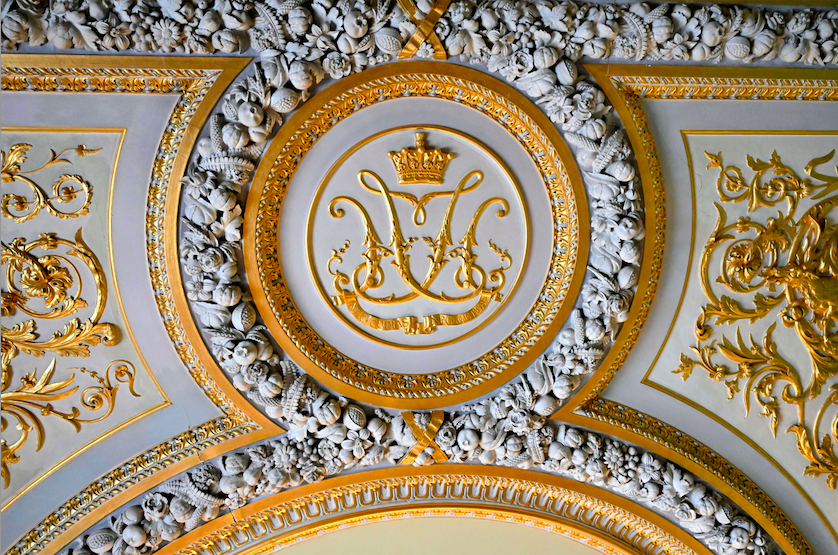
The Art of Monograms · GUSTAVO ATHAYDE Atelier
Bespoke Monogram — The Private Language of Distinguished Identity
On the quiet authority of a personal symbol — and why the most enduring forms of distinction have always belonged to individuals, not institutions.
The Bespoke Monogram as Private Language
A bespoke monogram is, at its most essential, a private language — one spoken not in words, but in the deliberate arrangement of form, letter, and line. Long before personal branding became the pursuit of every entrepreneur with an Instagram account, the art of the personal emblem belonged exclusively to those who understood that true distinction is never announced. It is recognized.
There is something quietly sovereign about a monogram. It does not explain itself. It does not seek approval. It appears — on the flap of an envelope, the cuff of a shirt, the corner of a note card — and it communicates everything necessary without uttering a single word. This economy of expression is not accidental. It is the result of centuries of refinement, of an accumulated understanding that the most powerful symbols are almost always the most restrained.
In a world increasingly saturated with noise — visual, digital, commercial — the bespoke monogram asserts itself through silence. It is a mark that belongs to one person alone, designed not to attract the gaze of everyone, but to be recognized by those who already know what to look for. That selectivity is, in itself, a form of elegance.
“Long before logos became commonplace, the most enduring marks of distinction belonged not to companies, but to individuals.”
To commission a bespoke monogram is to make a declaration — not of wealth, but of intention. It is to say, in the most refined terms possible, that one has arrived at a point in life where the details matter. Where the manner in which one presents oneself to the world is not left to chance, but curated with the same care one might bring to the selection of a tailor, an architect, or a wine cellar. These are the gestures of a life considered and lived with purpose.
This article is an exploration of that tradition — its roots in the oldest forms of visual culture, its evolution through royal courts and aristocratic houses, and its continued relevance for those who understand that in an age of mass production, true luxury is always singular.
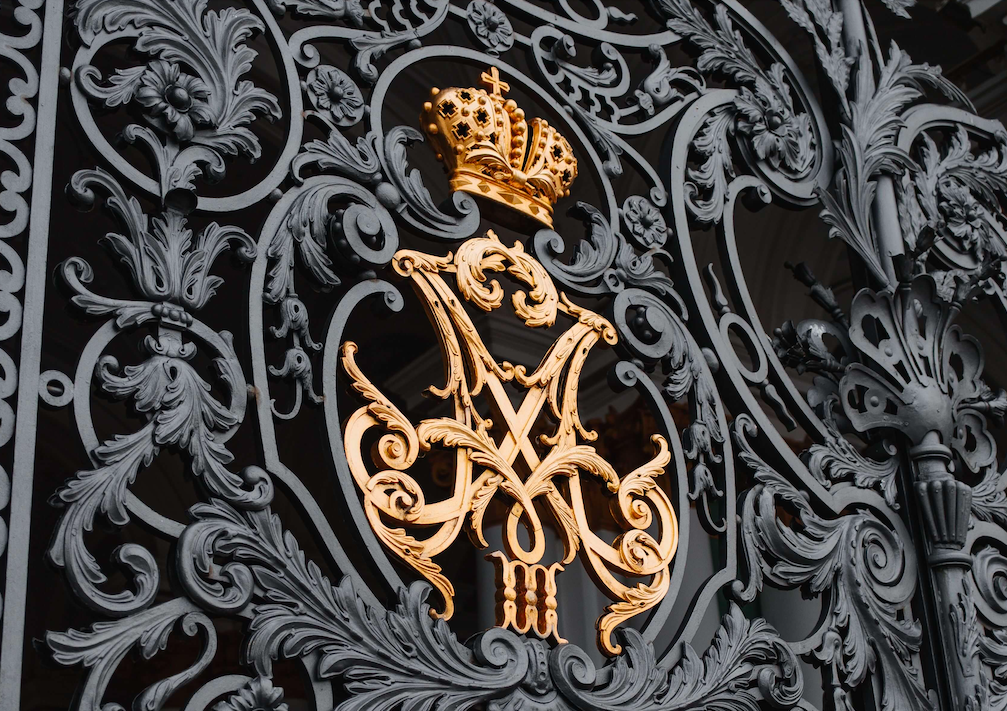
A History Written in Cipher: The Origins of the Bespoke Monogram
The monogram is one of the oldest surviving forms of personal identity in the Western world. Its earliest known appearances date to ancient Greece, where craftsmen and rulers alike would intertwine their initials into a single composite mark, affixing it to coins, ceramics, and official seals. These were not decorative choices — they were statements of authority, of authenticity, of irreproducible personal ownership.
The Roman emperors understood this instinctively. The chi-rho symbol, which intertwined the first two letters of Christ’s name in Greek, was adopted by Constantine as a mark of divine authority and later adapted into countless monograms of state and church. The formal logic was already established: the compression of identity into a single, indivisible form conveyed something that a name spelled out simply could not. Legibility, in this context, was never the point. Recognition was.
Ancient Greece · Circa 350 BC
The First Personal Emblems
Greek city-states and craftsmen began combining initials into single marks stamped onto coins and ceramics — the earliest formal monograms on record.Medieval Europe · 9th–12th Century
The Age of Heraldry
Knights and noble houses encoded lineage into visual symbols governed by strict heraldic law. A family’s emblem became synonymous with its honor and rank. Scholarship institutions devoted entirely to the study and preservation of these traditions endure to this day — a testament to how seriously this visual language was and continues to be regarded.Renaissance Italy · 15th–16th Century
The Merchant Prince and the Personal Mark
Florentine merchants and Venetian patricians adopted refined monograms as marks of commercial authority. The Medici bank’s interlocking letters appeared on everything from bills of exchange to palace facades — among the first instances of what we might now recognize as luxury brand identity.Royal Courts of Europe · 17th–19th Century
The Apotheosis of the Crowned Monogram
European monarchs codified the royal monogram as an instrument of governance and prestige. The cypher of a sovereign appeared on military regalia, state correspondence, porcelain services, and palace interiors — projecting authority across an empire before any other medium existed to do so. These traditions are preserved in extraordinary detail through royal archival institutions whose collections document centuries of monarchical visual culture.The Gilded Age · Late 19th Century
Monograms Enter the Private Sphere
As prosperity extended to a wider class of educated, ambitious individuals, the bespoke monogram migrated from court to country house — appearing on linen, silver, leather, and writing paper as a mark of refined domestic culture.The Contemporary Atelier · Present
The Singular Counterpoint
In an era defined by digital replication, the commissioned bespoke monogram has never been more meaningful. It remains — by definition — the one thing that cannot be downloaded, templated, or mass-produced.A Note on Heraldic Tradition
The relationship between the personal emblem and the formal heraldic tradition runs deep. The systematic study of coats of arms, badges, and personal devices has been practiced under formal institutional authority in England since 1484. The visual grammar these institutions established — the rules governing field, charge, tincture, and crest — informed the aesthetics of refined monogram design for centuries, and continues to inform the atelier tradition today. For those interested in the scholarly dimensions of this history, resources exist dedicated entirely to its preservation.
Why Bespoke Monogram Design Cannot Be Replicated by Algorithm
The question of what distinguishes a bespoke monogram from its commercial imitations is not merely a matter of aesthetics. It is a question of intent, process, and understanding — and the answers reveal everything about why the form endures while its substitutes do not.
A template, however elegantly designed, begins from a position of generality. It accommodates many names, many styles, many contexts. A bespoke monogram, by contrast, begins from a position of absolute particularity. It starts not with a font or a software module, but with a question: who is this for, and what should it say about them?
The answer to that question requires something no algorithm can provide: judgment. The capacity to weigh the character of a name against the traditions of visual culture, to balance historical reference with contemporary proportion, to make decisions about negative space and letterform that are simultaneously logical and intuitive. This is not a skill that scales. It is a skill that deepens.
| Criterion | Bespoke Monogram | Digital Template |
|---|---|---|
| Point of departure | The individual — their name, lineage, and character | A generic font or preset symbol |
| Singularity | ✦ Entirely unique; no other version exists | — Shared by hundreds or thousands |
| Design intelligence | Informed by art history, heraldry, and typographic tradition | Dependent on available presets |
| Heraldic literacy | ✦ Deeply considered; references verified tradition | — Absent or superficial |
| Longevity | Designed to be passed through generations | Designed to be used until the next trend |
| Medium adaptability | ✦ Tested across embossing, embroidery, engraving, digital | Optimized for screen only |
| What it communicates | An identity cultivated over time | A preference selected in minutes |
The Metropolitan Museum of Art’s collection of decorative arts offers one of the most comprehensive windows into how personal emblems have functioned across centuries and civilizations — from the engraved silver services of European aristocracy to the formal monograms embroidered onto royal garments. In each case, what distinguishes the finest examples is not their complexity but their coherence — the sense that every line was placed with reason, and that the whole speaks with a single voice.
This coherence is precisely what the bespoke process is designed to produce. It is the work of a designer who understands not only the letterforms themselves, but their cultural context — and who approaches each commission as a unique problem requiring a singular solution.
Commission Your Mark Begin the Conversation
The Bespoke Monogram and the Royal Tradition of Personal Cyphers
No tradition speaks more eloquently to the power of the personal monogram than the royal cypher — the compressed initials of a reigning monarch that appear on everything from the buttons of a palace footman’s livery to the covers of state documents. To study these emblems is to understand, with unusual clarity, just how much symbolic weight a few carefully arranged letters can carry.
The British monarchs, in particular, elevated the personal cypher to an art of considerable sophistication. Each sovereign’s monogram was newly designed at the start of their reign, incorporating their initial and crown in a composition that would come to represent not merely a name but an entire era of governance. These cyphers appeared across the widest possible range of materials — on military colors, on royal warrants, on the ceramic services commissioned from the finest European manufacturers — and their authority derived not from their legibility but from their design confidence.
The record of these royal commissions is one of the most revealing archives of personal emblem design in existence — a documented sequence of how successive rulers understood the relationship between visual identity and authority. What emerges from any sustained engagement with this material is a consistent principle: the finest cyphers were never designed to be impressive. They were designed to be right.
The Principle of Quiet Authority
The greatest personal emblems in history share a common characteristic: they do not try. They do not announce their significance, because their significance is assumed. A royal cypher needed no explanation because it appeared in a world where its meaning was understood. A bespoke monogram of genuine quality operates on the same principle — its authority is inherent, not performed.
This principle has obvious implications for the contemporary commission. A bespoke monogram designed for a private individual carries a different kind of authority than a royal cypher — but it is authority nonetheless. The authority of a person who has, in commissioning such a mark, declared their intention to be recognized not by the logos on their possessions, but by the singular mark that belongs to them alone.
The royal tradition also reminds us that the monogram is not merely a decorative device — it is a narrative instrument. When a monarch’s cypher appeared on a piece of porcelain, it told a story about who commissioned that piece, when, and under what cultural circumstances. The finest private monograms carry the same narrative potential: they locate their owner within a tradition of refinement that extends far beyond the present moment.
The GUSTAVO ATHAYDE Bespoke Monogram: A Philosophy of Singular Form
Every bespoke monogram created at the GUSTAVO ATHAYDE atelier begins with a conversation — not about aesthetics, but about identity. Before a single line is drawn, the essential questions must be answered: What does this person value? What is the nature of the occasion or legacy this symbol will represent? In what contexts will it appear, and across what materials must it perform? These questions are not preliminary — they are foundational.
The answers shape everything that follows. The choice of letter configuration — whether to interlock, to stack, to present in sequence — is informed not by current typographic trends but by what the letters themselves demand when considered in relation to the name they represent and the tradition they are meant to honor. Every decision in a bespoke commission is motivated by reason grounded in culture, history, and an intimate understanding of the individual.
01
Discovery & Dialogue
The commission begins not with a brief, but with a conversation. The atelier listens before it draws — understanding the person, the purpose, and the cultural context that will give the bespoke monogram its meaning.
02
Historical Research & Reference
Before any mark is made, the typographic and heraldic traditions most relevant to the commission are studied. A family with Anglo-Norman heritage demands different visual treatment than one with roots in the Portuguese nobility — and the atelier approaches each with appropriate specificity.
03
Form Development
Initial compositions are developed by hand before any digital tool is introduced. The gesture of drawing — the pressure of a pen on paper — produces a quality of line that software cannot originate. These preliminary forms capture something essential about the character of the mark before it is ever refined.
04
Refinement & Testing
The bespoke monogram is tested across scales and surfaces — reduced to the size of a wax seal impression, enlarged to the proportions of an embossed cover, converted to black on white and white on black. Only a composition that performs with equal authority in each context is considered complete.
05
Presentation & Delivery
The final mark is delivered in all professional formats alongside documentation of its design logic — a record of the decisions that shaped it, and a foundation for any future extensions of the visual identity it initiates.
On the Question of Digital vs. Handcrafted Origins
There is a persistent misunderstanding in contemporary design culture that equates digital production with efficiency and handwork with nostalgia. At GUSTAVO ATHAYDE, these categories do not conflict. The hand provides what the screen cannot: the accident of discovery, the pressure variation that suggests character, the proportion arrived at intuitively before it is calculated. The screen provides what the hand cannot: the precision, the scalability, and the reproducibility that a functional mark requires. A bespoke monogram of genuine quality makes use of both — in that order.
Explore the Atelier’s Process Commission a Bespoke Monogram
The Many Contexts of a Bespoke Monogram: From Wedding Stationery to Family Legacy
One of the most revealing aspects of the bespoke monogram as a form is its extraordinary adaptability. The same essential design intelligence that produces a refined personal initial for an attorney’s correspondence can, with appropriate modification, produce a wedding monogram for a once-in-a-generation celebration, a family emblem intended to anchor a legacy spanning generations, or a luxury brand identity that communicates prestige without uttering a single explicit claim to it.
This adaptability is not the result of formal versatility alone — though the visual grammar of the monogram is indeed remarkably flexible. It is the result of the form’s fundamental nature as a container for meaning. The bespoke monogram does not impose a predetermined character onto its subject. It receives the character of its subject and gives it permanent, visual form.
The Personal Monogram
For the individual who understands that personal distinction is not declared, but demonstrated — through the quality of every material detail that surrounds them. Appearing on correspondence, personal seals, and possessions of lasting value.
The Wedding Monogram
A symbol of union that transcends the celebration itself. The finest wedding monograms are not designed for a single occasion — they are designed to endure, becoming the visual identity of a new household and, in time, a new chapter of family history.
The Family Emblem
Perhaps the most ambitious of all commissions — a family crest or emblem designed not merely to identify but to represent. To carry the visual weight of a family’s values, lineage, and aspirations in a form that can be passed from one generation to the next without diminishment.
The Luxury Brand Identity
For businesses and institutions that understand prestige cannot be purchased wholesale — only cultivated over time through consistent, intentional visual decisions. A bespoke monogram at the center of a luxury identity establishes an authenticity that no amount of marketing expenditure can replicate.
It is worth dwelling on the wedding monogram specifically, because it illustrates something important about the broader nature of the form. A couple commissioning a bespoke wedding monogram is not, fundamentally, seeking a decorative element for their stationery. They are seeking a symbol that will represent the beginning of something — a life built together, a household established, a family initiated. The mark, if it is designed with appropriate seriousness, will appear on objects long after the celebration itself has receded into memory. It will appear on anniversary correspondence, on possessions passed to children, on the stationery of a household that has grown and deepened over decades.
This is the true measure of a bespoke commission: not whether it looks beautiful on the day of its creation, but whether it continues to speak with authority on the day it is passed to the next generation.
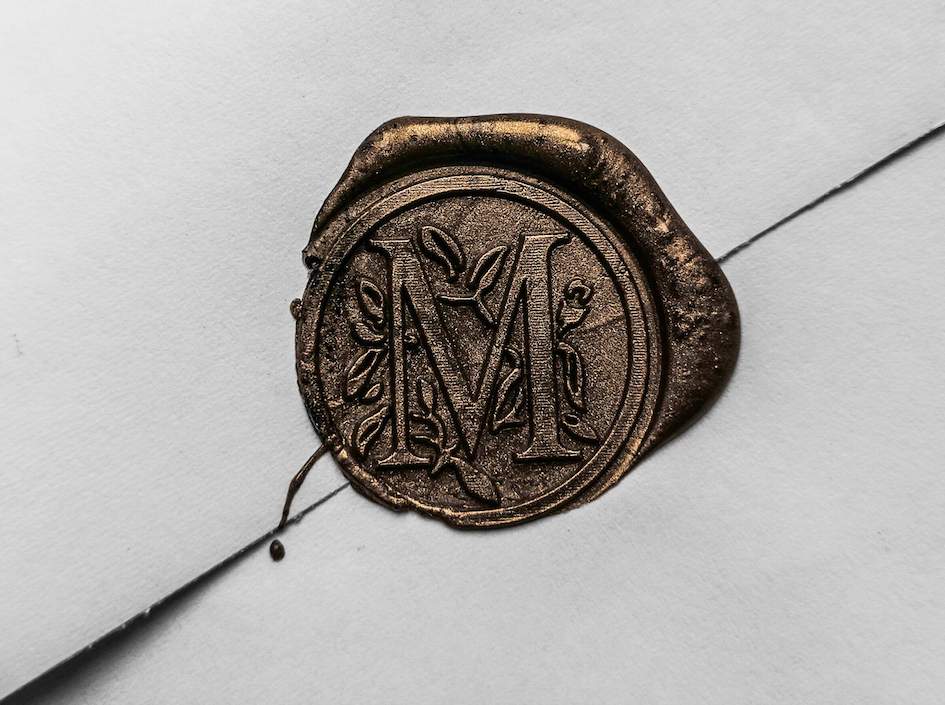
Bespoke Monogram Design: Reading the Visual Language of Personal Emblems
For those new to the serious study of personal emblems, the visual vocabulary of the bespoke monogram can seem at once intuitive and opaque. Certain marks communicate their quality immediately — there is no hesitation in their presence, no uncertainty in their line. Others, despite technical proficiency, leave a sense of something unresolved. Understanding the difference is the work of years, but the principles that govern it are not difficult to articulate.
✦
The Integrity of Negative Space
The space around and within the letters of a bespoke monogram is not empty — it is active. The finest designs treat negative space as a design element of equal importance to the letterforms themselves, ensuring that the composition breathes without losing coherence.✦
The Hierarchy of Letters
In a monogram of multiple initials, not all letters hold equal visual weight — and they should not. The surname initial, or the letter most phonetically prominent, typically anchors the composition. This hierarchy must be felt rather than announced, embedded in the proportions of the design rather than imposed through obvious size differences.✦
The Question of Tradition vs. Innovation
Every bespoke monogram occupies a position on the spectrum between classical reference and contemporary sensibility. The most durable designs tend toward the former — they draw from typographic traditions deep enough to carry genuine cultural authority, while introducing precisely the measure of originality necessary to make them singular. Too much novelty and the mark ages with its moment. Too much tradition and it becomes costume rather than identity.✦
Scalability as a Criterion of Quality
A bespoke monogram of genuine quality must perform equally well at the scale of a blind-embossed cover and the scale of a digital favicon. This constraint is not merely practical — it is a design criterion. Any form that requires a certain scale to appear resolved is a form that has not yet been fully resolved.✦
The Single-Reading Principle
The most successful monograms are read in a single visual moment. The eye does not labor to decipher them — it simply receives them. This quality is the result of a careful resolution between complexity and clarity, between the richness of visual information and the simplicity of overall composition.Elements of an Exceptional Bespoke Monogram
Historical & Typographic Literacy Essential
Negative Space Mastery Critical
Letter Hierarchy & Balance Critical
Scalability Across Applications Essential
Singularity of Form Non-Negotiable
Cultural & Contextual Appropriateness Fundamental
Explore All Atelier Services Request a Bespoke Commission
Family Heritage and the Bespoke Monogram as Generational Inheritance
There is a particular category of commission that stands apart from all others in its ambition and its responsibility: the family emblem. To commission a bespoke monogram as the founding symbol of a family’s visual identity is to create something that will, if done with the necessary care, outlast not only the commissioner but every generation they will ever know.
The history of heraldic design is, at its core, a history of exactly this aspiration — and the formal traditions that govern it reflect centuries of accumulated understanding about what makes a symbol capable of carrying such weight. The careful student of this tradition will find, embedded in its elaborate rules about colors and charges and the distinction between one family’s arms and another’s, a consistent underlying insight: the symbol that endures is the symbol that is exactly itself, and nothing else.
The institutions that have governed formal heraldic grants for centuries operate on precisely this principle — that the right to bear a particular visual mark is not a matter of preference or purchase, but of earned and formally recognized identity. While a bespoke monogram commission operates outside the formal heraldic system, the most thoughtful atelier approach draws from the same understanding: that a mark intended to represent a family across generations must be designed with that temporal weight in mind from the very first line.
This means, in practical terms, that the designer must resist the temptation of the merely fashionable. A bespoke monogram that incorporates the graphic vocabulary of a particular decade will read as a period document within twenty years. A bespoke monogram grounded in the longer tradition of letterform and emblem design — with a composition logic that connects it to centuries of refined visual culture — will read with equal authority in 2050 as it does today.
What a Family Emblem Must Carry
A well-designed family emblem encodes not just initials but values. The visual choices — the weight of the serif, the degree of ornamentation, the geometry of the overall composition — all communicate something about the character of the family and its understanding of its own identity. These are not superficial choices. They are, in a very real sense, the family’s first editorial decisions about how it wishes to be remembered.
What the Atelier Brings to the Commission
The atelier’s role in a family emblem commission is that of a translator — converting the intangible qualities of a family’s identity into the formal language of visual design. This requires both deep cultural knowledge and genuine sensitivity to the individual, a combination that cannot be replicated by any system designed to produce results at scale.
On Designing for Future Generations
The finest bespoke monograms and family emblems in the atelier’s portfolio share a common characteristic: they were designed with someone not yet born in mind. Not in the sense of anticipating future tastes — which is impossible — but in the sense of grounding the mark so deeply in the logic of refined visual culture that no future generation could reasonably find it wanting. This is the discipline of designing for permanence, and it requires a different quality of attention than designing for the present.
The Bespoke Monogram Across Materials: From Engraving to Embossing
A bespoke monogram does not exist in isolation. It exists as a mark applied to materials — and the intelligence of its design must account for every surface on which it will appear. This is not a secondary consideration; it is, in many ways, the most demanding aspect of the commission.
The challenges of translating a bespoke monogram across different applications are substantial. A design that reads beautifully in black ink on cream paper may lose definition entirely when blind-embossed into a leather cover. A composition with subtle hairlines may disappear when reproduced at small scale or translated into a single-color embroidery. These are not problems that can be solved after the fact — they must be anticipated in the original design.
12+ Applications Tested Per Commission
5 Core Material Contexts
∞ Generations It Is Designed to Serve
The five primary material contexts for a bespoke monogram each present their own demands. On paper — whether correspondence stock, note cards, or the heavyweight sheets used for formal invitations — the mark must perform with typographic precision, its finest details preserved. On leather — whether the cover of a portfolio, a wallet, or a bookbinding — it must translate into a three-dimensional impression without losing its sense of flat graphic design. On fabric — whether embroidered onto a shirt cuff, a napkin, or the lining of a jacket — it must simplify sufficiently for the medium while retaining its essential character.
On silver and other metals — engraved onto a piece of flatware, a flask, or a cigarette case — it must work at the smallest scales without resolution loss. And in digital contexts — as a watermark on digital correspondence, a favicon, a wax seal image — it must compress without confusion. A bespoke monogram that passes all five of these tests is one that was designed by someone who understood, from the beginning, that they were designing not a single object but an entire system of visual identity.
The Journal and the Atelier
For those who wish to explore the full range of the atelier’s editorial perspective on personal emblems, family identity, and the visual culture of distinction, the GUSTAVO ATHAYDE Journal continues to develop these themes across the full range of the studio’s practice — from the history of wedding monograms to the principles that distinguish a truly enduring family emblem from a merely competent one.
On the Experience of Commissioning a Bespoke Monogram
The most telling measure of any atelier’s work is not the portfolio it displays, but the experience it creates for those who commission it. A bespoke monogram is, by nature, a deeply personal commission — and the process of arriving at it should feel, from the first conversation to the final delivery, like a collaboration in the fullest sense of the word. The following accounts offer a sense of how that experience has been received.
“I commissioned a monogram for my personal correspondence and was entirely unprepared for the depth of conversation that preceded it. By the time the design was presented, I felt as though the mark already belonged to me — as though it had always existed and was simply being returned.”
E. Fairfax Private Client · Charleston, South Carolina“We wanted a family emblem that would serve as a visual anchor for generations — something our grandchildren would be proud to inherit. What was delivered exceeded that ambition entirely. It is already, in the opinion of every family member who has seen it, the defining symbol of who we are.”
The Whitmore Family Family Emblem Commission · Newport, Rhode Island“Our wedding monogram was the detail our guests remembered most clearly — not the flowers, not the venue, but that mark on every envelope and place card. It was restrained in a way that felt, paradoxically, like an extravagance. As though we had decided to be quiet about something beautiful.”
C. & A. Thornton-Haynes Wedding Monogram Commission · Savannah, Georgia“I have worked with design studios across three continents, and I can say without qualification that this commission produced the most considered piece of identity work I have ever received. There is a quality to it that I can recognize but not fully articulate — which is, I suspect, precisely the point.”
R. Nakamura Luxury Brand Commission · New York, New YorkThe Enduring Argument for the Bespoke Monogram in a Digital Age
There is a question that arises, with increasing frequency, in any serious discussion of personal identity in the present moment: does the digital age render the bespoke monogram obsolete, or does it make it more necessary? The answer, for those who have thought carefully about the question, is unambiguous. The digital age has not diminished the bespoke monogram — it has elevated it.
The logic is straightforward. In an environment where visual identity can be generated, replicated, and distributed at zero cost and infinite scale, the mark that cannot be generated — that exists only because a specific person commissioned it from a specific designer with a specific understanding of their specific identity — acquires a rarity value that no amount of technical sophistication can replicate. Scarcity, in design as in everything else, is a function of intention, not of difficulty.
“The finest symbols are rarely created to follow trends. They are created to outlive them.”
GUSTAVO ATHAYDE · Atelier PhilosophyThe bespoke monogram also serves, in the digital age, as a kind of proof of personhood — a declaration that the individual behind the mark has not outsourced their visual identity to an algorithm, a template engine, or a crowdsourced marketplace. This may seem like a minor distinction. In contexts where distinction matters, it is anything but.
Consider the role of the monogram in formal correspondence — a practice that, far from disappearing, has acquired new significance precisely because of its rarity. A handwritten note sealed with a wax impression bearing a bespoke monogram arrives in the world of digital communication with the impact of an object from another register entirely. It is not merely communication — it is a statement about how the sender chooses to communicate, and what that choice says about their understanding of the recipient.
This is the broader cultural argument for the bespoke monogram: that in an age of effortless reproduction, the deliberate, singular, commissioned mark is not an anachronism but an act of resistance — a refusal to accept that all marks are equivalent, that identity is a category available for selection from a dropdown menu, that the visual language of self-presentation can be generated without thought and without consequence.
Those who commission bespoke monograms understand, at some level, that they are making a statement about their relationship to quality, to tradition, and to the future. They are not merely acquiring a design service. They are participating in one of the oldest forms of human self-articulation — and doing so with the same seriousness that has always distinguished the finest examples of that tradition from those that merely imitate it.
The GUSTAVO ATHAYDE Journal
The atelier’s editorial practice extends across all the themes explored in this article — from the deep history of personal emblems to the specific traditions that inform wedding monogram design, family crest commissions, and luxury brand identity. Those wishing to explore these subjects in greater depth will find an expanding body of work at the GUSTAVO ATHAYDE Journal, where craft, culture, and the philosophy of distinction continue to be explored with the same seriousness applied to every atelier commission.
On Commissioning a Bespoke Monogram: The First Conversation
There is no correct moment to commission a bespoke monogram. There is only the moment when a person decides that their identity — personal, familial, professional, or ceremonial — deserves to be expressed with the care and permanence the bespoke form provides. For some, that moment arrives before a wedding. For others, it arrives at the founding of a family, the establishment of a business, or simply the recognition that one has arrived at a point in life where the quality of the details carries genuine meaning.
What the finest bespoke commissions share, regardless of the occasion that prompted them, is a quality of intentionality that is immediately apparent in the result. The mark that was designed with full attention to its subject, its context, and its future — that was allowed to develop through genuine creative dialogue between designer and client — carries that intentionality within it. It is not something that can be read analytically, but it is something that can be felt, even by those who could not articulate the reason for the feeling.
This is the oldest argument for the bespoke tradition, and it has not weakened with age. The things made with genuine care for a specific person in a specific context are, in the end, the things that endure. Everything else is content.
A Closing Reflection