
Cipher Monogram: A Private Architecture of Name
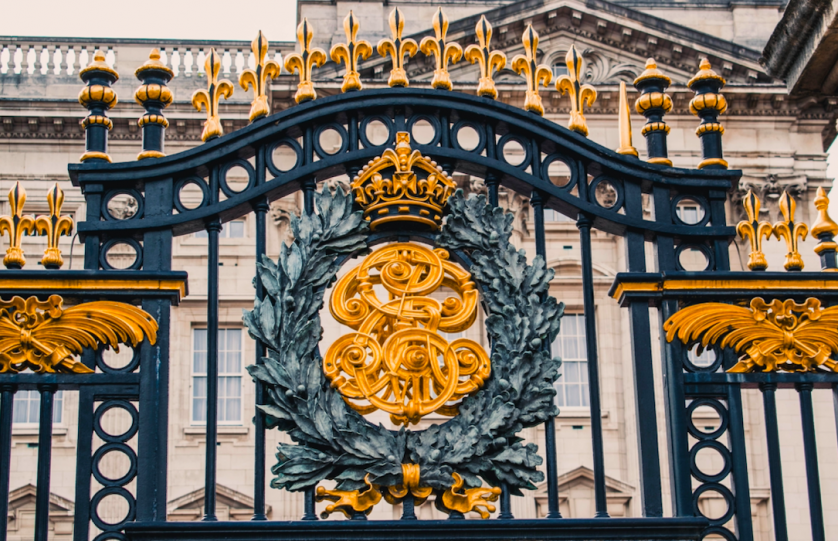
Cipher Monogram: The Private Architecture of a Name
The Art of Monograms
There is a particular kind of mark that does not announce itself.
It waits to be noticed rather than demanding attention.
This is the nature of the cipher monogram, a discipline of identity that predates the modern logo by centuries.
Where a signature can be forged and a name can be common, a cipher monogram is deliberately singular.
It interlaces initials into a private architecture, one legible to its owner and beautiful to everyone else.
The word cipher itself carries a double meaning worth pausing over.
In cryptography, a cipher conceals a message from all but its intended reader.
In design, a cipher monogram performs a similar function, encoding a name into a form that rewards close attention.
This is not decoration for its own sake.
It is a considered act of self-definition, rendered in line and proportion rather than words.
Across royal courts, aristocratic households, and enduring luxury houses, the cipher monogram has served as a quiet form of authorship.
It has marked linens, sealed letters, crowned gates, and closed the final page of correspondence between heads of state.
At GUSTAVO ATHAYDE, I approach the cipher monogram as both a historical inheritance and a living craft, a philosophy rooted in the atelier’s founding story.
Every commission begins not with a font, but with a question about what a family, a couple, or an institution wishes to preserve.
The answer rarely arrives in words.
It arrives in the shape of two or three letters, drawn close enough to become one.
This article considers the cipher monogram from several vantage points at once.
We will trace its lineage through royal houses and heraldic tradition.
We will examine how it differs, technically and philosophically, from the broader category of the monogram.
We will follow its passage into contemporary weddings, family legacies, and luxury identities.
Throughout, the guiding conviction remains the same.
A cipher monogram is not merely initials rendered attractively.
It is a private language, built once, and read for a lifetime.
The Art of Monograms
The Hidden Language of the Cipher
The earliest ciphers were born from necessity rather than vanity.
A monarch needed a way to authenticate a document without the labor of a full signature.
A merchant needed to mark a crate of goods crossing unfamiliar waters.
A noble household needed to distinguish its silver from that of a rival family at the same banquet.
Out of these practical demands, an art form quietly emerged.
Letters were no longer written in sequence but folded into one another, sharing strokes and negative space.
The resulting symbol could be reproduced by an engraver, a seal-cutter, or an embroiderer, and it would remain recognizably consistent.
This consistency mattered enormously in eras when literacy could not be assumed but visual recognition could.
A cipher, unlike a written name, could be understood at a glance by someone who had never learned to read.
It functioned as both signature and symbol, closer to a personal emblem than to typography.
The distinction between a cipher and an ordinary set of initials lies precisely in this interlacing.
Two letters simply placed side by side remain two letters.
Two letters woven so that one borrows the stem of the other become a single new form.
This transformation is the technical heart of cipher work, and it is exacting to execute well.
A poorly interlaced cipher reads as clutter, two shapes fighting for the same space.
A well-constructed one reads as inevitability, as though no other arrangement of those letters could have existed.
Achieving that sense of inevitability requires patience most commissions cannot rush.
I often spend as much time removing strokes from a cipher as I do adding them.
The instinct toward embellishment is natural, particularly when a client wishes their mark to feel significant.
Yet significance in this discipline tends to emerge from restraint rather than accumulation.
A cipher that has been edited down to its essential lines carries more authority than one crowded with flourish.
This is a lesson historical engravers understood intuitively, long before restraint became a design principle with a name.
Their tools, hand-cut dies and steel punches, punished excess by making it slow and costly to produce.
Necessity, once again, shaped the aesthetic that later generations would come to admire as elegance.
The cipher monogram, then, carries within its form the memory of the constraints that created it.
Understanding this history changes how a client approaches the commissioning process.
It is not a request for a pretty arrangement of letters.
It is a request to participate in a centuries-old discipline of concentrated meaning.
Every letterform choice, every angle of interlace, inherits decisions made by anonymous craftsmen long before any of us were born.
That inheritance is part of what a client is truly acquiring.
On Interlace
A cipher is not two letters placed side by side; it is one form built from the shared architecture of both.
Scholars who study the visual language of personal marks have traced interlaced initials back through medieval scriptoria, where scribes signed illuminated manuscripts with woven monograms rather than full names.
The instinct to compress identity into a single symbol long precedes the printing press, and it has never entirely disappeared.
What has changed is the context in which a cipher is now commissioned.
Fewer clients require a cipher to seal wax or authenticate correspondence.
Far more request one to anchor a wedding, a family archive, or a considered personal brand.
The function has shifted, but the underlying appetite for concentrated, private symbolism has not diminished at all.
A Note on Restraint
The finest cipher work is often achieved through subtraction, removing every stroke that is not essential to the final form.
The Atelier Journal
Where the Cipher Diverges from the Monogram
It is worth pausing to draw a clear line between a cipher monogram and the wider category simply called a monogram.
The word monogram is often used loosely, covering everything from a child’s initials on a backpack to a corporate wordmark built from letters.
A cipher monogram sits at the most exacting end of that spectrum.
It requires true interlace, meaning the letters share structural elements rather than merely sitting near one another.
A monogram, by contrast, may simply arrange initials in a pleasing layout without any structural fusion at all.
Both have their place, but they are not interchangeable, and a discerning client should understand the difference before commissioning either.
A cipher also tends toward symmetry and balance in a way an ordinary monogram does not require.
Historically, ciphers were often designed to be read correctly from more than one orientation, since they might be embossed, engraved, or embroidered onto objects viewed from varying angles.
This demand for multi-directional clarity shaped the geometry of cipher design for centuries.
Modern applications rarely require literal reversibility, yet the discipline of designing as though they might still elevates the final result.
A comparison is often the clearest way to understand where these two traditions diverge, so I have outlined the distinctions below.
Three qualities separate a true cipher from a general monogram: structural interlace, historical formality, and intended permanence.
A cipher is built to outlast trend cycles, often for a single lifetime or beyond.
A monogram, depending on its purpose, may be revised more freely as taste or branding needs shift.
Neither approach is inherently superior, but each serves a different kind of commission.
A couple naming their household typically wants the permanence of a cipher.
A seasonal collection or a temporary campaign may be better served by a lighter monogram treatment.
Understanding which category a project truly belongs to prevents years of quiet dissatisfaction with a mark that never fit its purpose.
This is one of the first conversations I have with any new client, well before a single sketch is drawn.
| Quality | Cipher Monogram | General Monogram |
|---|---|---|
| Construction | True structural interlace; letters share strokes | Initials arranged; no structural fusion required |
| Intended Lifespan | Decades to a lifetime, often generational | Flexible; may be revised as needs change |
| Formality | Rooted in heraldic and royal tradition | Ranges from casual to formal |
| Typical Commission | Family crest, wedding cipher, signet mark | Stationery accent, seasonal branding |
| Design Discipline | Extensive editing toward essential lines | Layout and spacing, less structural fusion |
“A cipher is built to outlive trend cycles, often for a single lifetime or beyond.”
Royal Traditions
Sovereigns and Their Secret Marks
No institution has preserved the tradition of the cipher more faithfully than the royal courts of Europe.
For centuries, a sovereign’s cipher appeared on state documents, military insignia, coinage, and the gates of royal residences.
The cipher functioned as an extension of the crown itself, a visual shorthand for authority that required no accompanying text.
Citizens who could never read a royal decree could still recognize the cipher stamped upon it.
This dual function, both legal and symbolic, gave the royal cipher a weight that ordinary heraldry did not always carry.
Heraldic scholarship has long distinguished between a coat of arms and a royal cipher.
The former follows strict compositional rules, while the latter allows more personal expression within its formality, a distinction that the institutions historically responsible for regulating English heraldry continue to observe today.
Bodies dedicated to the wider study of heraldic tradition, including independent societies devoted to the discipline, continue to document these distinctions with remarkable precision.
A cipher might change with each monarch, reflecting individual taste, while the underlying arms of a royal house often remained fixed across generations.
This tension between personal expression and institutional continuity is one of the more fascinating aspects of royal visual culture.
The holdings maintained within the collections assembled by Europe’s royal households over centuries preserve extraordinary examples of cipher work applied to porcelain, silver, textiles, and architecture.
Viewing these collections, whether in person or through scholarly documentation, offers a masterclass in restraint applied at the highest level of craft.
The most celebrated royal ciphers rarely relied on elaborate ornamentation to convey their authority.
Instead, their power came from proportion, from the confident negative space surrounding a small number of interlaced letters.
This is a principle I return to constantly in my own atelier practice.
A cipher does not need to be large or ornate to command a room.
It needs to be correct, in the sense that every line belongs and nothing further could be added without diminishing it.
Royal households also understood the cipher as a tool of continuity across generations.
A family’s core letterforms might persist even as individual monarchs added or altered small details to mark their own reign.
This layered approach to identity, honoring the past while making room for the present, offers a useful model for families today.
A cipher commissioned for a contemporary household can draw on ancestral initials while still reflecting the individuals who currently carry the name.
The result is a mark that feels inherited rather than invented, even when it is entirely new.
Working within this tradition requires genuine study, not merely aesthetic borrowing.
I encourage clients drawn to royal-inspired cipher work to spend time with primary visual sources before a single design decision is made.
The nuances of historical interlace reward close looking in a way that photographs alone rarely capture.
A visit to the decorative arts galleries of one of the world’s great encyclopedic museums allows a visitor to see, at close range, how gold thread or engraved metal actually carried these forms.
That physical understanding of material and scale informs every cipher I design, whether or not a given commission ever references royal history directly.
A Note on Provenance
A cipher inspired by royal tradition deserves genuine study, not merely aesthetic borrowing.
The Atelier Journal
The Architecture of a Cipher
Every cipher commissioned at GUSTAVO ATHAYDE follows a disciplined sequence, one refined over more than a decade of practice across the full range of bespoke commissions the atelier undertakes.
The process begins with listening rather than sketching.
A client’s letters are only the raw material; the meaning comes from what those letters are meant to carry.
I ask about the history behind a name, the occasion prompting the commission, and the objects or surfaces the cipher will eventually inhabit.
A cipher destined for a wedding invitation behaves differently than one destined for a signet ring or a family gate.
Scale, material, and viewing distance all shape the earliest structural decisions.
Once this context is established, I begin exploring letterform pairings by hand before any digital tool enters the process.
Hand-drawn exploration preserves a warmth and irregularity that purely digital construction often flattens away too early.
Dozens of interlace possibilities are tested at this stage, most of them discarded within minutes.
The goal is not to find every possible arrangement, but to recognize the one that feels inevitable once it appears.
This recognition is difficult to explain and easier to demonstrate; experienced eyes tend to know it when they see it.
From the strongest hand-drawn studies, I move into precise digital construction, where proportion and line weight are refined to exacting standards.
Every curve is checked against the others for consistency of stroke and rhythm.
A cipher with inconsistent line weight reads as unfinished, regardless of how clever its interlace may be.
This stage often takes longer than clients expect, precisely because the adjustments being made are so small.
A shift of half a degree in one letter’s angle can change the entire balance of the mark.
Once the core cipher is resolved, I test it at multiple scales and applications relevant to the client’s intended use.
A cipher that reads beautifully at the size of a dinner plate may lose clarity when reduced to the size of a cufflink.
Anticipating this range of application from the outset prevents costly redesign later in the process.
Only after this testing is complete does a cipher move toward final delivery and, where relevant, physical production guidance.
Throughout the entire sequence, revision is expected and welcomed rather than treated as failure.
The finest ciphers I have designed rarely emerged fully formed from a first sketch.
They arrived through patient refinement, conversation, and a willingness to set aside an early favorite in service of a stronger final result.
This is, in many ways, the atelier philosophy in miniature: craft rewards those willing to work slowly toward permanence.
1
→
Listen
Understand the history and occasion behind the commission.
2
→
Sketch
Explore letterform pairings by hand, before any digital tool is used.
3
→
Construct
Refine proportion and line weight with exacting digital precision.
4
→
Test
Confirm legibility across every intended scale and material.
5
Deliver
Prepare final files for engraving, embroidery, print, and archive.
Legacy & Family Heritage
A Family’s Cipher Across Generations
Few commissions carry more emotional weight than a cipher designed to represent a family across generations.
A family cipher is rarely built in a single sitting; it accumulates meaning the way a home accumulates memory.
Some families arrive with an existing mark, perhaps inherited from a grandparent or great-grandparent, seeking refinement rather than replacement.
Others begin with nothing more than a surname and a wish to establish something their descendants might one day inherit.
Both starting points deserve equal care, though the design conversations differ considerably.
When refining an inherited cipher, my first task is archival rather than creative.
I study whatever historical examples exist, whether engraved silver, an old seal, or a faded photograph of embroidered linen.
The goal is never to erase what came before, but to understand its logic well enough to extend it faithfully.
A family’s original cipher may have been designed under very different technical constraints than exist today.
Modern reproduction methods allow for a level of precision that earlier engravers could only approximate by hand.
This means a refined family cipher can honor its ancestral form while gaining a clarity the original may never have possessed.
When building an entirely new family cipher, the conversation instead centers on what the family hopes future generations will recognize.
This is a surprisingly difficult question for many clients, precisely because it asks them to imagine descendants they will never meet.
I encourage families to think less about their own preferences and more about what will remain legible and dignified decades from now.
Trends fade quickly; a cipher built to chase a current aesthetic will feel dated far sooner than one built on classical proportion.
This is why family commissions almost always favor restraint over novelty, even when a client initially requests something bolder.
A family cipher typically finds its way onto items intended for daily and ceremonial use alike.
Stationery, linens, signet jewelry, and even architectural details such as gates or door surrounds are common applications.
Each application places different demands on the design, and a well-built cipher must perform gracefully across all of them.
I often present families with a small visual timeline showing how their cipher might appear across a lifetime of use, from a christening gift to an anniversary commission decades later.
Seeing this continuity laid out tends to clarify, more than any verbal explanation could, why restraint in the initial design matters so much.
A cipher that can travel gracefully from a nursery blanket to a wedding invitation to a fiftieth anniversary gift has succeeded at its deepest purpose.
It has become, in the truest sense, a family’s own private language of identity.
First Generation
An ancestral cipher is engraved into silver, marking a household for the first time.
Second Generation
The same letterforms are quietly refined, preserving proportion while gaining new clarity.
A Wedding
The family cipher is joined, gracefully, with the initials of a new household.
Present Day
Descendants carry the mark forward, onto stationery, jewelry, and a family’s own archive.
On Longevity
A cipher that can travel from a nursery blanket to a wedding invitation has succeeded at its deepest purpose.
On Inheritance
Refining an inherited cipher begins with study, never with erasure of what came before.
Bespoke Weddings
The Cipher at the Center of a Wedding
A wedding remains one of the most meaningful occasions for commissioning a cipher monogram.
Two family names are, quite literally, being asked to become one visual form.
This is a design challenge unlike any other in the atelier’s practice, because it must honor two separate histories at once.
The technical question of interlace becomes, in a wedding cipher, also a question of balance between families.
Neither partner’s initial should visually dominate the other, regardless of alphabetical order or personal preference.
Achieving this balance requires careful attention to stroke weight, letter height, and the negative space each initial occupies within the final form.
Many couples come to this process assuming their cipher will only ever appear on their wedding invitation.
In practice, a well-designed wedding cipher tends to accompany a couple for decades, appearing on anniversary gifts, home linens, and eventually, family stationery passed to their own children.
This long horizon is why I discourage overly trend-driven choices during the wedding commission process, even when a couple is drawn to a particular current style.
A cipher chosen to feel current at the moment of a wedding often feels dated within a single decade.
A cipher chosen for enduring proportion tends to feel just as appropriate at a fiftieth anniversary as it did on the wedding day itself.
Couples frequently ask how their new cipher should relate to any existing family ciphers on either side.
There is no single correct answer, though most successful wedding ciphers draw quiet inspiration from both families rather than replacing either lineage outright.
A subtle nod to a grandmother’s engraved silver, or a father’s signet ring, can be woven into the new mark without overwhelming it.
This kind of layered reference rewards close attention from those who know the families well, while remaining simply elegant to everyone else.
Wedding ciphers also carry practical considerations that differ from other commissions.
They are frequently reproduced across multiple materials within a short window of time: engraved stationery, embroidered linens, a wax seal, and sometimes an aisle installation or dance floor projection.
Each of these applications demands a slightly different technical file, and I prepare a full suite of formats as part of every wedding commission.
The emotional stakes of this work are not lost on me, and they are visible throughout a curated selection of completed wedding commissions.
A wedding cipher is, in many respects, the first shared symbol a couple will ever commission together.
It deserves the same patience and precision the atelier brings to a royal-inspired family crest or a decades-old luxury identity, because for the couple receiving it, the significance is every bit as great.
The Invitation
The cipher anchors the wedding suite, from the outer envelope to the final card.
The Linens
Embroidered onto table linens, the mark quietly signals the union being celebrated.
The Seal
A wax seal, pressed with the new cipher, closes correspondence sent before the day itself.
The Keepsake
Engraved onto a small object, the cipher becomes a lasting memento of the occasion.
3Letters, on average, resolved into a single cipher form
40+Interlace variations typically explored per commission
5Material applications prepared for a wedding cipher
1Mark, built once, intended to last generations
Legacy & Family Heritage
The Cipher in the American Household
American families who commission a cipher often arrive with a different history than their European counterparts.
That history shapes the work in meaningful ways.
Rather than inheriting a cipher across many centuries, many American households are establishing one for the first time.
This often coincides with a wedding, a significant anniversary, or the founding of a family enterprise.
This absence of an inherited starting point is not a limitation; it is, in many respects, a rare freedom.
A family building its first cipher can draw consciously on whichever traditions resonate most, whether European heraldry, classical calligraphy, or a more contemporary interpretation of restraint.
I find these commissions particularly rewarding, precisely because the resulting mark carries no obligation to any prior version, only to the family’s own considered intentions.
Family-owned businesses across the United States have long understood the value of a mark that signals permanence rather than trend.
A cipher applied to a family enterprise communicates continuity in a way a purely commercial logo rarely achieves.
It suggests the business is an extension of a household, not a venture built for quick exit.
This distinction matters enormously to clients who think in terms of decades rather than fiscal quarters.
Philanthropic culture, too, has long made use of discreet personal marks, particularly among families who prefer their giving to remain understated rather than publicized.
A cipher engraved into a modest plaque, or embossed onto correspondence accompanying a gift, allows a family’s identity to be present without becoming the center of attention.
This quality of quiet presence is, in many ways, the defining characteristic of the cipher tradition as a whole.
Architectural applications also carry particular weight within American commissions, especially among families restoring or building historic residences.
A cipher worked into a gate, a mantel, or a stair rail can root a newly built home in a sense of continuity it might otherwise lack.
Even a family with no centuries-old lineage can, through a thoughtfully designed cipher, begin building the kind of visual legacy that future generations will inherit and extend.
This is, in the end, the promise every cipher commission ultimately offers, regardless of a family’s particular history or geography.
It does not require an ancient lineage to justify its creation.
It requires only the intention to build something worth passing on.
On First Ciphers
A family building its first cipher carries no obligation to any prior version, only to its own considered intentions.
The Atelier Journal
Voices from the Atelier
Clients rarely describe a cipher commission in the language of graphic design.
They describe it, instead, in the language of memory and inheritance.
“Working with GUSTAVO ATHAYDE felt less like commissioning a graphic and more like being interviewed for a small piece of family history worth preserving.”
The final cipher now appears on our wedding stationery and, quietly, on the cufflinks I wear to every anniversary dinner since.”
Eleanor V., Boston, Massachusetts Bespoke Wedding Cipher
“What struck me most was the restraint in the process itself; every proposal felt considered rather than decorative.”
Our family crest project took several months, and every one of those months was visible in the precision of the final result.”
The Whitfield Family, Charleston, South Carolina Family Crest Commission
“I did not expect a monogram commission to involve this much genuine conversation about our family’s history, but it shaped the entire design.”
The cipher now sits above our front gate, and it has already prompted three separate conversations with neighbors about its meaning.”
Marcus D., Aspen, Colorado Luxury Hospitality Identity
“As someone who runs a small luxury hospitality brand, I needed a mark that felt inherited rather than invented for marketing purposes.”
The cipher GUSTAVO ATHAYDE designed achieves exactly that; guests frequently assume it has existed for generations.”
The Alden Family, Newport, Rhode Island Newborn Cipher
Luxury Identity
The Cipher as Instrument of Luxury Identity
Luxury identity, at its most refined, rarely announces itself through logos in the conventional sense.
The most enduring names in fine craft, hospitality, and personal service have long favored symbols that reward proximity over symbols that demand attention from a distance.
A cipher monogram fits naturally within this philosophy, precisely because its legibility increases the closer one looks.
This is the opposite operating principle of most contemporary branding, which is built to be understood instantly, from a billboard or a phone screen, at minimal cognitive cost.
A cipher asks something different of its audience: patience, and a willingness to look twice.
For a luxury brand, business, or individual practice, this quality can function as a quiet filter.
Those who take the time to notice the interlace tend to be precisely the audience such a brand hopes to attract.
This is not exclusivity for its own sake, but a form of honest signaling about the values the mark represents.
A cipher communicates craftsmanship through its own construction, before a single word of marketing copy is ever written.
Clients building a professional identity around a cipher, whether an attorney, a physician, a collector, or an entrepreneur, often ask how to avoid the mark feeling stale over time.
The answer lies almost entirely in the discipline exercised during the original design.
A cipher built on classical proportion, rather than a fashionable typographic trend, does not require the periodic refresh that many contemporary logos eventually need.
This is a meaningful advantage for any individual or institution seeking a mark that will represent them for a decade or longer rather than a single marketing cycle.
Application consistency matters as much as the design of the cipher itself.
A luxury identity built around a cipher should apply that mark with the same restraint across every surface, from a business card to a private office door.
Overuse dilutes the very quality that made the cipher distinctive in the first place.
I generally counsel clients toward fewer, more deliberate placements rather than saturating every available surface.
A cipher that appears everywhere quickly loses the sense of quiet significance that made it worth commissioning at all.
This principle of restraint extends to color as well.
The most successful luxury ciphers I have designed rely on a limited palette, often no more than two tones, applied with total consistency across every application.
This discipline is not a limitation; it is precisely what allows the mark to feel timeless rather than tied to a particular era’s color trends.
A cipher, treated with this level of care, becomes an asset that compounds in value the longer it is used correctly.
Structural Interlace95%
Historical Fidelity90%
Cross-Material Consistency92%
Restraint in Application97%
On Application
A cipher that appears everywhere quickly loses the sense of quiet significance that made it worth commissioning at all.
The Atelier Journal
Craftsmanship, Restraint, and the Discipline of Less
Craftsmanship, in the context of cipher design, is ultimately a discipline of subtraction.
Every commission begins with more possibilities than the final design will ever contain.
The work of the atelier is not to add complexity, but to identify which single arrangement of letters and lines carries the intended meaning most clearly.
This is a philosophy borrowed, in part, from classical architecture and calligraphy, both traditions built on the conviction that proportion communicates more powerfully than ornament.
A well-trained eye can sense when a cipher has one stroke too many, even without being able to articulate precisely why.
Developing that eye takes years, and I continue to refine my own through constant study of historical examples across cultures and centuries.
Restraint, however, should never be mistaken for simplicity in the dismissive sense.
A restrained cipher is often the product of far more decisions than an elaborate one, because every element that survives the editing process has been tested against its removal.
This is slower work, and it resists the shortcuts that faster design methods often rely upon.
Clients occasionally arrive expecting a rapid turnaround, having encountered template-based monogram tools elsewhere.
Explaining the difference between an automated arrangement of letters and a genuinely interlaced cipher is one of the more important conversations I have at the outset of any commission.
The two are not competing products; they serve entirely different purposes and entirely different expectations of permanence.
A cipher intended to last across generations cannot be generated in minutes, regardless of how sophisticated the underlying software might be.
It requires the accumulated judgment of a trained hand, weighing decisions a computer cannot yet make with genuine discernment.
This is not a criticism of technology broadly; digital tools play an essential role throughout my own process, particularly in refinement and file preparation.
The judgment applied to those tools, however, remains entirely human, shaped by years of study and observation.
I often tell clients that a cipher is finished not when nothing more could be added, but when nothing more could be removed without loss.
This standard, borrowed loosely from architectural minimalism, has guided every commission I have completed.
It is also, I believe, the standard by which the finest historical ciphers were judged by the craftsmen who made them, even if they never articulated it in quite these words.
The discipline endures because the standard itself has never gone out of date.
“A cipher is finished not when nothing more could be added, but when nothing more could be removed without loss.”
Reading a cipher correctly is its own small skill, one most viewers never consciously develop yet somehow still practice.
The eye searches first for symmetry, then for the individual letterforms hidden within the larger shape.
A well-designed cipher rewards this searching with a moment of quiet recognition, the instant two or three letters resolve out of what first appeared to be pure ornament.
This delayed legibility is intentional, and it is one of the qualities that separates a cipher from a logo built for instant recognition.
A logo wants to be understood in half a second, often from across a room or a screen.
A cipher is content to be understood eventually, by someone willing to look closely enough to earn that understanding.
This difference in intended pace changes nearly every decision made during the design process.
Letterforms in cipher work tend toward classical proportion rather than contemporary geometric construction, because classical forms reward close inspection in a way heavily geometric letters often do not.
Serifs, when present, are rarely decorative; they typically serve a structural purpose, helping one letter’s terminal connect gracefully into the next.
The angle at which two letters meet carries enormous weight in the overall composition, often more than the letters’ individual shapes.
A slight adjustment to this angle can shift a cipher from feeling static to feeling as though it is quietly in motion.
I test dozens of these angle variations for every commission, often differing by only a few degrees between versions.
Clients rarely notice these incremental changes individually, yet nearly everyone can identify the strongest version once it is placed beside its alternatives.
This is, in many ways, the clearest evidence that proportion operates on an audience even when that audience cannot articulate why.
Symbolism can also be woven into a cipher beyond the letters themselves, through subtle references to family history, profession, or personal meaning.
A small architectural detail, a nod to a particular calligraphic tradition, or a deliberate echo of an ancestral mark can all be folded into the interlace without disrupting its clarity.
The most successful examples of this layered symbolism remain invisible to a casual viewer while carrying real significance for the family or individual who commissioned the work.
This is, perhaps, the truest test of a cipher’s success: that it functions beautifully for those who know nothing of its history, while rewarding those who do with far greater depth.
On Legibility
A cipher is content to be understood eventually, by someone willing to look closely enough to earn that understanding.
Contemporary production methods have expanded what a cipher can achieve without altering the discipline required to design one well.
Engraving, embroidery, laser cutting, and fine printing each interpret a cipher’s lines slightly differently, and a well-prepared design anticipates these differences from the outset.
I prepare every finished cipher across multiple technical formats, ensuring the mark performs with equal precision whether cut into stone or stitched into linen.
This preparation is invisible to the client in the final product, yet it determines whether a cipher ages gracefully across decades of varied use.
A cipher intended for a signet ring, for instance, must remain legible at a scale smaller than a fingernail, which places real constraints on stroke thickness and negative space.
The same cipher, enlarged for an architectural gate, must instead account for viewing distance and the visual weight appropriate to a much larger surface.
Reconciling these competing demands within a single coherent design is one of the more technically demanding aspects of the atelier’s work.
Digital tools allow this reconciliation to happen with a precision earlier craftsmen could only approximate through painstaking manual adjustment.
Yet the underlying judgment, of what to preserve and what to simplify at each scale, remains an entirely human exercise in discernment.
Longevity is, ultimately, the quiet ambition behind every technical decision made during production preparation.
A cipher is rarely commissioned for a single use or a single season.
It is commissioned with the expectation that it will outlive trends, technologies, and even the production methods available at the moment of its creation.
Preparing a cipher to endure that kind of timeline requires thinking well beyond the immediate application in front of a client today.
This is why the atelier treats file preparation and material testing with the same seriousness as the original design work itself.
A beautiful cipher that fails to reproduce cleanly at a smaller scale, or loses coherence when engraved rather than printed, has not truly succeeded at its purpose.
On Preparation
A beautiful cipher that fails to reproduce cleanly at a smaller scale has not truly succeeded at its purpose.
The Art of Monograms