
Personalized Personal Monogram: Design Draws on Crest Heritage
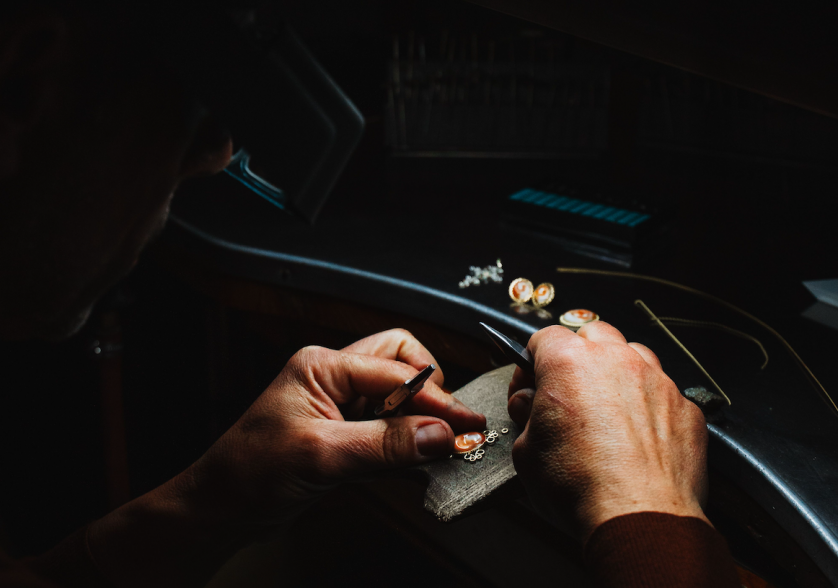
The Personalized Personal Monogram: Between Crest and Classic Letter
A name is inherited without any say in the matter.
A monogram, by contrast, is composed with a great deal of say in it.
This publication concerns what happens between those two facts.
It concerns the personalized personal monogram, and what it owes to both the crest and the classic letter.
The Art of Monograms
The Personalized Personal Monogram, Considered
Two words are doing a great deal of work in the phrase personalized personal monogram.
The first word promises a process; the second promises an outcome that belongs to one person alone.
Together they describe something narrower than an ordinary monogram, and considerably harder to produce.
A personal monogram, on its own, simply means a mark built from someone’s own initials.
A personalized personal monogram means that mark was built in direct response to that particular person’s history.
The distinction sounds academic until a client has experienced both approaches side by side.
One produces a set of initials rendered in a pleasant typeface.
The other produces something closer to a considered portrait, composed in letters rather than in paint.
This publication is concerned with the second kind, and with what makes it possible.
Two older traditions inform every personalized personal monogram produced at this atelier.
The first is the formal grammar of the crest, with its rules of hierarchy, restraint, and inherited meaning.
The second is the classic monogram, a quieter discipline concerned with proportion rather than heraldic law.
A crest speaks for a family, a house, or an institution across generations.
A classic monogram speaks for an individual, in a single unbroken line of typographic tradition.
A personalized personal monogram sits deliberately between the two, borrowing gravity from one and restraint from the other.
It does not claim the formal authority of a granted coat of arms.
It does claim something of the same seriousness, applied instead to a single living person.
Clients rarely arrive already able to describe this balance in these terms.
On the Word Personalized
Personalized does not mean decorated. It means composed in direct response to one particular life.
They arrive instead with an instinct that their initials deserve more consideration than a font selection.
That instinct is, in almost every case, entirely correct.
A generic monogram generator treats every name as an interchangeable input to the same system.
It cannot account for the specific weight a particular letter carries within a particular family history.
It cannot account for a client who has inherited a crest and now wants a personal companion to it.
A personalized personal monogram begins instead with a conversation, never with a template library.
The atelier asks what a name has already been asked to carry before drawing a single line.
Sometimes that history includes an existing family crest, formally granted or informally understood.
Sometimes it includes nothing more than a name and a wish to give it permanent form.
Both situations receive the same underlying rigor, adjusted only in the material the atelier has to work with.
What never changes is the requirement that the final mark feel inevitable rather than assembled.
That feeling of inevitability is the entire argument in favor of personalization as a discipline.
It cannot be manufactured through speed, and it cannot be faked through decoration.
It can only be earned through patient attention to one name, drawn by hand, tested at every scale.
This is the standard against which every personalized personal monogram at this atelier is measured before delivery.
Royal Traditions
A Living History of the Personal Mark
The personalized personal monogram did not begin in a design studio; it began on coins, seals, and cornerstones.
Ancient rulers pressed a single letter into metal long before anyone described the practice as identity design.
The letter was chosen because it could be recognized instantly, even by those who could not read at all.
Medieval Europe carried this instinct in two directions at once, and both still shape the discipline today.
One direction produced the crest, governed by a formal study of hierarchy, tincture, and precedent.
The other produced the private cipher, a personal mark with no obligation to any family beyond its owner.
A crest was, and remains, a collective symbol, granted under law and inherited by an entire house.
A personal cipher was, and remains, an individual symbol, chosen freely and answerable to no one else.
The personalized personal monogram descends from both lines, though it borrows more heavily from the second.
It takes from the crest a respect for hierarchy, proportion, and restraint under formal discipline.
It takes from the cipher its individual ownership, unattached to any wider claim of lineage or rank.
European courts refined the personal cipher into a formal visual grammar governed by proportion rather than whim.
Royal ciphers in particular were treated as instruments of governance, appearing on currency and state seals alike.
This heritage is the quiet foundation beneath every personalized personal monogram produced today.
Few clients arrive aware of this lineage, though nearly all recognize it once it has been explained.
The instinct to compress identity into a single mark is far older than any individual commission.
Each era refined the same underlying principle, that a personal mark can carry authority across generations.
A design unaware of this lineage tends to feel merely fashionable rather than genuinely founded.
A design composed with awareness of it tends to feel inevitable, as though arranged no other way.
This is precisely why the atelier studies precedent before beginning any new personalized commission.
History, treated this way, is not ornamental context; it is a working design tool.
It is worth dwelling briefly on the specific hurdles each era solved for the personal mark in turn.
Coin dies required forms that could be struck cleanly into metal without losing their essential definition.
This forced early artisans to think in bold, simplified geometry from the very beginning.
Manuscript illumination, by contrast, rewarded patience and permitted extraordinary intricacy across a static page.
Major collections such as a museum’s holdings of engraved silver and personal stationery still preserve marks belonging to monarchs and merchants alike.
The printing press later demanded forms that could be carved or cut with real precision.
A personalized personal monogram today inherits every one of these historical constraints, whether the client knows it or not.
A mark composed without awareness of them often repeats mistakes long since resolved by earlier craftsmen.
A mark composed with that awareness tends to feel settled from its very first presentation.
A Brief Chronology of the Personal Mark
AntiquityThe Struck LetterRulers and city-states pressed personal initials into coin and ceramic as instruments of recognition.
Medieval EuropeThe Crest and the CipherNoble houses formalized personal marks into heraldic law, while scribes wove initials into private correspondence.
RenaissanceThe Merchant’s MonogramTrading families adopted personal marks to authenticate goods and letters across unfamiliar routes.
Georgian & VictorianThe Domestic MonogramThe personal mark entered daily life, engraved onto silver and pressed into stationery.
Twentieth CenturyThe House LetterPersonal ciphers became the foundation of luxury house identity, translated from court to commerce.
Present DayThe Personalized CommissionThe personalized personal monogram now serves individuals directly, apart from any formal heraldic grant.
Legacy & Family Heritage
Where the Crest Ends and the Personal Mark Begins
A crest monogram and a personalized personal monogram are close relations, though they are not the same instrument.
A crest encodes lineage, governed by formal heraldic convention and precedent handed down across centuries.
Institutions such as the heraldic authority responsible for granting personal arms in England still formalize this tradition under long-established law.
A personalized personal monogram, by contrast, encodes an individual, though it may become a family’s inheritance over time.
The distinction matters less than the intention behind it, which remains consistent across both forms.
Both exist to answer the same quiet question, namely what will remain once the original owner is gone.
Clients who already carry a family crest often arrive for a different reason than clients who do not.
They are not seeking a replacement for the crest; they are seeking a personal companion to it.
A crest governs the whole family; a personalized personal monogram governs the correspondence, the signet ring, the private study.
The two marks are meant to coexist, each performing a role the other cannot.
This coexistence requires real discipline on the atelier’s part, since the two marks must never compete visually.
A personal monogram drawn without regard for an existing crest can clash with it badly in shared applications.
The atelier studies any existing crest closely before proposing a single letterform for the personal mark.
Sometimes the resulting personalized personal monogram borrows a tincture or proportion directly from the family crest.
More often, it borrows only a sensibility, a shared restraint that lets both marks sit comfortably together.
Clients without an existing crest face a different, though related, set of decisions.
Some wish to begin one, treating the personalized personal monogram as the first step toward a future family crest.
On the Crest Monogram
A crest monogram speaks for a house across generations; a personalized personal monogram speaks for one life within it.
Others wish only for a personal mark, with no ambition toward the formal heraldic tradition at all.
Both wishes are entirely legitimate, and the atelier approaches each with the same seriousness.
What must never happen is a personal mark that borrows the visual vocabulary of a crest without understanding it.
Charges, tinctures, and shields carry specific meaning within the heraldic tradition, whether or not a mark is formally granted.
A personalized personal monogram that uses this vocabulary carelessly risks appearing costume-like rather than considered.
This is why the atelier studies heraldic precedent even for commissions with no formal heraldic ambition at all.
The goal is never imitation of a crest; the goal is fluency in the grammar a crest is written in.
That fluency allows a personal mark to feel dignified without ever overstating its own authority.
A family that later decides to pursue a formal crest benefits enormously from this earlier discipline.
The personalized personal monogram, composed this way, becomes a foundation rather than an obstacle to what follows.
Families who commission this work rarely think only of the present occasion prompting the conversation.
They think, more often, of a grandchild encountering the same mark decades from now, without any context.
A monogram intended to function this way must be built with unusual restraint from its earliest sketch.
Trend-driven ornamentation dates a mark quickly, while considered proportion does not date at all.
A closer look at how a custom personal monogram is composed around a single name deepens this same argument from a related angle.
The Art of Monograms
The Discipline of the Classic Monogram
A classic monogram is not a style so much as a discipline, tested and refined across many centuries.
It draws its authority from proportion, not from the fashion of any particular decade.
This is precisely what allows a classic monogram to remain legible and dignified across an entire lifetime.
A personalized personal monogram borrows this discipline directly, applying it to one specific name rather than a general alphabet.
The word customization suggests choosing from a set of predetermined options.
A client selects a font, a color, and an arrangement, and the process ends there.
Personalization begins somewhere else entirely, with a conversation about a person’s history, temperament, and aspirations.
A personalized personal monogram considers the shape of a name before considering its style.
Some names are top-heavy, others are balanced, and each demands a different structural solution.
A generic monogram maker cannot account for this, because it does not know the name in advance.
It builds a system and asks every name to fit inside it, regardless of the fit.
The atelier’s approach reverses that order entirely, letting the name arrive first and the system be built around it.
This is slower, and it resists easy scale, but it is the only method that earns the word personalized.
The difference is subtle on the surface and profound underneath, once the two are compared directly.
One approach produces a label; the other produces something closer to an heirloom.
Consider how each method treats a name with unusual letter proportions or an uneven number of syllables.
A template system compresses or stretches that name until it fits a fixed grid.
A personalized process adjusts the grid until it honors the name instead, however unusual its shape.
On the Classic Monogram
A classic monogram draws on proportions established over centuries without ever feeling old-fashioned or dated.
This reversal sounds minor, but it changes almost everything about the outcome that follows from it.
It changes how the letters interlock, how the composition breathes, and how the eye ultimately reads it.
Clients rarely articulate this distinction in technical terms, and they do not need to.
They recognize it instinctively, the way one recognizes a well-tailored garment without naming the tailoring itself.
That instinct is a reliable guide, and the atelier trusts it as much as any formal rule.
A personalized personal monogram should pass this instinctive test before it passes any technical one.
If a mark requires justification to feel right, it likely is not yet finished.
This is why the atelier resists shortcuts, even when a faster method is readily available.
Speed and personalization are, in most cases, simply incompatible goals within the same commission.
A generic system optimizes for how many marks it can produce within a single day.
A personalized process optimizes for how long a single mark will remain meaningful once delivered.
These are fundamentally different goals, and they rarely produce comparable results in practice.
For clients seeking the most reduced expression of this discipline, a single custom initial monogram follows the same underlying rigor.
A classic monogram and a personalized personal monogram are not competing ideals within the atelier’s practice.
They are two expressions of the very same discipline, applied at different scales of composition.
Three Approaches to a Single Name
| Consideration | Classic Monogram | Crest Monogram | Generic Template |
|---|---|---|---|
| Origin | Centuries of typographic proportion | Formal heraldic grant and precedent | A preset applied to any name entered |
| Governs | One name, timelessly rendered | An entire family or house | Whichever name is typed into it |
| Authority | Earned through restraint | Earned through formal recognition | Assumed by the software, not earned |
| Longevity | Designed to remain legible for generations | Designed to remain legible for generations | Designed to be replaced within seasons |
| Exclusivity | Singular once personalized | Singular to one house | Available to any purchaser at any time |
Luxury Identity
Personalization as a Luxury Discipline
Luxury has often been mistaken for abundance, and that mistake shapes a great deal of ordinary design.
In truth, the most enduring luxury communicates through absence rather than excess.
A personalized personal monogram succeeds when it says less, not more, about the person it represents.
Every unnecessary flourish is an opportunity for the mark to age poorly within a decade.
This is the same philosophy that governs a well-considered bespoke commission of any kind at this atelier.
The discipline required to remove rather than add is often underestimated by first-time clients.
It is far easier to decorate a letterform than to simplify one down to its essential lines.
Clients sometimes arrive expecting elaborate detail and leave appreciating quiet precision instead.
This shift in expectation is, in many ways, the atelier’s most important service to any new client.
It teaches a client to recognize the difference between decoration and genuine distinction.
A personalized personal monogram, done correctly, requires very little explanation once it is complete.
It simply looks correct, the way a well-tailored garment simply fits without alteration.
That sense of rightness cannot be rushed, and it cannot be manufactured cheaply at any price point.
It is earned through careful proportion, patient revision, and disciplined restraint applied consistently.
The atelier often tells clients that the best compliment a mark can receive is silence.
No one should need to ask what it is, or why it looks the way it does.
On Restraint
The most convincing luxury signal is rarely more ornament, but rather the confidence to include only what is necessary.
It should simply register as correct, the way a well-proportioned room registers as calm without explanation.
This is a difficult standard to meet, and an even harder one to describe to a client in advance.
Clients rarely arrive already speaking this language, and that is entirely expected of them.
Part of the atelier’s role is helping a client recognize restraint when they finally see it on the page.
Once recognized, it becomes very difficult for a client to accept anything less considered again.
This shift in perception is, in many ways, the most valuable outcome of the entire process.
It changes how a client evaluates not only their mark, but many of their broader visual choices.
Luxury, understood this way, is less a category of object than a way of deciding what to keep.
A personalized personal monogram is simply one expression of that broader, quieter discipline.
This restraint applies equally whether the mark leans toward the crest tradition or the classic monogram tradition.
A crest overloaded with charges reads as insecure rather than distinguished, whatever its formal legitimacy.
A classic monogram overloaded with flourish reads as dated rather than timeless, however skillfully rendered.
The atelier resists both temptations equally, regardless of which tradition a particular commission leans toward.
The same restraint underlies every bespoke monogram commission produced within the atelier, whatever its eventual scale.
The Art of Monograms
The Anatomy of a Personalized Personal Monogram
Beneath the surface of any personalized personal monogram lies a set of principles rarely discussed outside the atelier.
These principles are not stylistic preferences; they are structural requirements for a mark meant to endure.
Letterform selection determines whether a mark feels timeless or merely fashionable within a narrow window.
Proportion determines whether a composition feels resolved or simply assembled from adjacent parts.
Negative space is treated as an active design element rather than empty background around the letters.
Hierarchy determines which letter carries the composition and which letters offer quiet support.
Interlace, the manner in which letters join one another, must be resolved through structural logic alone.
It cannot be applied decoratively, without regard for legibility across every intended application.
Scalability determines whether a mark performs equally well on a ring and on a building facade.
Each of these six elements is considered independently before they are ever combined into a single mark.
A mark that skips any one of these principles tends to fail quietly, over years, rather than immediately.
This is why the atelier treats all six as inseparable requirements rather than optional considerations.
A single initial offers less to hide behind than a pair of interlaced letters ever could.
There is no second letter to distract the eye from an imprecise curve or an uncertain weight.
A personalized personal monogram built from several initials must resolve this same exposure at greater complexity.
Every additional letter increases the number of relationships that must be individually considered and tested.
A skilled hand recognizes which letters carry natural authority and which must earn it through proportion.
Some names resolve almost effortlessly, and others resist every obvious treatment applied to them at first.
This resistance is not a failure of the name; it is simply a signal that more care is required.
The atelier treats a resistant name as an invitation to work more slowly, never as a reason to compromise.
When these six elements align, a personalized personal monogram becomes legible in a single glance.
That immediacy is the quiet signature of a mark that has been properly resolved from the outset.
A design unaware of these principles often repeats mistakes long since resolved by earlier craftsmen.
A design composed with awareness of them tends to feel settled from its very first presentation.
None of this discipline is visible in the finished artifact itself, yet all of it is felt over time.
A mark built without it may look identical to one built with it, at least initially upon delivery.
The difference reveals itself only with time, which is precisely why the discipline cannot be skipped.
This is the quiet standard against which every personalized personal monogram produced here is measured.
Six Structural Principles
LetterformTypographic choices are drawn from traditions deep enough to carry genuine authority.
ProportionThe dominant letter is weighted to anchor the composition without ever straining for attention.
Negative SpaceThe space within and around each letter is composed with the same intention as the letters.
HierarchyWhen multiple initials combine, one is permitted to lead without dominating its neighbors.
InterlaceThe manner in which letters join is often the single most defining decision in the mark.
ScalabilityA finished mark is tested from the scale of a signet ring to the scale of a facade.
Legacy & Family Heritage
The Question of Inheritance
A personalized personal monogram rarely stays confined to a single generation, whatever its original intention.
Children inherit initials, and often inherit the marks that were built around them by a parent.
This transition from individual mark to family symbol happens gradually, almost without anyone noticing it.
A mark built with enough restraint can absorb this shift without requiring any alteration at all.
One built around a passing trend cannot survive the same transition intact.
This is precisely why the atelier designs every personal mark as though it might one day be inherited.
Not every client intends this outcome consciously, though most, upon reflection, hope for it quietly.
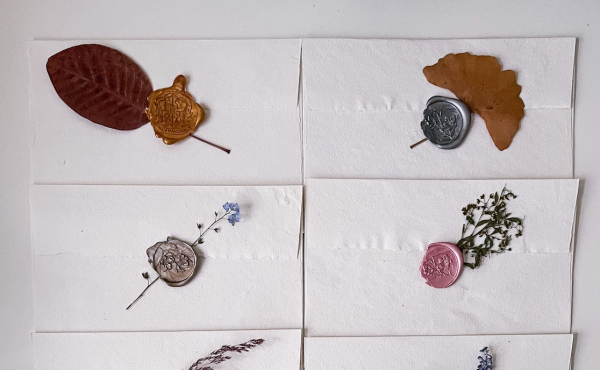
The process typically begins with a conversation about what a person actually wishes to preserve.
Sometimes it is a name threatened by the ordinary erosions of time, distance, or marriage.
Sometimes it is a set of values a person has long associated with their own name and standing.
Sometimes it is simply the wish to mark a particular moment worth remembering with formal weight.
Whatever the motivation, the resulting mark is built to be inherited rather than merely used for a season.
This means avoiding anything overly literal, anything that explains itself completely on first glance.
A truly enduring personal mark rewards a second look, and a third, across an entire lifetime of use.
It becomes, in time, something closer to a family crest in the fullest sense of the phrase.
Not because it claims noble descent, but because it behaves the way a crest always has, as a promise kept.
On Inheritance
A personal mark, carried well, tends to become a family’s own inheritance without ever being asked to.
Families who commission this work rarely think only of the present occasion prompting the conversation.
They think, more often, of a grandchild encountering the same mark decades from now, without context.
The first question most ask is almost always about what will happen to the mark several decades ahead.
Will it still feel dignified engraved on a great-grandchild’s signet ring, long after this conversation is forgotten.
Will it still feel appropriate on an invitation two generations removed from the one being planned today.
These are unusual questions for an ordinary design brief, yet they arrive constantly within this particular practice.
Answering them requires resisting anything that feels clever in the moment but shallow across a longer horizon.
A mark accepted too quickly has usually not been tested thoroughly enough against a family’s own story.
The strongest personal commissions tend to emerge from a small amount of productive friction, not an easy first answer.
This is slower than most clients initially expect, and considerably slower than many vendors would tolerate.
The atelier tolerates it gladly, because the resulting mark tends to earn a very different kind of loyalty.
A closer look at how a personalized monogram becomes an heirloom of identity traces this same idea from a related angle.
A family that has worked toward its mark values it more than one that received an easy answer immediately.
That effort, in retrospect, is almost always remembered fondly, once the finished mark has proven itself over time.
Royal Traditions
Royal Precedent and the Ceremonial Mark
No account of the personalized personal monogram is complete without acknowledging its royal and ceremonial origins.
European monarchs were among the first to formalize personal initials into instruments of governance.
A royal cipher appeared on currency, on state seals, and on the correspondence of an entire court.
These marks were never merely decorative; they functioned as legal and symbolic instruments of authority.
Institutions such as a royal collection preserving centuries of ceremonial regalia continue to document this history in remarkable detail.
Their archives reveal how carefully proportion, symmetry, and hierarchy were once governed by formal convention.
A royal cipher was rarely the work of a single hand; it was refined across successive reigns.
This iterative refinement is part of why these marks still feel authoritative many centuries later.
Contemporary commissions borrow directly from this discipline, even when the client is not a monarch at all.
The same principles of proportion and restraint apply equally to a family, a practice, or a private individual.
What differs is the scale of consequence, not the underlying rigor of the process itself.
A modern client does not require the historical weight of a crown to deserve this level of care.
They require only a name worth treating with the same seriousness a court once applied to its own.
This same grammar of restraint governs the personalized personal monogram commissioned for a milestone of any kind.
A single mark, chosen to represent one life, must carry warmth and authority in equal measure.
This is a delicate negotiation, more diplomatic in nature than strictly typographic in its demands.
European monarchies developed elaborate rules governing exactly how a cipher could be displayed and where.
Size, placement, and context were all dictated by protocol rather than personal preference alone.
This may sound restrictive, but it produced marks of extraordinary consistency and immediate clarity.
A viewer instantly understood what they were looking at, without requiring any further explanation.
Contemporary personalized personal monograms rarely operate under such formal protocol, and yet the lesson still holds.
A mark that changes meaning depending on context has failed at its most basic task.
Royal heraldry also demonstrates the enduring value of a limited, disciplined visual vocabulary.
Certain forms, colors, and arrangements were reserved for specific ranks and purposes across the court.
This scarcity is precisely what gave those marks their enduring authority across so many centuries.
A personalized personal monogram benefits from a similar discipline, even without formal rank standing behind it.
Restricting the visual vocabulary of a mark often strengthens rather than limits its overall impact.
There is a lesson here for any client tempted to add just one more decorative flourish.
The strongest historical marks nearly always resisted that particular temptation, whatever the era.
Their makers understood that restraint, not addition, was the harder and more valuable skill to practice.
The finest symbols are rarely created to follow trends. They are created to outlive them.
The Atelier Journal
Inside the Atelier: Composing a Personalized Personal Mark
Commissioning a personalized personal monogram is closer to a private consultation than to an ordinary transaction.
The process begins with conversation rather than with a questionnaire handed across a desk.
Family history, professional context, and personal preference are discussed before any sketching begins at all.
Only once that context is understood does the atelier begin exploring specific letterform directions.
Multiple design directions are typically developed before a single one is ever presented to the client.
Refinement continues until the mark performs correctly at every scale it is likely to encounter.
The final stage is not delivery alone, but guidance on how the mark should be applied consistently.
This structure exists to protect the client from a common risk, namely settling too quickly on the wrong direction.
Each stage exists to remove uncertainty before a client ever commits to a single final direction.
By the time delivery occurs, the outcome rarely feels like a surprise to the client receiving it.
It feels, instead, like confirmation of something the client already sensed was correct from the beginning.
The consultation matters more than most clients expect it to, going into the first conversation.
A personalized personal monogram is a portrait in miniature, and a portrait requires that its subject be understood.
The atelier wants to know how a name is spoken, how often, and what it is meant to convey.
These questions seem tangential until the moment they quietly determine the structure of the mark itself.
Clients are shown the reasoning behind each direction, not simply the final image presented at the end.
This transparency is intentional, since a commissioned mark should be understood, not merely accepted on faith.
A client who understands the reasoning trusts the outcome more than one handed a finished result cold.
That trust, once established, makes every subsequent revision easier for both sides of the conversation.
It also makes it considerably easier to say no to a direction that simply is not working yet.
Revision proceeds through careful, incremental adjustment rather than wholesale change from one draft to the next.
This measured pace allows small errors to be caught before they compound into larger, harder problems.
By the time a personalized personal monogram reaches final delivery, it has been tested extensively across contexts.
Nothing arrives at a client’s hands without having earned its place there through repeated scrutiny.
This is not a marketing claim; it is simply how the process has always worked within this atelier.
The Commissioning Process
01ConsultationA private conversation establishes history, context, and intention behind the commission.
02ResearchTypographic and, where relevant, heraldic references are gathered for the specific name involved.
03Structural DrawingThe dominant letter and supporting initials are drafted in raw, unrefined form.
04RefinementProportion, interlace, and negative space are resolved across several careful passes.
05Scale TestingThe mark is tested at multiple sizes and across every intended material.
06DeliveryThe finished personalized personal monogram is prepared for its intended applications.
The Atelier Journal
Craft in Numbers
A single personalized personal monogram typically explores several distinct design directions before one is finally chosen.
This range exists because the correct solution for a given name is rarely obvious immediately.
Multiple scales are tested for every finished mark, from ring-sized engraving to stationery-sized print.
A mark that only works at a single scale has not, in the fullest sense, been properly finished.
Most first-time clients assume the initial idea is the hard part, and refinement a mere formality afterward.
In practice, the opposite proves true, and the last small adjustments decide almost everything that matters.
This ratio is precisely inverted from how most people imagine the design process actually working.
The atelier has found, across many commissions, that the opposite is almost always true in practice.
On Measurement
Craftsmanship resists easy measurement, though certain figures still illuminate what a commission actually involves.
These figures describe restraint rather than scale, which is precisely the underlying point of the exercise.
A personalized personal monogram, like true luxury, is not measured by how frequently it changes over time.
It is measured, instead, by how rarely it ever needs to change at all once delivered.
The interlace variations considered during exploration rarely survive into the finished mark in more than one form.
Most are set aside quietly, not because they fail, but because a stronger option is eventually found.
This process of elimination is largely invisible to the client, though its absence would be immediately obvious.
A client sees only the final resolution, which is precisely the intended outcome of the entire exercise.
What a Single Commission Involves
3–5Design directions explored per commission
40+Interlace variations typically considered
100+Years a well-proportioned mark can remain legible on silver
1Mark, built once, intended to serve a generation or longer
Luxury Identity
Where a Personalized Personal Monogram Lives
A finished personalized personal monogram is expected to perform across a wide range of contexts and materials.
It may appear on personal stationery one day and on a small leather case the very next.
It may be engraved into silver, embossed into leather, or rendered as a small digital favicon.
Each of these contexts places different demands on legibility, weight, and overall proportion.
A mark that only works at one scale has not yet been fully resolved by its designer.
The atelier tests every commission across the applications most relevant to a given client’s actual life.
This testing phase is rarely visible to the client, though its absence would be immediately obvious.
A mark that blurs at small sizes or feels sparse at large ones has failed a basic requirement.
Basic requirements of this kind are non-negotiable, regardless of how elegant a design appears on a single screen.
Some clients require only a handful of applications; others require dozens across an entire household.
A private individual may need the mark only for stationery and a small collection of personal objects.
A family may need it across correspondence, gifts, and a lasting record of household identity.
Both cases receive the same underlying rigor, adjusted only in scope rather than in underlying standard.
Scale introduces a related set of considerations that cannot be resolved through assumption alone.
A mark that reads clearly at signet-ring size must still read clearly at a larger, framed scale.
This range, from smallest to largest application, is deliberately tested rather than simply assumed to work.
On Materials
The right material does not merely display a personal mark; it participates in how the mark ages and is remembered.
Assumptions are where templated design typically fails, since a template is rarely tested beyond its original context.
A commissioned mark, by contrast, is stress-tested against every application a client is likely to require.
This attentiveness to material and scale separates a graphic exercise from a genuine, lasting identity.
It is a slower way of working, and the atelier makes no apology whatsoever for that pace.
Consider how differently a single mark behaves across just two applications most clients request together.
A personalized personal monogram for correspondence must read warmly, often alongside restrained typography and quiet color.
The same mark, engraved later onto a signet ring, must read with far more authority and less delicacy.
Reconciling these two moods within a single coherent design is a genuinely difficult problem to solve well.
It is solved not through compromise, but by identifying which elements of the mark are load-bearing.
Certain proportions and interlace decisions must remain fixed across every application for the mark to feel consistent.
Other elements, such as weight or a supporting flourish, can flex depending on the surface involved.
Knowing which is which requires the kind of experience that cannot be shortcut by software alone.
This is, again, where a personalized process distinguishes itself most clearly from an automated alternative.
Silver deepens, leather softens, and paper yellows, and a well-composed mark accommodates all three with grace.
Luxury Identity
The Measure of Restraint
Luxury, properly understood, has very little to do with ornamentation for its own sake.
It has a great deal to do with discretion, precision, and quiet confidence in a design’s own presence.
A personalized personal monogram embodies this principle more directly than almost any other object a client commissions.

It does not need to shout, because its owner already knows exactly what the mark represents.
This is the quality that separates genuinely luxurious design from design that is merely expensive.
The proportions above reflect how deliberately each stage of a commission is weighted in actual practice.
Refinement consistently consumes the largest share of total effort, which surprises most first-time clients.
They assume the initial idea is the hard part, and the refinement a mere formality afterward.
In practice, the opposite is true, and the last small adjustments decide everything that matters most.
The most successful marks are read in a single visual moment, without the eye laboring to decipher them.
This immediacy is the result of a careful resolution between richness and clarity, never an accident of taste.
A viewer’s eye can hold only so much information in a single glance before it stops reading as a mark.
Every proposed addition to a composition is tested against a simple question before it is ever accepted.
Does this addition earn its place, or does it merely fill space that could otherwise breathe freely.
This question applies equally to a personalized personal monogram leaning toward crest gravity or classic restraint.
A crest-adjacent mark risks accumulating charges that add complexity without adding meaning.
A classic-leaning mark risks accumulating flourish that adds decoration without adding character.
The atelier applies the same testing question to both tendencies, without favoring either by default.
How a Single Commission Is Weighted
Consultation & Listening — 20%
Letterform Exploration — 25%
Refinement & Testing — 40%
Final Delivery & Handoff — 15%