
The Luxury Cipher Monogram: A Private Language for Two Names
The Luxury Cipher Monogram: A Private Language for Two Names
Two initials, composed once and composed correctly, can outlast almost everything else a pairing owns.
A luxury cipher monogram exists to prove that claim, quietly and without apology.
This is an editorial account of a discipline considerably older than the phrase personal branding.
It concerns what a luxury cipher monogram asks of its maker, and of the two people it represents.
THE ART OF MONOGRAMS
The Luxury Cipher Monogram, Considered
A luxury cipher monogram begins where a single initial ends and a shared story begins.
Two letters, drawn once and drawn correctly, can hold more meaning than either ever could alone.
This is not a monogram halved, nor a shorthand version of a fuller family crest.
It is a distinct form, reserved for the moment two identities agree to share one mark.
The word luxury is not applied here as a marketing flourish or a price signal.
It describes a specific standard, letters studied, weighed, and composed for two people alone.
A luxury cipher monogram is judged less by its first appearance than by its hundredth encounter.
A generic pairing tool applies identical treatment to any two initials entered into its field.
A luxury cipher monogram begins instead with a private conversation about the two people it represents.
Their names are considered individually before any attempt is made to join them into one form.
Some letter pairs settle into balance with almost no resistance from the very first sketch.
Others require considerable patience, and several discarded attempts, before the correct proportion reveals itself.
A trained hand recognizes which letters wish to be joined and which merely tolerate the arrangement.
Clients rarely arrive able to articulate this distinction before their first real conversation with the atelier.
This is the same discipline every personalized cipher commission begins with, long before a single line is drawn.
Every decision that follows, from letterform to spacing, is made in service of that specific pairing.
This is what separates a luxury cipher monogram from an ordinary arrangement of the same two letters.
Consider how rarely a modern purchase is expected to remain unchanged for fifty years or longer.
Wardrobes are refreshed, residences are renovated, and even signatures drift gradually across a lifetime of use.
A luxury cipher monogram, by contrast, is one of the few objects still expected to resist that turnover.
None of this discipline is visible in the finished mark, yet all of it is felt for years afterward.
There is also a question of timing that most couples do not consider until it is raised for them.
A cipher commissioned too early, before either name feels settled, tends to feel provisional rather than resolved.
A cipher commissioned with the right patience tends to feel inevitable from the very first presentation.
Two names, properly rendered together, are closer to an heirloom than to an asset that depreciates on schedule.
That is the premise from which every luxury cipher monogram at this atelier begins its very first sketch.
A cipher is, in a sense, the smallest possible unit of shared identity a household can commission.
Nothing about its scale diminishes the seriousness with which it should be approached.
If anything, the opposite is true, since a smaller composition leaves nowhere for an imprecise decision to hide.
Two letters cannot rely on additional ornament to distract from an unresolved proportion.
They must simply be correct, in relation to one another, from the very first presentation.
This is a discipline closer to portraiture than to ordinary graphic design.
A portrait succeeds or fails on the strength of a handful of essential decisions, rarely on abundance of detail.
A luxury cipher monogram succeeds or fails on precisely the same narrow set of terms.
Clients sometimes arrive expecting the process to move quickly, given how few letters are actually involved.
They tend to leave with a considerably deeper appreciation for how much judgment two letters can require.
That shift in expectation is, in its own quiet way, part of what the commission delivers.
LEGACY & FAMILY HERITAGE
The Origins of the Cipher Tradition
Every alphabet, every symbol, every emblem began as an image long before it became a form of writing.
The earliest interlaced initials were stamped into wax, engraved into rings, or pressed into clay.
A single combined mark served as proof of identity in a world where few documents carried a full signature.
Merchants sealed their letters, artisans marked their tools, and couples marked the objects that mattered most.
A luxury cipher monogram descends directly from this instinct, refined over centuries into deliberate craft.
It was never meant to explain itself in words placed alongside it.
It was meant to be recognized the way a familiar hand is recognized, before a single word is read.
Scholars of European ornament trace the earliest interlaced ciphers to manuscript traditions, where a single mark anchored a page.
Those illuminated initials were never incidental additions to the text they introduced.
They were considered worthy of as much craftsmanship as the words surrounding them.
A bespoke atelier today inherits that same philosophy when developing a cipher from two individual histories.
The cipher is rarely an afterthought applied once every other decision has already been settled.
It is often the very first decision made, the seed from which a shared identity eventually grows.
What separates a true luxury cipher monogram from a simple arrangement of letters is intention, sustained at every stage.
Every element, from the angle of a single stroke to the negative space surrounding it, is weighed with care.
History, treated this way, functions as a working design tool rather than as decorative background context.
A cipher composed without this awareness often repeats mistakes long since resolved by earlier craftsmen.
A cipher composed with it tends to feel settled from its very first presentation to a client.
This is why the atelier studies precedent as closely as it studies a pairing’s own personal history before any sketching begins.
It is worth pausing on why the interlaced form endured when so many other decorative conventions did not.
A monogram, unlike an ordinary decoration, was never separable from the person it represented.
Fashion could change around it without requiring the mark itself to change in response.
This independence from passing style is precisely what gave the form its long institutional life.
A seal cut once could serve a merchant house for an entire working lifetime without revision.
That same expectation of permanence carries directly into how a cipher is approached today.
The tools have changed considerably since wax and clay, but the underlying discipline has not.
A designer today still asks the same question a medieval craftsman once asked of a seal.
Will this mark still mean what it is meant to mean, once the moment that inspired it has passed.
That question, more than any single technique, is the true inheritance of the cipher tradition.
A Brief Chronology of the Cipher
Antiquity
The First Combined Marks
Craftsmen and rulers intertwine initials on coins, seals, and ceramics as proof of authorship.
Medieval Europe
The Personal Seal
Individuals press interlaced initials into wax alongside a household’s arms, joining letter to lineage.
Renaissance
The Merchant’s Cipher
Trading houses adopt interlaced initials to authenticate correspondence traveling unfamiliar routes.
18th Century
Formal Convention
Proportion and letterform become codified across European courts and academies.
19th Century
The Household Fixture
The cipher becomes a fixture of silver, linen, and stationery among established families.
Present Day
The Commissioned Cipher
A luxury cipher monogram continues as a deliberate expression of a shared, chosen identity.
ROYAL TRADITIONS
The Royal Precedent for the Cipher
No institution in European history applied the interlaced initial with more discipline than the royal houses of the continent.
A sovereign’s cipher, formed from initials joined in careful balance, served simultaneously as signature, seal, and declaration.
It appeared on state documents, on regimental colors, and on gates few were ever permitted to approach.
The royal cipher was never intended as ornament alone.
It functioned as an instrument of recognition, legible across a kingdom without a single word of explanation.
An archive maintained by one of the world’s most storied royal collections documents this discipline in extraordinary detail, preserving centuries of precedent on how a personal cipher should be composed.
What is striking about these historical marks is how rarely they relied on excess to communicate importance.
Grandeur, in the finest historical examples, was achieved through proportion rather than accumulation.
The interlaced initials found on royal linens, porcelain, and stationery followed strict conventions of scale, weight, and placement.
Those conventions were never arbitrary.
They ensured a personal cipher remained legible and dignified whether viewed on a ring seal or across a ceremonial gate.
A bespoke atelier drawing on this tradition inherits more than an aesthetic preference.
It inherits a discipline, the understanding that a luxury cipher monogram must be built to last, never simply to please.
A royal cipher was never designed for a single audience alone.
It had to remain dignified whether examined up close on a document or observed from a distance on a facade.
That dual requirement, intimacy and grandeur achieved through the same restrained form, remains the central challenge today.
A private client rarely requires anything so elaborate as a full royal cipher, but the underlying discipline still applies in full.
Royal ciphers also demonstrate remarkable restraint in their use of color and material across an entire reign.
A small, fixed palette, used consistently, reads as far more authoritative than a wide and varied one ever could.
A royal cipher was rarely designed to be impressive; it was designed to be correct, a considerably higher standard.
It is tempting to assume this discipline belongs only to a monarch, distant from any private commission.
The temptation is understandable, though it misreads what actually made these marks endure.
Correctness, not rank, is what allowed a royal cipher to remain legible across an entire reign.
That same correctness is available to any pairing willing to commission the work with equal seriousness.
A private cipher does not inherit a monarch’s authority, but it can inherit a monarch’s discipline.
Discipline, unlike rank, has never required formal permission to be adopted by anyone willing to practice it.
This is precisely why royal precedent remains a living reference for private commissions today.
It is studied not to imitate grandeur, but to understand restraint applied under real historical consequence.
A cipher struck once into state silver could not be quietly revised the following season.
That permanence forced an unusual seriousness into decisions many contemporary designers now make in haste.
A small, fixed palette, used consistently, reads as far more authoritative than a wide and varied one ever could.
The finest ciphers were never designed to be impressive. They were designed to be correct — a considerably higher standard.
THE ART OF MONOGRAMS
Cipher, Classic Monogram, or Crest: Choosing the Right Mark
Clients new to bespoke identity design often ask which form of mark actually suits their occasion.
A luxury cipher monogram, a classic monogram, and a family crest each serve a distinct purpose, and confusing them weakens the result.
A classic monogram is typically built from a single set of interlaced initials and speaks most naturally to one individual.
A cipher, by contrast, is composed specifically to hold two sets of initials in deliberate, lasting balance.
A personalized personal monogram occupies this same territory from a single name, before a second initial ever enters the composition.
A family crest sits at a further remove still, built from pictorial charges rather than letterforms alone.
Many clients ultimately commission more than one mark, allowing each to serve its intended purpose rather than asking one design to do everything.
A couple often pairs their cipher with a luxury duogram reserved specifically for the engagement season itself.
The distinction matters because each mark carries different expectations regarding permanence and intended audience.
A luxury cipher monogram can be lighter in spirit than a full crest, since it speaks to two people rather than an entire lineage.
It sits comfortably between the immediacy of a single monogram and the institutional weight of a family crest.
Understanding these distinctions before beginning a commission prevents a client from asking one mark to perform work better suited to another.
Clients occasionally worry that choosing a cipher over a simpler monogram somehow overstates their own occasion.
This worry rarely survives the first real conversation about what the mark is actually meant to represent.
A cipher is not a claim to grandeur; it is simply a considered record of two names joined by choice.
Anyone willing to commission the work properly, and with patience, can hold a mark built with genuine rigor.
The confusion between these three forms is understandable, since all three share a common typographic root.
Each begins with letters, and each ends with a mark meant to represent something larger than the letters alone.
What differs, in every case, is scope, the size of the story each form is actually asked to carry.
A classic monogram carries the story of one life, considered on its own terms.
A cipher carries the story of two lives, chosen to be represented together.
A family crest carries the story of a lineage, extended forward and backward across many lives at once.
None of these scopes is inherently superior to the others; each simply answers a different question.
The error most often made is asking a smaller form to carry a weight it was never built for.
A single cipher asked to represent an entire family history will eventually feel strained under that weight.
A family crest commissioned for a single relationship will often feel oversized for the occasion it serves.
Matching the form to the actual scope of the story is the first real decision any commission requires.
A cipher is not a claim to grandeur; it is simply a considered record of two names joined by choice.
Three Related Forms, Considered Side by Side
| Mark | Represents | Typical Use |
|---|---|---|
| Luxury Cipher Monogram | Two initials joined by choice, celebration, or union | Stationery, linens, invitation suites |
| Classic Monogram | A single individual, rendered with quiet precision | Correspondence, luggage, personal accessories |
| Family Crest | An entire lineage, expressed through pictorial charges | Architecture, heirlooms, formal documents |
LUXURY IDENTITY
The Cipher as an Instrument of Luxury Identity
Luxury has always relied on symbols that communicate more than they state outright.
A luxury cipher monogram is among the most efficient of these symbols, precisely because it requires no explanation.
A single well-composed cipher can suggest craftsmanship, occasion, and personal standing without a solitary word of justification.
This is precisely why the finest houses have historically relied on interlaced marks rather than lengthy names.
The same underlying philosophy governing a bespoke monogram extends naturally into the design of a cipher intended for daily or ceremonial use.
A cipher embossed onto formal stationery performs a function similar to a house mark maintained across centuries.
It signals that the object, and the pairing behind it, were considered rather than assembled in haste.
This distinction matters enormously to a particular kind of client.
They are not seeking to display wealth outright, nor are they interested in symbols that perform that function loudly.
They are seeking to display consideration, the sense that every mark bearing their initials was chosen with genuine intention.
A luxury cipher monogram achieves this more elegantly than almost any other design element currently available.
It does not shout.
It simply confirms, quietly and permanently, that the pairing behind it cared enough to have their identity rendered properly.
This philosophy extends naturally into contemporary professional life, where a cipher increasingly appears alongside traditional applications.
A well-composed cipher can accompany a household from its earliest correspondence to its most significant milestones without reconsideration.
That kind of longevity is rare in design, and it is precisely what elevates a cipher from decoration to instrument.
A private commission also carries a freedom that a mass-market alternative simply cannot offer to any single buyer.
Every decision can be made in service of one pairing alone, rather than a wide and anonymous audience of purchasers.
A brand that relies on excess is rarely mistaken for one built to last across changing seasons.
A mark built on a single, well-resolved cipher communicates the opposite quality, namely quiet certainty.
Luxury, in this narrower sense, has never been primarily about material cost.
It has always been about the degree of consideration applied to a decision most people never examine closely.
A cipher is one of the few objects where that consideration remains entirely visible to a trained eye.
Proportion cannot be faked convincingly, even by an otherwise well-produced object.
A viewer may not be able to name what feels slightly wrong about a poorly balanced mark.
They will nonetheless sense it, in the same way an untrained ear still notices an instrument slightly out of tune.
This is why the atelier treats every cipher as a standalone composition rather than a variation on a template.
A composition, unlike a variation, must justify every one of its own decisions independently.
That independence is what ultimately separates a luxury cipher monogram from its many imitators.
A cipher does not need to announce success to strangers; it simply preserves a standard already set.
Where the Cipher Sits Among Its Neighbors
Luxury Cipher
Two initials joined in lasting, considered balance.
Classic Monogram
A single identity, rendered with quiet precision.
Wedding Cipher
A union marked with formal, enduring restraint.
Professional Identity
A shared standard extended into daily correspondence.
THE ATELIER JOURNAL
The Anatomy of a Luxury Cipher Monogram
A luxury cipher monogram is built from a limited set of decisions, and each one carries disproportionate weight.
The first is configuration, which determines whether the initials interlock, stack, or present in careful sequence.
The second is hierarchy, the question of which letter, if any, is permitted to lead the composition.
The third is weight, the consistency of line that unifies two letterforms into a single considered mark.
Each of these decisions reflects the character of the pairing being represented, not a passing aesthetic preference.
A pairing devoted to quiet permanence will typically favor fewer flourishes, arranged with considerable restraint.
A pairing shaped by celebration or public occasion may support a slightly more ornamental composition without tipping into excess.
Understanding this distinction is essential to designing a cipher that will still feel appropriate decades from now.
A cipher is finished not when nothing more could be added, but when nothing more could be removed without loss.
This is why the process typically begins with extended conversation rather than a folder of pre-made letter pairings.
A couple’s own history contains more useful design information than any mood board could ever provide.
The atelier’s task is to listen for the detail a client may not yet recognize as significant.
A grandparent’s handwriting, a favorite proportion, or a half-remembered family initial can all inform the final composition.
None of these details dictate the outcome directly, but each contributes to a mark that belongs to this pairing alone.
That specificity is precisely what separates a commissioned cipher from an arrangement of letters selected at random.
Configuration, hierarchy, and weight rarely resolve themselves in a single sitting, however experienced the hand involved.
Most directions explored during this stage are eventually set aside, and setting them aside is not wasted effort.
Each discarded treatment teaches something about what the pairing refuses to become, which narrows the truth considerably.
By the time a direction is presented, it has already survived every quiet objection the atelier could raise against it.
What remains is rarely the cleverest option that was drawn during exploration.
It is, instead, the option that simply stopped asking to be revised any further.
This distinction matters more than most first-time clients initially expect it to.
A clever solution photographs well in a single presentation but rarely survives sustained, everyday use.
A resolved solution may look quieter at first glance, yet it is the one that ages the most gracefully.
How a Luxury Cipher Monogram Is Composed
01
Discovery
An extended conversation establishes the pairing’s history, values, and long-term intentions.
↓
02
Research
Typographic and heraldic precedent relevant to the two names is studied in depth.
↓
03
Composition
Early concepts explore configuration, hierarchy, and weight before a single direction is chosen.
↓
04
Refinement
The favored direction is tested at every scale the pairing is likely to require.
↓
05
Delivery
A complete cipher is prepared for stationery, engraving, and personal application.
BESPOKE WEDDINGS
The Cipher at Life’s Threshold Moments
A wedding remains one of the more meaningful occasions for commissioning a luxury cipher monogram.
Two lives reach a threshold, and the resulting mark is meant to carry that recognition forward.
Many couples choose to commission their cipher well before the wedding itself, treating it as a foundational decision.
Others prefer to wait until after the occasion, once its meaning has become clearer with time.
Either approach is valid, provided the decision is made with genuine intention rather than convenience.
A cipher introduced at this stage becomes a unifying thread across every subsequent milestone a household will mark.
It appears on correspondence marking an anniversary, on a gift marking a birth, and eventually on objects passed to those who come after.
Neither partner’s initials should visually dominate the other, regardless of how the composition is ultimately divided.
Achieving this balance requires careful attention to how each letter is weighted within the shared field.
Many couples assume their cipher will only ever appear on wedding stationery.
In practice, a well-designed luxury cipher monogram tends to accompany a household for decades, appearing on correspondence and heirlooms alike.
This long horizon is why the atelier discourages overly trend-driven choices, even when a couple is drawn to a current style.
A mark chosen to feel current at the moment of a wedding often feels dated within a single decade.
A mark chosen for enduring proportion tends to feel just as appropriate at a fiftieth anniversary as it did on the day itself.
Etiquette has long held that a shared surname initial should wait until vows are actually exchanged.
A cipher built from first initials alone claims nothing that has not already been earned by the couple.
This restraint is why the form has always moved so gracefully through an engagement season specifically.
After the ceremony, a household’s fuller monogram often grows directly from that first considered pairing.
The cipher, the classic monogram, and the eventual family crest are chapters of one continuing story.
Each respects the moment it was made for, and none pretends to be the chapter that follows it.
Guests notice a coherent visual identity even when they cannot name precisely what creates the coherence.
A luxury cipher monogram, applied with restraint across a celebration, is often exactly what is doing that quiet work.
Few decorative decisions made during an engagement season are still visible fifty years later; this one routinely is.
“I commissioned our cipher the year we married, and what arrived felt less like a new design and more like something we had simply been waiting to recognize.”
E. Marchetti · Private Client
“The process asked us questions about our own story we had never quite put into words before, and the finished mark answered every one of them.”
Dr. N. Okafor & R. Okafor · Private Clients
LEGACY & FAMILY HERITAGE
The Cipher as a Considered Inheritance
A luxury cipher monogram is rarely designed with only the present occasion in mind.
The best examples are built to be inherited, which means they must avoid anything overly specific to a single decade’s taste.
This requirement shapes nearly every decision an atelier makes when developing a household’s primary mark.
Trend-driven flourish is set aside in favor of proportions and forms that have already proven their staying power.
Clients who have built their standing across a career, particularly in law, medicine, or finance, often understand this principle instinctively.
They have already watched other assets appreciate or depreciate depending on how well they were built to last.
A luxury cipher monogram is no different.
One designed with genuine restraint will still feel correct decades after fashions in ornament have shifted several times over.
This is why a cipher and a classic monogram are so often developed in tandem, each serving a distinct but complementary purpose.
The cipher anchors a household’s shared story, while an individual monogram allows daily correspondence to carry a lighter, more immediate variation.
For households that already carry a formally granted coat of arms, the heraldic authority responsible for granting personal arms in England remains the authority of record, quite apart from any private commission.
A private cipher operates outside that formal system, yet it borrows the same underlying discipline of accountability.
Choosing between the cipher and the classic monogram rarely produces a poor design outright.
It more often produces a design quietly asked to do work it was never actually built for.
A couple beginning this process for the first time is encouraged to think less about how the cipher will look and more about what it must continue to mean.
That single shift in perspective, from appearance to meaning, tends to produce the most enduring results across every commission the atelier undertakes.
Children inherit initials, and often inherit the marks that were built around them by a parent.
This transition from private mark to family symbol happens gradually, almost without anyone noticing it occur.
A mark built with enough restraint can absorb this shift without requiring any alteration at all.
One built around a passing trend cannot survive the same transition intact.
This is precisely why the atelier designs every cipher as though it might one day be inherited.
Not every client intends this outcome consciously, though most, upon reflection, hope for it quietly.
Introducing the cipher’s meaning to children early, rather than simply displaying it, helps ensure genuine inheritance.
A child who understands why a particular configuration was chosen treats the mark very differently than one who has not.
This pairing of narrative and symbol tends to produce the most durable result of all.
A cipher is not designed for the couple who commissions it. It is designed for the grandchildren who will one day inherit it.
Craft in Numbers
100+
Years a well-built cipher may remain in use
5
Core material contexts tested per commission
3–6
Distinct visual directions typically explored
1
Shared identity, carried across an entire household
ROYAL TRADITIONS
Heraldry and the Grammar Beneath the Cipher
Heraldry developed its own strict grammar centuries before typography existed as a formal discipline in its own right.
Every element of a composed mark, from weight to placement to hierarchy, once carried specific meaning within a governed system.
A luxury cipher monogram borrows from this grammar even when its final form appears far simpler than a full coat of arms.
Balance, hierarchy, and proportion all originate from this same heraldic convention.
A cipher built around two letters of equal weight often follows a balance long used in formal armorial design.
This convention persists today across most considered personal marks developed for American clients.
An institution devoted to the formal study of this visual grammar continues to document these conventions with remarkable precision, offering a record of symbols governed by rule rather than whim.
That record remains a valuable reference for any atelier committed to historical accuracy rather than invented tradition.
It is easy to design a mark that merely looks attractive.
It is considerably more difficult to design a mark that honors the grammar it has inherited.
This is the difference between a luxury cipher monogram that feels timeless and one that feels merely fashionable.
The former draws on centuries of established convention.
The latter draws only on the preferences of the present moment, which rarely age well.
A well-trained eye can often identify a cipher’s era simply by how loosely or strictly it follows heraldic grammar.
The most enduring designs tend to sit closer to the disciplined end of that spectrum.
This does not mean a contemporary cipher cannot feel genuinely fresh.
It means that any freshness must be achieved within the grammar, through proportion and craftsmanship, rather than by abandoning it.
A cipher that ignores this grammar entirely rarely reads as innovative; more often, it simply reads as unfinished.
A client who understands this history tends to make better decisions during their own commission, even when the final design departs from historical precedent.
Knowing the rules, in other words, is what makes breaking them thoughtfully possible in the first place.
This grammar traveled well beyond any single court, adopted with regional variation across the European continent.
Some traditions favored cleaner, more geometric letterforms suited to a particular regional sensibility.
Others leaned toward denser compositions, layering ornament to record an especially long or complicated history.
What remained constant across every regional variation was the underlying seriousness of the exercise itself.
A cipher was never treated as casual decoration in any of these traditions, regardless of local style.
A cipher composed today still answers to that same underlying seriousness, whatever the client’s own background.
Nothing about the discipline scales down for a smaller commission, nor does it scale up for a grander one.
It simply remains constant, since correctness is not a quality that can be rationed according to occasion.
A cipher composed without awareness of its grammar often repeats mistakes long since resolved by earlier craftsmen.
THE ATELIER JOURNAL
Materials, Scale, and the Discipline of Craftsmanship
A luxury cipher monogram does not exist in isolation; it exists as a mark applied to material.
The intelligence of its design must account for every surface it will inhabit.
This is not a secondary consideration within the process; it is, in many respects, the most demanding aspect of the commission.
A composition that reads beautifully in ink on cream stationery may lose definition entirely when embroidered onto linen.
A design with subtle hairline detail may disappear when translated into a single-color engraving or a compressed digital format.
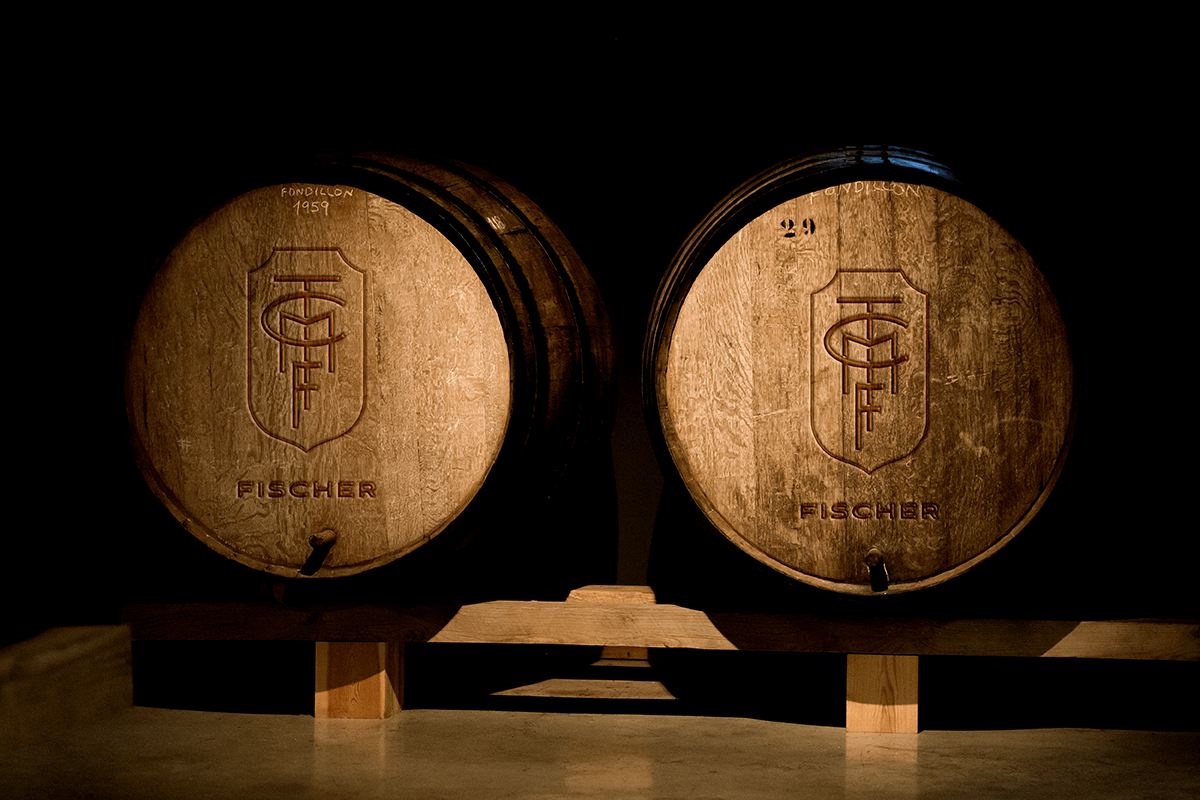
These are not problems that can be resolved after the fact; they must be anticipated from the very first sketch.
On paper, whether correspondence stock or heavier invitation sheets, the cipher must perform with genuine typographic precision.
On silver and other metals, engraved onto flatware or a signet ring, it must hold its integrity at the smallest scales.
On fabric, embroidered onto linen or a napkin, it must simplify sufficiently while retaining its essential character.
A luxury cipher monogram that satisfies each of these material tests was designed by someone who understood the full system from the outset.
Nothing about this discipline can be improvised once the commission has already begun.
A composition intended for personal stationery must read warmly, often alongside softer supporting typography.
The same cipher, engraved later onto silver, must read with far more authority and considerably less delicacy.
Reconciling these two moods within one coherent design is a genuinely difficult problem to solve well.
It is solved not through compromise, but by identifying which elements of the cipher are load-bearing across every context.
Certain proportions and stroke widths must remain fixed across every application for the mark to feel consistent.
Other elements, such as flourish or supporting ornament, can flex depending on the surface involved.
Knowing which is which requires the kind of experience that cannot be shortcut by software alone.
A finished cipher is expected to perform across a far wider range of contexts than most clients initially expect.
Some clients require only a handful of applications; others require dozens across an entire household’s correspondence.
A mark that only works at one scale has not, in the fullest sense, been properly finished.
This is why the atelier tests every direction well beyond the size at which it is first presented.
A composition that looks effortless at first glance has usually been quietly revised a dozen times before delivery.
None of that revision is visible in the final mark, which is precisely the intended effect of the process.
A mark that only works at one scale has not, in the fullest sense, been properly finished.
LUXURY IDENTITY
What Enduring Houses Understand About the Cipher
The world’s most respected luxury houses were, in nearly every case, founded around a single considered mark.
Long before they became recognized names, their identities functioned exactly like a luxury cipher monogram.
A founder’s chosen initials, applied with total consistency, became the visual anchor for everything the house would later produce.
What separates these identities from a passing trend is the discipline with which they were maintained.
A house that changes its mark with every season eventually loses the very trust that mark was meant to signal.
A house that protects its original identity for a century earns something no advertising expenditure can purchase, quiet inherited credibility.
Clients commissioning a luxury cipher monogram are, in effect, applying the same principle at a private scale.
The mark is not meant to announce success to strangers.
It is meant to preserve a standard the pairing has already set for themselves.
The decorative arts collections held within one of the world’s great encyclopedic museums preserve extraordinary examples of interlaced initials belonging to couples and courts alike.
Viewing this history, even through scholarly documentation alone, offers a genuine education in restraint applied at the highest level of craft.
A house that treats its own mark carelessly forfeits the very permanence that made the mark worth having in the first place.
Consistency, not novelty, is what earns any mark, private or commercial, the right to be remembered decades after it was first composed.
This lesson applies just as directly to a household as it does to a centuries-old maison.
A pairing that treats their own cipher with the same discipline a great house treats its mark will find that discipline growing more meaningful with each passing year.
Studying centuries-old engraved initials teaches proportion in a way no modern template can replicate.
A minimalist cipher and an ornate one still share the same underlying rules of proportion beneath the surface.
Only the surface vocabulary changes; the architecture beneath it remains entirely constant across both approaches.
Silver deepens, leather softens, and paper yellows, and a well-composed mark accommodates all three with grace.
A mark that tries too hard to impress usually succeeds only in dating itself quickly.
Confidence, in visual terms, looks remarkably like silence once it has been properly resolved.
The atelier considers that trade settled, and it has never once regretted the terms of the exchange.
Nothing about this philosophy is fashionable, which is exactly why it continues to work.
“I have worked with design studios across three continents, and this commission produced the most considered piece of personal identity work I have ever received.”
R. Voss · Luxury Brand Commission
THE ATELIER JOURNAL
Voices of Distinction
The most telling measure of any atelier’s work is not the portfolio it displays.
It is the experience it creates for those who commission it.
A luxury cipher monogram is, by nature, a deeply personal undertaking.
The process of arriving at one should feel like a genuine collaboration from the first conversation to the final delivery.
Names have been abbreviated throughout, to preserve the privacy each client is rightfully owed.
What recurs across these accounts, again and again, is relief rather than excitement.
Excitement tends to fade within a season; relief tends to persist for years afterward instead.
Clients rarely describe the process in technical terms when asked to reflect on the experience afterward.
They describe it, instead, in terms of recognition, partnership, and a certain quiet relief.
The reflections gathered here are drawn from individuals and couples who have commissioned this particular work.
Each account offers a further sense of how that experience has been received across a genuinely varied clientele.
The finest symbols are rarely created to follow trends. They are created to outlive them.
GUSTAVO ATHAYDE · Atelier Philosophy
“What struck me most was the restraint. Nothing was added to our cipher that did not need to be there, and nothing essential was left out.”
J. Castellan · Private Client