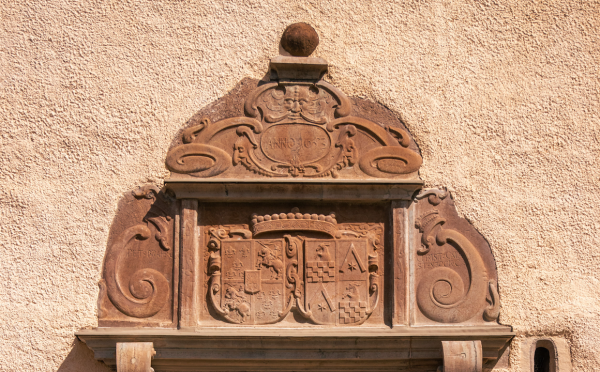
Custom Personal Crest: A Private Language

The Custom Personal Crest: A Mark Made for One Life Alone
A name is given before anyone considers what it should look like.
A custom personal crest exists to close that distance, slowly and with intention.
This is an account of a discipline older than personal branding itself.
It is written for a reader who already senses that a single life deserves more than decoration.
The Art of Monograms
The Custom Personal Crest as a Private Language
Every individual, whether they recognize this or not, already carries a visible history waiting to be formalized.
A custom personal crest simply gives that history a single, disciplined shape.
It is not an ornament layered onto a name; it functions closer to a private constitution.
The finest personal crests are never designed to explain themselves to a stranger.
They are designed to be recognized instantly by those who already understand what they represent.
This is precisely why the form has endured across centuries while so many decorative trends have not.
Its authority never depended on novelty.
It depended on restraint, on proportion, and on a story worth preserving in visual form.
A person commissioning such a mark is rarely seeking decoration for its own sake.
They are seeking a permanent record of what a single life has chosen to value.
That distinction separates a genuinely custom personal crest from a template quietly rearranged to fit a new name.
A template can approximate elegance, but it cannot carry the specific weight of one person’s documented story.
This is a discipline closer to cartography than to decoration, mapping a life onto a form small enough for a signet ring.
Every curve within the composition is considered against the character of the person it will represent.
A person shaped by quiet stewardship will commission a crest that whispers rather than announces.
A person shaped by public service or ceremony may ask for a mark that commands a room.
Both outcomes begin at precisely the same starting point, which is the individual’s own unembellished story.
What follows is an examination of how that story becomes form, and why so few clients rush the process.
A personal crest, once resolved, tends to reveal something its owner already believed but had never rendered visually.
This is a quieter kind of discovery than most design commissions offer, and it rewards patience.
Few possessions a person owns are asked to carry this much responsibility while remaining this restrained.
The same discipline that shapes a fuller a fuller family crest tradition extends naturally into a mark built for one life alone.
A custom personal crest also differs from a classic monogram in the kind of question it is built to answer.
A monogram asks what a name looks like; a personal crest asks what a life has chosen to stand for.
Both questions are worth answering carefully, and neither should be rushed to satisfy an approaching occasion.
A crest monogram, blending pictorial charge with a single interlaced initial, answers a version of both questions at once.
This hybrid form has grown more common precisely because so many clients arrive wanting both immediacy and depth.
The atelier resists offering it as a shortcut, however, since a hybrid still requires the same discovery process as either form alone.
A rushed hybrid mark tends to satisfy neither question particularly well.
A carefully built one satisfies both, which is precisely why the form rewards patience rather than convenience.
Legacy & Family Heritage
The Origins of the Personal Crest Tradition
Every alphabet, every symbol, every emblem began as an image long before it became a form of writing.
The earliest personal marks were carved into stone, stamped into wax, or engraved into a ring.
A single symbol served as proof of identity in a world where few people could read an entire document.
Merchants marked their letters, physicians marked their instruments, and individuals marked the objects that mattered to them.
The custom personal crest descends directly from this instinct, refined over centuries into a deliberate discipline.
It was never meant to explain itself in words.
It was meant to be recognized the way a face is recognized, before a single word is spoken.
That instinct has not weakened in the centuries since it first appeared on a merchant’s ledger or a scholar’s seal.
Scholars of European ornament trace the earliest personal marks to manuscript traditions, where a single symbol could anchor a page.
Those illuminated marks were never incidental additions.
They were considered worthy of as much craftsmanship as the text they introduced.
A bespoke atelier today inherits that same philosophy when developing a custom personal crest from an individual’s own history.
The crest is rarely an afterthought applied once everything else has been decided.
It is often the very first decision made, the seed from which an entire personal identity eventually grows.
What separates a true custom personal crest from a simple arrangement of initials is intention, sustained at every stage.
Every element, from a single charge to the negative space surrounding it, is weighed against the life it will represent.
A related but distinct tradition exists for an entire household rather than a single life, built from the same underlying grammar.
A personal crest and a family emblem often share the same underlying grammar while answering to a different scope of audience.
Understanding which one a given moment actually calls for prevents a client from asking one mark to do the other’s work.
Most clients arrive already sensing which form suits their situation, though the atelier still tests that instinct through conversation.
A person early in an independent career, for instance, is usually better served by a personal crest than a fuller family mark.
A family emblem can always follow later, once a household has taken a shape worth representing in its own right.
Medieval Europe
The Personal Seal
Individuals mark correspondence and possessions with symbols unique to their own name.
Renaissance
The Merchant’s Cipher
Personal marks distinguish goods, letters, and trade agreements traveling unfamiliar routes.
18th Century
Formal Convention
Composition, tincture, and proportion become widely codified across European courts.
19th Century
The Household Fixture
The personal crest becomes a fixture of silver, stationery, and architectural detail.
20th Century
American Adoption
Distinguished individuals across the Atlantic adopt the tradition as a mark of considered permanence.
Present Day
The Commissioned Mark
A custom personal crest continues as a deliberate expression of one life’s identity.
This lineage of practice is precisely what a considered personal crest draws upon today, regardless of its final form.
Ornament dates a design far more quickly than proportion ever does.
A mark built from fashion fades within a decade; a mark built from proportion does not fade at all.
This is why the atelier studies precedent as closely as it studies the client’s own personal history before any sketching begins.
History, treated this way, functions as a working design tool rather than as decorative background context.
A crest composed without this awareness often repeats mistakes long since resolved by earlier craftsmen.
A crest composed with it tends to feel settled from its very first presentation to a client.
Royal Traditions
The Royal Precedent for a Private Mark
No institution in European history applied the personal mark with more discipline than the royal houses of the continent.
A monarch’s cypher, formed from initials or dynastic symbols, served simultaneously as signature, seal, and declaration.
It appeared on state documents, on regimental colors, and on gates few were ever permitted to approach.
The royal mark was never intended as ornament alone.
It functioned as an instrument of authority, recognizable across a kingdom without a single word of explanation.
The institution long responsible for regulating these marks has preserved centuries of precedent on how a personal mark should be composed to convey legitimacy rather than passing taste.
An archive maintained by one of the world’s most storied royal collections documents this discipline in extraordinary detail, offering a masterclass in restraint applied at the highest level of craft.
What is striking about these historical marks is how rarely they relied on excess to communicate importance.
Grandeur, in the finest historical examples, was achieved through proportion rather than accumulation.
The interlaced symbols found on royal linens, porcelain, and stationery followed strict conventions of scale, weight, and placement.
Those conventions were never arbitrary.
They ensured a personal mark remained legible and dignified whether viewed on a ring seal or across a ceremonial gate.
A bespoke atelier drawing on this tradition inherits more than an aesthetic preference.
It inherits a discipline: the understanding that a custom personal crest must be built to last, never simply to please.
This is the same discipline applied to every crest developed within this atelier, regardless of the material it will inhabit.
A royal cypher was never designed for a single audience alone.
It had to remain dignified whether examined up close on a document or observed from a distance on a facade.
That dual requirement, intimacy and grandeur achieved through the same restrained form, remains the central challenge today.
A private client rarely requires anything so elaborate as a full royal cypher, but the underlying discipline still applies in full.
Every element included in a custom personal crest should still be able to justify its own presence within the composition.
Royal marks also demonstrate remarkable restraint in their use of color and material across an entire reign.
A small, fixed palette, used consistently, reads as far more authoritative than a wide and varied one ever could.
This is a lesson the atelier applies directly to every private commission it undertakes, regardless of scale or budget.
The Atelier Journal
The Anatomy of a Custom Personal Crest
A custom personal crest is built from a limited set of decisions, and each one carries disproportionate weight.
The first is composition, which determines whether the mark reads as a shield, a cipher, or a hybrid crest monogram.
The second is the choice of charge, the specific symbol selected to represent a life’s documented history.
The third is tincture, the formal language of color that heraldic tradition has governed for centuries.
Each of these decisions reflects the character of the person being represented, not a passing aesthetic preference.
A person devoted to quiet stewardship will typically favor fewer charges, arranged with considerable restraint.
A person shaped by public service or ceremony may support a slightly more layered composition without tipping into excess.
Understanding this distinction is essential to designing a crest that will still feel appropriate decades from now.
A custom personal crest differs from a classic monogram in one essential respect, which is scope.
A monogram speaks through initials alone; a personal crest speaks through symbolic charge and pictorial language.
This is why the process typically begins with extended conversation rather than a folder of pre-made symbols.
A person’s own history contains more useful design information than any mood board could ever provide.
The atelier’s task is to listen for the detail a client may not yet recognize as significant.
A grandfather’s handwriting, a favorite proportion, or a half-remembered family symbol can all inform the final composition.
None of these details dictate the outcome directly, but each contributes to a mark that belongs to this person alone.
That specificity is precisely what separates a commissioned crest from an arrangement of symbols selected at random.
01
Discovery
An extended conversation establishes the individual’s documented history, values, and long-term intentions.
02
Research
Heraldic and typographic precedent relevant to the person’s specific story is studied in depth.
03
Composition
Early concepts explore charge, tincture, and proportion before a single direction is chosen.
04
Refinement
The favored direction is tested at every scale the individual is likely to require.
05
Delivery
A complete personal crest is prepared for engraving, stationery, and personal application.
Nothing about this process is rushed, and nothing about it is delegated to convenience.
A custom personal crest intended to last a lifetime deserves a process willing to take the necessary time.
Each stage exists to protect the client from a decision made too quickly, before its full weight is understood.
This is why the atelier resists shortening the discovery phase, even for clients eager to see a finished composition.
A composition arrived at quickly may look identical to one arrived at carefully, at least on the day of delivery.
The difference reveals itself only with time, which is precisely why the discipline cannot be skipped for convenience.
Legacy & Family Heritage
Crest, Monogram, or Cipher: Choosing the Right Mark
Clients new to bespoke identity design often ask which form of mark actually suits them.
A custom personal crest, a classic monogram, and a crest monogram each serve a distinct purpose, and confusing them weakens the result.
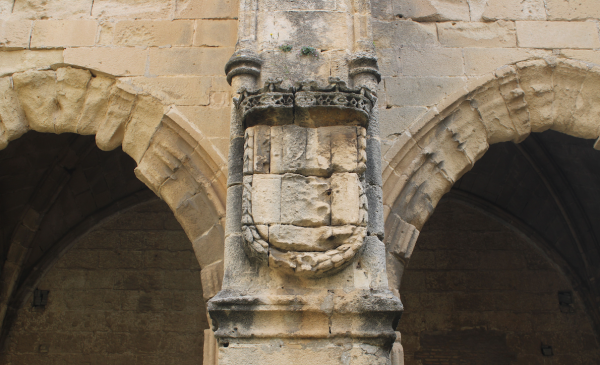
A classic monogram is typically built from interlaced initials and speaks most naturally to a single individual.
A personal crest, by contrast, is built from symbolic charges rather than letterforms and is designed to represent an entire life story.
A related exploration of the custom family emblem explores the related tradition built for an entire lineage rather than one individual alone.
A crest monogram sits between the two, combining a pictorial charge with an interlaced initial in a single hybrid form.
Many clients ultimately commission more than one mark, allowing each to serve its intended purpose rather than asking one design to do everything.
A person might commission a classic monogram for daily correspondence while separately planning a personal crest for more formal use.
Another individual may reserve a formal crest for architectural or ceremonial application while relying on a monogram for everyday life.
The distinction matters because each mark carries different expectations regarding permanence and intended audience.
A crest monogram can be lighter in spirit than a full crest, since it borrows the immediacy of a monogram’s initial.
A classic monogram sits between the two, personal enough for daily use yet formal enough to outlast a single occasion.
Understanding these distinctions before beginning a commission prevents a client from asking one mark to perform work better suited to another.
A custom personal crest, once resolved, tends to outlast every other visual decision an individual will make.
Clients occasionally worry that choosing a personal crest over a classic monogram somehow overstates their own story.
This worry rarely survives the first real conversation about what the mark is actually meant to represent.
A personal crest is not a claim to nobility; it is simply a considered record of one life’s own values.
Anyone willing to commission the work properly, and with patience, can hold a mark built with genuine rigor.
| Mark | Represents | Typical Use |
|---|---|---|
| Custom Personal Crest | An individual life, considered in full | Signet rings, stationery, formal documents |
| Classic Monogram | A single name or a married couple | Linens, luggage, personal accessories |
| Crest Monogram | A hybrid of pictorial charge and interlaced initial | Signet rings, ceremonial or formal use |
| Decorative Cipher | A couple or a single celebratory occasion | Wedding stationery, event design |
Each of these forms draws on the same underlying discipline, even when their final applications diverge considerably.
What matters most is that the choice is made with intention, not left to convenience or trend.
Luxury Identity
The Personal Crest as an Instrument of Luxury Identity
Luxury has always relied on symbols that communicate more than they state outright.
A custom personal crest is among the most efficient of these symbols, precisely because it requires no explanation.
A single well-composed mark can suggest craftsmanship, history, and personal standing without a solitary word of justification.
This is precisely why the finest houses have historically relied on interlaced marks rather than lengthy names.
The same underlying philosophy that governs a luxury monogram commission extends naturally into the design of a personal crest intended for ceremonial or architectural use.
A crest engraved into a library door or embossed onto formal stationery performs a function similar to a house mark maintained across centuries.
It signals that the object, and the person behind it, were considered rather than assembled in haste.
This distinction matters enormously to a particular kind of client.
They are not seeking to display wealth outright, nor are they interested in symbols that perform that function loudly.
They are seeking to display consideration, the sense that every mark bearing their name was chosen with genuine intention.
A custom personal crest achieves this more elegantly than almost any other design element currently available.
It does not shout.
It simply confirms, quietly and permanently, that the person behind it cared enough to have their identity rendered properly.
Personal Crest
An entire life, carried in a single considered mark.
Classic Monogram
A single identity, rendered with quiet precision.
Crest Monogram
Pictorial charge and initial joined in lasting balance.
Professional Identity
A life’s discipline extended into public and formal use.
This philosophy extends naturally into contemporary professional life, where a personal crest increasingly appears alongside more traditional applications.
A well-composed crest can accompany a person from a single formal document to their most significant institutional milestones without reconsideration.
That kind of longevity is rare in design, and it is precisely what elevates a crest from decoration to instrument.
A private commission also carries a freedom that a mass-market alternative simply cannot offer to any single buyer.
Every decision can be made in service of one person alone, rather than a wide and anonymous audience of purchasers.
This is the freedom, and the responsibility, that a genuinely bespoke personal crest represents for the client who commissions it.
Royal Traditions
Heraldry and the Grammar Beneath the Personal Crest
Heraldry developed its own strict grammar centuries before typography existed as a formal discipline in its own right.
Every element of a shield, from tincture to charge to placement, carried specific meaning within a governed system.
A custom personal crest borrows from this grammar even when its final form appears far simpler than a full coat of arms.
Balance, hierarchy, and proportion all originate from this same heraldic convention.
A crest built around a single dominant charge often follows a hierarchy long used in formal armorial design.
This convention persists today across most considered personal marks developed for American clients.
Institutions dedicated to preserving heraldic tradition continue to document these conventions with remarkable precision, offering a record of symbols governed by rule rather than whim.
That record remains a valuable reference for any atelier committed to historical accuracy rather than invented tradition.
It is easy to design a mark that merely looks attractive.
It is considerably more difficult to design a mark that honors the grammar it has inherited.
This is the difference between a personal crest that feels timeless and one that feels merely fashionable.
The former draws on centuries of established convention.
The latter draws only on the preferences of the present moment, which rarely age well.
A well-trained eye can often identify a personal crest’s era simply by how loosely or strictly it follows heraldic grammar.
The most enduring designs tend to sit closer to the disciplined end of that spectrum.
This does not mean a contemporary crest cannot feel genuinely fresh.
It means that any freshness must be achieved within the grammar, through proportion and craftsmanship, rather than by abandoning it.
A personal crest that ignores this grammar entirely rarely reads as innovative; more often, it simply reads as unfinished.
This is precisely why the atelier studies the original grammar closely enough to use it correctly, rather than borrowing its aesthetic without understanding its logic.
A client who understands this history tends to make better decisions during their own commission, even when the final design departs from historical precedent.
Knowing the rules, in other words, is what makes breaking them thoughtfully possible in the first place.
The Atelier Journal
Materials, Scale, and the Discipline of Craftsmanship
A custom personal crest does not exist in isolation; it exists as a mark applied to material.
The intelligence of its design must account for every surface it will inhabit.
This is not a secondary consideration within the process; it is, in many respects, the most demanding aspect of the commission.
A composition that reads beautifully in ink on cream stationery may lose definition entirely when engraved into silver.
A design with subtle hairline detail may disappear when translated into a single-color embroidery or a compressed digital format.
These are not problems that can be resolved after the fact; they must be anticipated from the very first sketch.
On paper, whether correspondence stock or heavier formal sheets, the mark must perform with genuine typographic precision.
On silver and other metals, engraved into a signet ring or flatware, it must hold its integrity at the smallest scales.
On stone or wood, carved into an architectural detail, it must read with equal confidence from a considerable distance.
A custom personal crest that satisfies each of these material tests was designed by someone who understood the full system from the outset.
100+
Years a well-built crest may remain in use
5
Core material contexts tested per commission
3-6
Distinct visual directions typically explored
1
Personal identity, carried across an entire life
Scale changes everything about how a symbol is perceived, and a genuinely custom personal crest accounts for this before a single line is finalized.
Nothing about this discipline can be improvised once the commission has already begun.
Consider how differently a single mark behaves across just two applications most clients request together.
A composition intended for personal stationery must read warmly, often alongside softer supporting typography.
The same mark, engraved later onto a signet ring, must read with far more authority and considerably less delicacy.
Reconciling these two moods within one coherent design is a genuinely difficult problem to solve well.
It is solved not through compromise, but by identifying which elements of the crest are load-bearing across every context.
Bespoke Weddings
The Personal Crest at Life’s Threshold Moments
A wedding, a milestone birthday, or a significant professional appointment is often the occasion that prompts a first personal crest.
A single life reaches a threshold, and the resulting mark is meant to carry that recognition forward.
This is where a custom personal crest and a bespoke monogram frequently intersect within a single commission.
The two are related but distinct undertakings.
A monogram speaks to a name; a personal crest speaks to a life considered in its fuller shape.
Together, they form a complete visual record of an individual’s identity as it moves through a significant chapter.
Many clients choose to commission their personal crest well after the occasion itself, once its meaning has become clearer.
Others prefer to begin the process immediately, treating the crest as a foundational decision rather than an afterthought.
Either approach is valid, provided the decision is made with genuine intention rather than convenience.
A personal crest introduced at this stage becomes a unifying thread across every subsequent milestone a life will mark.
It appears on correspondence marking a promotion, on a gift marking an anniversary, and eventually on objects passed to those who come after.
Professional milestones carry their own version of this same tradition, quietly and without any need for a formal occasion to justify them.
A person founding a new venture or accepting a significant appointment may choose, for the first time, to commission a personal crest of their own.
The timing rarely matters as much as the intention behind the decision, which should never be rushed to meet an approaching date.
“I commissioned my crest the year I turned fifty, and what arrived felt less like a new design and more like something I had simply been waiting to recognize.”
E. Marchetti · Private Client, United States
“The process asked me questions about my own life I had never quite put into words before, and the finished mark answered every one of them.”
Dr. N. Okafor · Private Client, United States
This is precisely the outcome a well-considered custom personal crest is meant to produce.
It should feel, from the moment it is delivered, as though it has always existed.
Legacy & Family Heritage
The Personal Crest as a Considered Inheritance
A personal crest is rarely designed with only the present moment in mind.
The best examples are built to be inherited, which means they must avoid anything overly specific to a single decade’s taste.
This requirement shapes nearly every decision an atelier makes when developing an individual’s primary mark.
Trend-driven flourish is set aside in favor of proportions and forms that have already proven their staying power.
Clients who have built their standing across a career, particularly in law, medicine, or finance, often understand this principle instinctively.
They have already watched other assets appreciate or depreciate depending on how well they were built to last.
A custom personal crest is no different.
One designed with genuine restraint will still feel correct decades after fashions in ornament have shifted several times over.
This is why a personal crest and a classic monogram are so often developed in tandem, each serving a distinct but complementary purpose.
The crest anchors an individual’s broader story, while the monogram allows daily correspondence to carry a lighter, more immediate variation of the same language.
Choosing between the two rarely produces a poor design outright.
It more often produces a design quietly asked to do work it was never actually built for.
Historical Fidelity 92%
Cross-Material Consistency 95%
Restraint in Application 97%
Documented Symbolism 90%
A mark built for one moment in a life should still feel entirely appropriate decades later.
Time, more than any critic, remains the true judge of a personal crest’s quality.
A person beginning this process for the first time is encouraged to think less about how the crest will look and more about what it must continue to mean.
That single shift in perspective, from appearance to meaning, tends to produce the most enduring results across every commission the atelier undertakes.
Luxury Identity
What Enduring Houses Understand About Personal Marks
The world’s most respected luxury houses were, in nearly every case, founded by a single person.
Long before they became recognized names, their identities functioned exactly like a custom personal crest.
A founder’s chosen symbol, applied with total consistency, became the visual anchor for everything the house would later produce.
What separates these identities from a passing trend is the discipline with which they were maintained.
A house that changes its mark with every season eventually loses the very trust that mark was meant to signal.
A house that protects its original identity for a century earns something no advertising expenditure can purchase: quiet, inherited credibility.
Clients commissioning a personal crest are, in effect, applying the same principle at an individual scale.
The mark is not meant to announce success to strangers.
It is meant to preserve a standard the person has already set for themselves, and to hold future use gently accountable to it.
A house that treats its own mark carelessly forfeits the very permanence that made the mark worth having in the first place.
Consistency, not novelty, is what earns any mark, private or commercial, the right to be remembered decades after it was first composed.
“I have worked with design studios across three continents, and this commission produced the most considered piece of personal identity work I have ever received.”
R. Voss · Luxury Brand Commission, United States
This lesson applies just as directly to an individual as it does to a centuries-old maison.
A person who treats their own crest with the same discipline a great house treats its mark will find that discipline growing more meaningful, not less, with each passing year.
The Atelier Journal
Symbolism Woven Within a Personal Crest
Every element placed within a custom personal crest is chosen deliberately, never decoratively.
A person devoted to philanthropy might favor a softened, rounded form, a quiet signal of warmth within the composition.