
The Personalized Family Emblem: A Household Rendered in One Mark
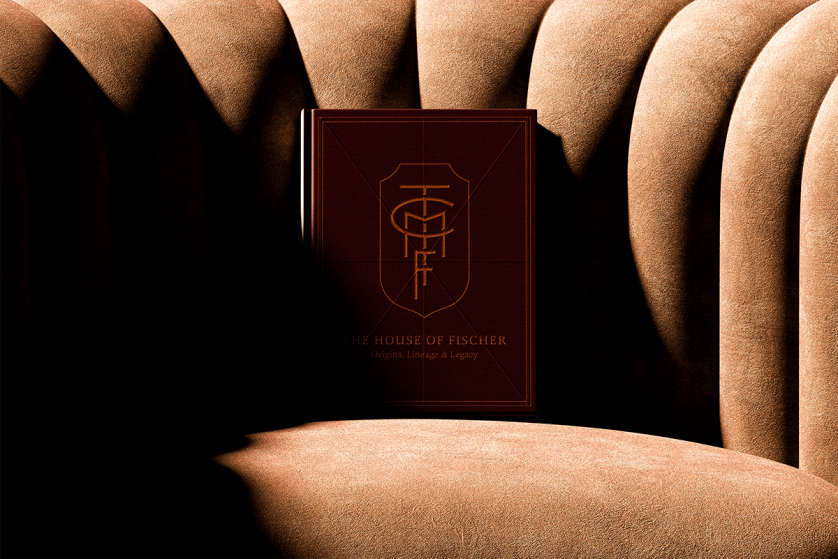
The Personalized Family Emblem: A Household Rendered in One Mark
A household acquires a name long before it decides what that name should look like.
A personalized family emblem is the decision to answer that question deliberately.
It is neither a granted coat of arms nor a decorative flourish borrowed for an occasion.
It is a private symbol, composed once, and carried afterward by everyone the name belongs to.
What follows is an account of how such a mark is made, and why it is worth making slowly.
The Art of Monograms
The Personalized Family Emblem, Considered
Two words carry nearly all the weight in the phrase personalized family emblem.
The first promises that nothing was borrowed; the second promises that nothing belongs to one person alone.
Together they describe a commission considerably harder to execute than an ordinary arrangement of initials.
A personal mark answers to a single life and may indulge whatever proportion that life prefers.
A household mark answers to everyone who will inherit it, including those not yet born.
The distinction sounds academic until a family has seen both approaches placed side by side.
One produces a pleasant composition, chosen for a season and enjoyed for exactly that long.
The other produces something nearer a private constitution, written in symbol rather than in statute.
This publication concerns the second kind, and the discipline that makes it possible at all.
What the word personalized actually promises
Personalization is not the act of selecting preferences from a menu of fixed options.
It is the act of building the system itself around one household’s documented history.
The order of those two operations decides almost everything about the result.
Families rarely arrive at the atelier able to describe what they want in these terms.
They arrive instead with an instinct that a shared name deserves more than a font selection.
That instinct, in nearly every case, turns out to be entirely correct.
A generic emblem generator treats every surname as an interchangeable input to one fixed system.
It cannot weigh the particular history a name has already been asked to carry.
A personalized family emblem begins with conversation instead, never with a template library.
The atelier asks what the name has meant before it asks what the mark should look like.
Sometimes that history includes an inherited crest, formally granted or informally understood among relatives.
Sometimes it includes nothing beyond a surname and a wish to give it permanent shared form.
Both situations receive identical rigor, adjusted only in the material available to draw from.
What never changes is the requirement that the finished emblem feel inevitable rather than assembled.
That quality of inevitability is the entire argument for personalization as a working discipline.
It cannot be manufactured through speed, and it cannot be simulated through added ornament.
It is earned only through patient attention to one name, tested at every scale a household will use.
A different measure of success
Most design work is judged by how it performs today, under one set of eyes.
A personalized family emblem is judged by how it performs under eyes that do not yet exist.
That single change of horizon reshapes every decision made in the first week of a commission.
A flourish that photographs beautifully this year may read as dated the moment fashion moves.
A proportion resolved through genuine study tends to survive that same shift entirely untroubled.
The atelier treats this distinction as the central discipline of household work, not a footnote.
Few commissions ask a designer to think this far past the moment of delivery.
Fewer still are expected to remain unchanged while the family around them changes completely.
A personalized family emblem is asked to do exactly that, and asked to do it quietly.
This is why the work resists scale, and why it should.
Legacy & Family Heritage
A Lineage Written in Symbol and in Letter
The instinct to compress a household into a single mark is far older than any modern commission.
Ancient families pressed devices into coin, seal, and cornerstone long before anyone called it design.
The mark was chosen because it could be recognized instantly by those who could not read.
Medieval Europe carried that instinct into a formal discipline governed by hierarchy and precedent.
A personalized family emblem descends from this lineage, though it answers to no formal authority.
It borrows the crest’s respect for proportion, restraint, and shared ownership across a household.
It borrows the private cipher’s warmth, its sense of belonging to people rather than institutions.
Each era refined the same underlying principle, that a household mark can carry authority across time.
A design unaware of this lineage tends to feel merely fashionable rather than genuinely founded.
A design composed with awareness of it tends to feel settled, as though arranged no other way.
Antiquity
The Struck Device
Households press personal devices into coin and ceramic as instruments of shared recognition.
Medieval Europe
The Family Shield
Noble houses formalize inherited marks under strict convention, binding a lineage to one visual form.
Renaissance
The Merchant Household
Trading families adopt marks to authenticate goods and correspondence across unfamiliar territory.
Georgian & Victorian
The Domestic Emblem
The household mark enters daily life, engraved onto silver and pressed into private stationery.
Twentieth Century
The Private Household Cipher
Family devices become a quiet fixture of correspondence, gifts, and generational keepsakes.
Present Day
The Personalized Family Emblem
A household commissions a mark built to be inherited, apart from any formal heraldic grant.
It is worth dwelling on the specific constraints each era solved for the household mark.
Coin dies demanded forms that could be struck cleanly into metal without losing definition.
This forced early artisans toward bold, simplified geometry from the very beginning of the craft.
Manuscript illumination rewarded patience instead, and permitted extraordinary intricacy across a static page.
The printing press later required forms that could be cut with precision and repeated at speed.
Engraved silver imposed its own discipline, since fine hairlines fill in under the graver’s hand.
A personalized family emblem inherits every one of these constraints, whether a household recognizes them or not.
A mark composed without that awareness often repeats errors resolved centuries ago by better craftsmen.
A mark composed with it tends to feel resolved from its very first presentation.
History as a working tool
The atelier studies precedent before proposing a single form to any household.
This is not scholarly indulgence; it is simply how the discipline avoids repeating old mistakes.
Every era already solved problems a contemporary commission will otherwise meet unprepared.
Much of that accumulated knowledge survives only because someone chose to record it carefully.
Today independent scholarship devoted to preserving this visual grammar keeps that record intact, cataloguing conventions that would otherwise have thinned with time.
That body of work remains a genuine reference for any atelier committed to accuracy over invention.
An emblem that ignores this grammar rarely reads as innovative; more often it reads unfinished.
Knowing the rules, in other words, is what makes departing from them thoughtfully possible.
The atelier treats every household commission as a continuation of this lineage, never a break from it.
That continuity is precisely what a family is buying when it commissions a mark of this kind.
Legacy & Family Heritage
Where the Crest Ends and the Family Emblem Begins
A crest and a personalized family emblem are close relations, though they are not the same instrument.
A crest encodes lineage under formal convention, governed by rules established across many centuries.
An emblem encodes a household directly, without requiring any grant of arms to stand behind it.
The distinction matters less than the intention, which remains identical across both forms.
Both exist to answer the same quiet question, namely what will remain once the present household has passed.
Families who already carry an inherited crest often arrive at the atelier for a different reason.
They are not seeking a replacement; they are seeking a companion mark that lives alongside it.
The crest governs the formal record, while the emblem governs correspondence, linen, and the everyday.
Those who wish to understand the fuller heraldic register of the granted family crest will find that the two forms were never meant to compete.
Each performs a role the other was never built to perform, and both are diminished by conflation.
Three Ways a Household Marks Its Name
| Consideration | Personalized Family Emblem | Formal Family Crest | Generic Template |
|---|---|---|---|
| Origin | Composed around one household’s documented story | Granted under formal heraldic precedent | A preset applied to any surname entered |
| Governs | An entire household, across generations | An entire lineage under formal law | Whichever name is typed into it |
| Authority | Earned through restraint and proportion | Earned through formal recognition | Assumed by the software, never earned |
| Longevity | Designed to remain legible for generations | Designed to remain legible for generations | Designed to be replaced within seasons |
| Exclusivity | Singular to one household | Singular to one house | Available to any purchaser at any time |
This coexistence requires real discipline, since two marks in one household must never visually argue.
An emblem drawn without regard for an existing crest can clash badly in shared applications.
The atelier therefore studies any inherited crest closely before proposing a single form.
Sometimes the resulting emblem borrows a proportion or a tincture directly from that crest.
More often it borrows only a sensibility, a shared restraint that lets both marks sit comfortably together.
Families without an existing crest face a different, though related, set of early decisions.
Some wish to begin one, treating the emblem as a first step toward a future formal grant.
Others wish only for a household mark, with no ambition toward the fuller heraldic tradition.
Both wishes are entirely legitimate, and the atelier approaches each with the same seriousness.
What must never happen is an emblem that borrows the vocabulary of a crest without understanding it.
Charges, tinctures, and shields carry specific meaning, whether or not a mark is formally granted.
A personalized family emblem that uses this vocabulary carelessly risks appearing costume-like rather than considered.
The atelier studies heraldic precedent even for commissions with no heraldic ambition whatsoever.
This is not caution for its own sake; it is fluency in the grammar a crest is written in.
Formal authority in these matters remains genuinely narrow, and it is worth stating plainly.
In England, the office that has regulated the granting of arms in England for five centuries still determines who may bear arms, and under what conditions.
A private commission operates entirely outside that system and makes no claim upon it.
The discipline, however, is borrowed wholesale, since nothing should enter a household mark without a reason.
That single principle is what separates an emblem of substance from an emblem of decoration.
It is also the principle most often abandoned when a mark is produced quickly for an occasion.
Occasions pass; a household emblem is expected to remain long after the occasion is forgotten.
Royal Traditions
Royal Precedent for the Household Emblem
No account of the family emblem is complete without acknowledging its ceremonial origins.
European courts were among the first institutions to treat a household mark as an instrument of governance.
A royal cypher appeared on currency, on state seals, and on the correspondence of an entire dynasty.
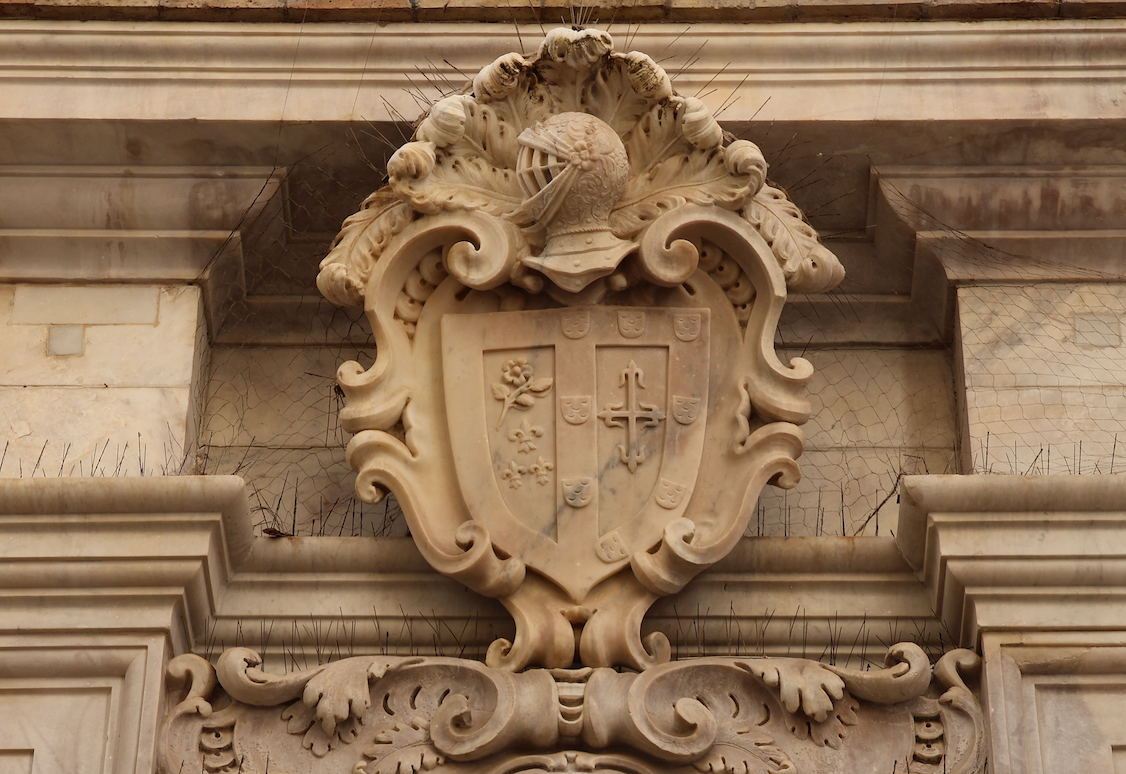
These marks were never merely decorative; they functioned as legal and symbolic instruments of continuity.
A cypher was rarely the work of a single hand, and rarely the work of a single generation.
It was refined gradually, each reign inheriting conventions it was expected to honor rather than reinvent.
That iterative refinement is part of why these marks still read as authoritative centuries later.
The physical evidence survives in remarkable quantity, and it repays close and patient attention.
Within the assembled holdings of Europe’s longest-standing royal household one finds household marks applied to porcelain, silver, textiles, and bound volumes alike.
Studying that material, even at a distance, is a masterclass in restraint at the highest level of craft.
European courts also developed elaborate rules governing exactly how a household mark could be displayed.
Size, placement, and context were dictated by protocol rather than by personal preference.
This sounds restrictive, and it was, yet it produced marks of extraordinary consistency and clarity.
A viewer understood immediately what they were looking at, without requiring any further explanation.
Royal heraldry also demonstrates the enduring value of a limited vocabulary applied without deviation.
Certain forms, colors, and arrangements were reserved for specific households and specific purposes.
That scarcity is precisely what gave the marks their authority across so many generations.
A personalized family emblem benefits from the same discipline, even without rank standing behind it.
Restricting the visual vocabulary of a mark strengthens rather than limits its overall presence.
Scarcity, not scale
Royal household marks were authoritative because they were rare, not because they were large.
The same principle governs a private commission, where every added element dilutes the whole.
A household emblem earns weight by refusing additions, not by accumulating them.
There is a lesson here for any family tempted to add one more meaningful flourish.
The strongest historical marks nearly always resisted that particular temptation, whatever the era.
Their makers understood that restraint is the harder skill, and the more valuable one to practice.
A viewer glancing at a household mark forms an impression within roughly a single second.
That impression is either earned through deliberate design, or it is not earned at all.
Contemporary families borrow this discipline directly, even when no title stands behind the name.
The same principles of proportion apply to a household, a practice, or a private foundation.
What differs is the scale of consequence, never the rigor brought to the commission itself.
A modern family does not require the historical weight of a crown to deserve this level of care.
It requires only a name worth treating with the seriousness a court once applied to its own.
The Art of Monograms
The Classic Monogram at Household Scale
A classic monogram is less a style than a discipline, tested and refined across many centuries.
It draws its authority from proportion rather than from the fashion of any particular decade.
This is precisely what allows a classic monogram to remain dignified across an entire lifetime.
A personalized family emblem borrows that discipline and applies it to a shared name.
Some households prefer an emblem built purely from letterform, without any pictorial charge at all.
For them, a companion study of the household mark composed purely in letterform explores that narrower discipline at length and on its own terms.
Others prefer a charge, a device, or a small pictorial element carried alongside the letters.
The emblem, as this atelier defines it, is the broader commission that can resolve toward either.
The atelier does not impose one register before understanding the household it will represent.
Consider what happens when a surname carries unusual proportions or an uneven number of syllables.
A template system compresses or stretches that surname until it fits a fixed and indifferent grid.
A personalized process adjusts the grid until it honors the surname instead, however unusual its shape.
This reversal sounds minor, yet it changes almost everything that follows from it.
It changes how the letters interlock, how the composition breathes, and how the eye reads it.
Households rarely articulate this distinction in technical terms, and they do not need to.
They feel it immediately, in the same way one feels a well-hung door or a well-cut coat.
The feeling is not mysterious; it is simply the accumulated result of many small correct decisions.
Letterform Selection
Typographic choices are drawn from traditions deep enough to carry genuine shared authority.
Proportion & Hierarchy
The dominant surname initial anchors the composition without ever straining for attention.
Negative Space
The space within and around each form is composed with the same intention as the strokes.
Charge & Device
Any pictorial element must trace to documented history rather than to a symbol library.
Scalability
A finished mark is tested from the scale of a signet ring to the scale of a household gate.
Material Behavior
Every form is judged by how it survives engraving, embossing, thread, and digital reduction.
When these elements align, a personalized family emblem is read in a single visual moment.
That immediacy is the quiet signature of a mark properly resolved before it was ever delivered.
A mark that skips any one of them tends to fail slowly, across years rather than immediately.
This is why the atelier treats all of them as requirements rather than optional considerations.
A dominant surname initial should anchor a composition without ever straining for attention.
Supporting initials should feel deliberately placed rather than merely accommodated.
Negative space should be composed with the same intention as the strokes surrounding it.
And the whole should survive reduction to the size of a signet ring without losing itself.
The classic register, applied to a household
A classic monogram and a personalized family emblem are not competing ideals.
They are two expressions of one discipline, applied at different scales of composition.
The household version simply has more people to satisfy and more decades to survive.
The Atelier Journal
Inside the Atelier: Composing a Household Mark
Commissioning a personalized family emblem is closer to a private consultation than to a transaction.
The process begins with conversation rather than with a questionnaire handed across a desk.
Family history, professional context, and shared preference are discussed before any sketching begins.
Only once that context is understood does the atelier explore specific directions for the household.
Multiple directions are typically developed before a single one is presented to the family.
Refinement continues until the mark performs correctly at every scale a household is likely to meet.
The final stage is never delivery alone, but guidance on applying the mark consistently afterward.
This structure exists to protect a family from settling too quickly on the wrong direction.
01
Consultation
A private conversation establishes history, context, and the household’s shared intention.
02
Research
Typographic and, where relevant, heraldic references are gathered for the specific surname.
03
Structural Drawing
The dominant letter and any supporting device are drafted in raw, unrefined form.
04
Refinement
Proportion, interlace, and negative space are resolved across several careful passes.
05
Scale Testing
The mark is tested at multiple sizes and across every material the household intends to use.
06
Delivery
The finished emblem is prepared for its intended applications and archived for the family.
Each stage exists to remove uncertainty before a household commits to a final direction.
By the time delivery occurs, the outcome rarely feels like a surprise to the family receiving it.
It feels instead like confirmation of something the household already sensed was correct.
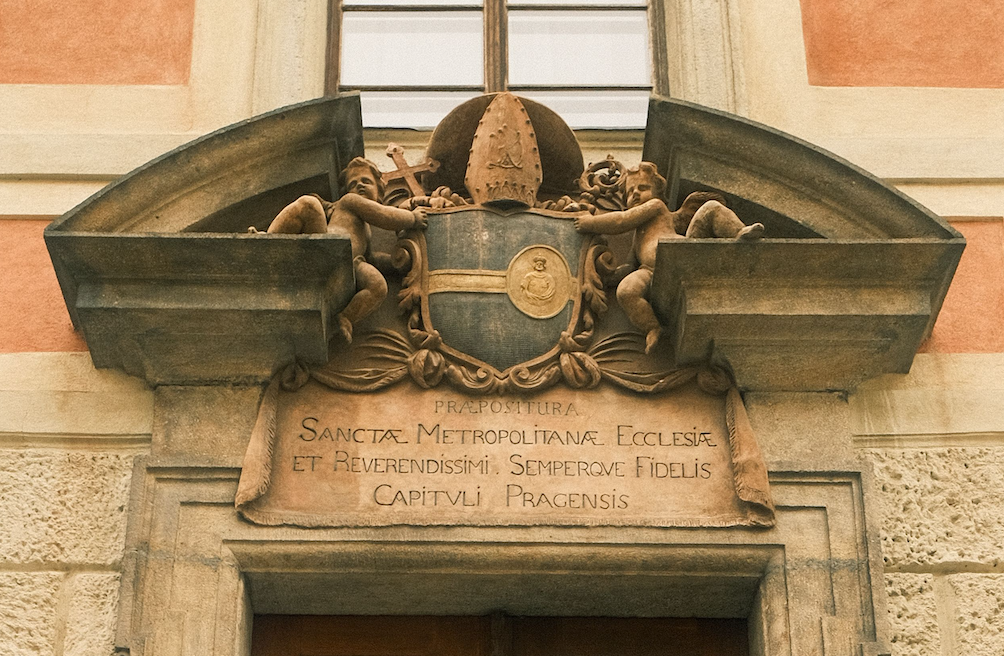
A personalized family emblem is a portrait in miniature, and a portrait requires a subject understood.
The atelier wants to know how a surname is spoken, how often, and what it is meant to convey.
These questions seem tangential until they quietly determine the structure of the mark itself.
Families are shown the reasoning behind each direction, not simply the image at the very end.
This transparency is deliberate, since a commissioned mark should be understood rather than accepted.
A household that understands the reasoning trusts the outcome more than one handed a finished result.
That trust, once established, makes every subsequent revision easier for both sides.
It also makes it considerably easier to say no to a direction that is simply not working.
A family emblem is shown in progress, never delivered cold. Understanding the reasoning is what allows a household to trust the mark for fifty years.
Revision proceeds through incremental adjustment rather than wholesale change between drafts.
This measured pace allows small errors to be caught before they compound into larger ones.
Exploration is deliberately generous at this stage, because certainty cannot be rushed into existence.
Most directions drawn during exploration are set aside, and setting them aside is not wasted effort.
Each discarded treatment teaches something about what the name refuses to become.
By the time a direction is presented, it has survived every quiet objection the atelier could raise.
What remains is not the cleverest option drawn, but the one that stopped asking to be revised.
Nothing reaches a household without having earned its place through repeated and unsentimental scrutiny.
The Atelier Journal
Craft in Numbers
Craftsmanship resists easy measurement, though certain figures illuminate what a commission involves.
A single personalized family emblem typically explores several distinct directions before one is chosen.
That range exists because the correct solution for a given surname is rarely obvious immediately.
Multiple scales are tested for every finished mark, from ring engraving to architectural application.
A mark that only works at a single scale has not, in the fullest sense, been finished.
Most first-time families assume the initial idea is the hard part and refinement a formality.
In practice the opposite proves true, and the last small adjustments decide almost everything.
3–5
Design directions explored per household commission
40+
Form and interlace variations typically considered
100+
Years a well-proportioned mark can remain legible on silver
∞
Generations a properly commissioned household mark is meant to serve