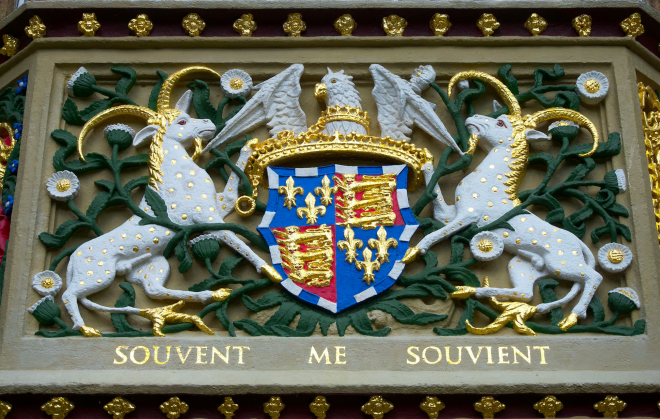
Family Emblem: A Quiet Form of Permanence
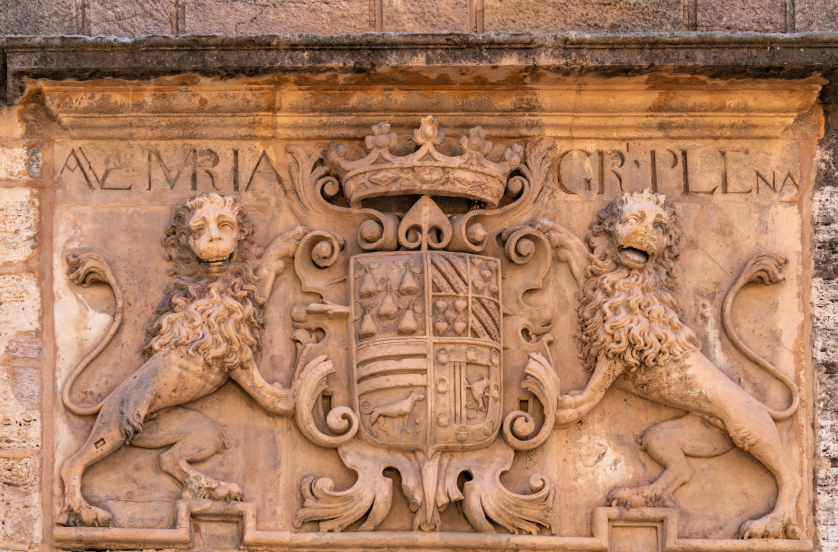
Legacy & Family Heritage
The Family Emblem: An Heirloom Written in Symbol
Long before a name could be written, a family required something the eye could recognize instantly.
That need produced one of civilization’s most enduring inventions: the family emblem.
A family emblem is not decoration applied after the fact.
It is identity distilled into a single, memorable form.
Where a name must be spoken or read, an emblem is simply recognized.
It carries continuity across generations who may never meet one another.
A great-grandfather and a great-granddaughter can be joined by nothing more than a shared mark.
This is the particular power a family emblem holds that ordinary decoration never can.
At GUSTAVO ATHAYDE, this power is the entire premise of the work.
A family emblem is commissioned rarely, considered carefully, and worn for a lifetime.
Some are worn for many lifetimes, passed from hand to hand like an heirloom.
The distinction between an emblem and a mere design choice is not stylistic.
It is a question of intention, permanence, and meaning.
Every family carries a story that has never been rendered visually.
A family emblem is the vessel built to hold that story without a single word.
This is why the process is closer to authorship than to graphic design.
The atelier does not begin with a blank template or a set of stock shapes.
It begins with a conversation about where a family came from and what it intends to become.
From there, the emblem is built letter by letter, symbol by symbol, decision by decision.
What follows is a study of how that process unfolds, and why it endures.
It is also an invitation to consider what a mark, once made, can carry forward.
Few objects a family will ever commission carry more weight than this one.
There is a reason so many families postpone this commission for years before finally beginning it.
The decision to render an entire lineage into a single image is not made lightly, nor should it be.
Most families arrive at the atelier only after a specific occasion has forced the question into the open.
A milestone anniversary, a new generation, or the settling of an estate often provides the initial impulse.
Whatever the occasion, the underlying motivation tends to be the same across nearly every family.
There is a quiet worry that a family’s particular story might otherwise simply dissolve with time.
A family emblem answers that worry directly, by giving the story a form that does not depend on memory alone.
It does not replace the stories a family tells about itself, but it does anchor them.
Long after a particular anecdote has been forgotten, the mark built from it can remain perfectly legible.
This is the quiet, practical function beneath everything else this article will describe.
The Art of Monograms
Before a Name Was Written, It Was Worn
The instinct behind the family emblem is older than any alphabet in common use today.
Ancient seals pressed into wax carried marks meant to identify a household before literacy was widespread.
A mark could be recognized by an illiterate steward as easily as by a noble heir.
This is precisely the utility that made the family emblem indispensable for centuries.
Medieval Europe formalized this instinct into an entire discipline of visual law.
A rigorous body of heraldic law determined which shapes, colors, and charges a family was entitled to bear.
These were not casual choices; they were formal declarations of lineage and standing.
A family emblem announced who held land, who owed allegiance, and who had earned distinction.
Even the smallest variation in a charge or a tincture carried specific, documented meaning.
Sons inherited the base of a family emblem but were expected to difference it, subtly, from their fathers.
This practice preserved continuity while still marking the passage from one generation to the next.
A family emblem was never static; it was a living register of a family’s unfolding history.
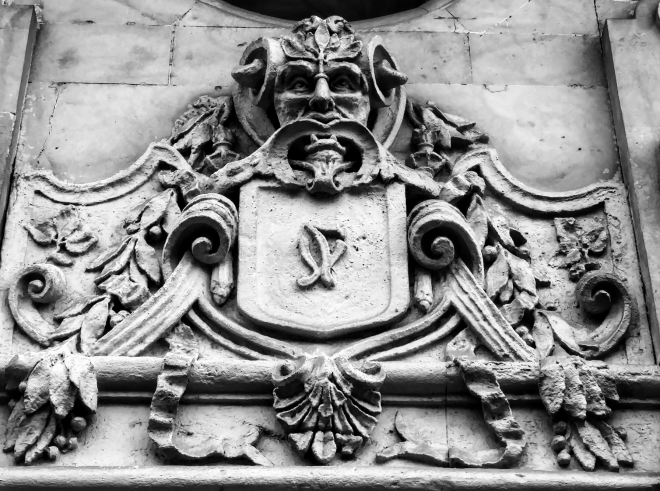
Many of today’s private commissions still draw directly from this same family crest tradition, even when no formal title is involved.
Battles, marriages, and territorial gains were folded into the design across decades.
What began as a battlefield necessity soon migrated into domestic and ceremonial life.
Silver services, library bindings, and carriage doors all carried the same recognizable mark.
A visitor could walk into an unfamiliar house and immediately understand whose household it was.
This transferability from armor to architecture is part of what makes the family emblem so durable.
It was never confined to a single material or a single use.
The emblem could travel from a ring to a gate to a private chapel ceiling.
Its form remained consistent even as its application changed completely.
This consistency is the quality every serious commission today still aims to preserve.
When a family commissions an emblem now, it inherits this entire tradition, whether it names it or not.
The visual grammar established centuries ago still shapes what reads as authentic today.
Symmetry, restraint, and a clear hierarchy of elements remain the foundation of a convincing mark.
A family emblem that ignores this grammar tends to look invented rather than inherited.
This is one reason the process cannot be rushed or reduced to a quick sketch.
Each element must be considered against a much longer visual history than most people realize.
The result, when done properly, feels less like an invention and more like a discovery.
It should feel as though the mark had simply been waiting to be found.
This is the standard the atelier holds itself to on every single commission.
It is worth noting how differently this history unfolded across various regions of Europe.
In some territories, heraldic authorities regulated marks with exceptional strictness, down to the smallest detail.
In others, custom and social consensus did much of the same work without a formal governing body.
Both approaches nonetheless converged on remarkably similar principles of clarity, hierarchy, and restraint.
This convergence suggests the underlying logic was never arbitrary in the first place.
A mark that is instantly recognizable, at a distance and at speed, tends to follow the same handful of rules regardless of origin.
Modern research into visual perception has, in many respects, simply confirmed what medieval heralds already understood by trial and error.
Simple, high-contrast forms are processed by the eye far more quickly than intricate, densely detailed ones.
A family emblem crowded with excessive ornament sacrifices exactly the recognizability that gives the form its purpose.
This is why the atelier resists a client’s occasional instinct to include every meaningful detail at once.
Meaning and legibility are not opposites, but they do require careful, deliberate balancing.
A family emblem that fails this balance tends to satisfy the family for only a short while.
Over time, an overly literal or crowded mark tends to read as busy rather than dignified.
The most enduring examples, by contrast, distill an entire history down to only its essential elements.
Everything else, however meaningful in conversation, is set aside in service of the finished composition.
This is often the single hardest decision a family faces during the entire process.
Choosing what to leave out proves considerably harder, in practice, than choosing what to include.
Medieval Origins
Family emblems begin as formal marks of arms, governed by strict heraldic authority and worn primarily in ceremony and battle.
Renaissance Expansion
Merchant families without hereditary title begin commissioning emblems of their own, extending the tradition beyond the nobility for the first time.
The Domestic Century
Emblems migrate from armor and seals onto silver, linen, and library bindings, becoming part of everyday household identity.
The Private Commission Today
Families across the United States now commission emblems as considered, contemporary heirlooms, independent of any formal claim to arms.
The Art of Monograms
The Family Emblem, Defined Against Its Neighbors
The words emblem, monogram, and crest are often used as though they were interchangeable.
In careful practice, they are not, and the difference matters more than most people expect.
A classic monogram is built from initials, resolved into a single, legible composition.
It speaks to an individual, or occasionally to a couple, rather than to an entire lineage.
A crest, in the strictest heraldic sense, is only the topmost element of a full coat of arms.
Historically, a crest could not be displayed without the shield and mantling it belonged to.
A family emblem, by contrast, is a broader and more flexible category than either term alone.
It may incorporate initials, resolved in the manner of a cipher monogram, without being defined solely by them.
It may also include heraldic charges, structured in the spirit of a monogram crest, though it is not bound by a crest’s formal rules.
What defines a family emblem is not its ingredients but its intention.
It exists to represent an entire household, its history, and its values, in one unified mark.
This distinction shapes every decision the atelier makes once a commission begins.
A monogram-based approach favors legibility and elegance; a crest-based approach favors formality and heritage.
A true family emblem often draws from both traditions without being bound by either.
The result should feel considered rather than borrowed from a single visual convention.
Clients frequently arrive uncertain which category their instinct actually belongs to.
Clarifying this question early prevents a great deal of wasted revision later in the process.
The table below offers a working distinction, though every commission still resists easy categorization.
No two family emblems, even within the same broad category, should ever look alike.
Individuality is not an added feature; it is the entire justification for commissioning bespoke work at all.
A family that wants a mark exactly like another family’s has misunderstood the purpose of the exercise.
The emblem must belong to the family that commissioned it, and to no one else.
This is why the atelier declines to reuse compositional elements across separate commissions.
Each family emblem begins from an empty page, regardless of how many have come before it.
That discipline is, in the end, the only guarantee of genuine distinction.
It is worth adding a further distinction, one clients rarely raise on their own initiative.
A family emblem is not obligated to remain fixed forever in a single, unchanging form.
Historically, marks were differenced from generation to generation precisely because circumstances changed.
A contemporary family emblem can be built with a similar, disciplined capacity for evolution.
This does not mean redesigning the mark casually or frequently, which would defeat its purpose entirely.
It means building enough structural logic into the original composition that later, careful additions remain coherent.
A well-built family emblem anticipates the family it will serve twenty years from now, not only the family that commissioned it.
This forward-looking discipline distinguishes a genuinely bespoke commission from a purely decorative one.
Few clients think in these terms at the outset, though most come to appreciate the reasoning by the process’s end.
It is, in a sense, designing not just an object but a small, living institution.
| Mark | Core Basis | Typical Scope |
|---|---|---|
| Classic Monogram | Initials resolved into a single composition | An individual or a couple |
| Heraldic Crest | A single element of a full coat of arms | A titled or armigerous family |
| Family Emblem | History, symbolism, and initials combined freely | An entire household across generations |
The Atelier Journal
What a Family Emblem Is Not
It is worth pausing on what a family emblem is not, before describing what it is.
It is not a logo, though it may borrow a logo’s clarity and restraint.
A logo exists to be recognized quickly by strangers in a commercial context.
A family emblem exists to be recognized slowly, by the people who already know its meaning.
It is not a trend, and it should never be designed to follow one.
A mark built to feel current will, by definition, feel dated within a decade.
It is not a crest purchased from an online directory organized by surname.
Those directories offer symbols connected to a surname, not to a specific family’s actual history.
A genuine family emblem reflects one household’s particular story, not a name’s statistical popularity.
It cannot be assembled from a catalogue of pre-made shapes and colors.
It is not a single-use graphic meant for one invitation or one event.
A family emblem is built to outlast the occasion that may have prompted its commission.
It is not, finally, a vanity object detached from meaning.
Every element within a properly built emblem should be able to answer the question, why this.
If an element cannot answer that question, it does not belong in the composition.
This discipline is what separates a family emblem from decoration that merely resembles one.
The atelier applies this test to every single line before a commission is considered complete.
It is a demanding standard, and it is the only one worth holding.
There is also a subtler misconception worth addressing directly.
A family emblem is not, by itself, evidence of noble descent or formal title.
Commissioning one does not confer a rank the family did not already hold beforehand.
This confusion occasionally deters families who assume the entire practice is somehow reserved for the aristocratic.
It is not, and it never has been, confined to that narrow a population.
Merchant and professional families have commissioned marks of their own for centuries, entirely apart from any noble claim.
What a family emblem represents is a household’s own history and values, on its own terms, regardless of formal title.
This distinction matters enormously to the many families who approach the atelier without any hereditary claim whatsoever.
They are, without exception, entitled to a mark built with the same rigor as any other.
A family emblem earns its place through meaning, not through visual complexity alone.
Restraint is not the absence of ambition; in emblem design, it is the clearest sign of it.
A family emblem is not a logo waiting to be trademarked; it is a memory waiting to be worn.
The Atelier Journal
How the Atelier Builds a Family Emblem
The process behind a family emblem is deliberately unhurried.
It begins with a private consultation, conducted before a single line is drawn.
The atelier listens first to the family’s history, not to their aesthetic preferences.
Preferences arrive later, once the underlying story has been properly understood.
A family’s origin, migrations, professions, and defining moments all inform the initial research.
This stage often surfaces details a family had forgotten they still carried.
From this research, a set of visual directions is proposed, never a single fixed design.
Each direction represents a genuinely different interpretation of the family’s story.
The family is asked to react, refine, and, where necessary, discard entirely.
This iterative refinement is where most of the actual design work occurs.
A chosen direction is then resolved into its final proportions, letterforms, and details.
Every curve is tested at multiple scales before it is considered finished.
A mark that only works at one size has not yet been properly resolved.
Once resolved, the family emblem is prepared for its intended applications.
This may include stationery, engraved silver, architectural signage, or textile work.
Each application requires its own technical adaptation, though the core mark never changes.
The final stage is delivery, along with full documentation of the emblem’s construction.
This documentation ensures the mark can be reproduced correctly for generations to come.
Without it, a family emblem risks being redrawn inconsistently by different hands over time.
The atelier treats this documentation as seriously as the design itself.
A family emblem that cannot be reliably reproduced has failed at its most basic purpose.
This entire arc, from consultation to documentation, typically unfolds over several months.
Patience at every stage is what allows the final mark to feel inevitable rather than assembled.
The result should feel less like something made and more like something confirmed.
It is worth describing what happens when a family disagrees internally during this process, since it happens often.
Disagreement is not treated as a problem to be resolved quickly, but as information to be understood.
Often, each family member is responding to a different part of the same shared history.
One may prioritize a grandparent’s profession; another, the family’s country of origin; another, a more recent milestone.
The atelier’s task is not to select a winner among these preferences but to find a composition that honors all of them.
This is rarely achieved on the first attempt, and it is not expected to be.
Several rounds of refinement are considered normal, not a sign that the process has gone astray.
What matters is that every family member eventually recognizes something of their own perspective in the finished mark.
When that recognition happens, the commission is considered successful, regardless of how many revisions it required.
01
Consultation
A private conversation to surface a family’s history, values, and intentions.
02
Research & Direction
Several genuinely distinct visual interpretations are developed from that history.
03
Refinement
The chosen direction is resolved letterform by letterform, at every scale it will be used.
04
Delivery & Documentation
The finished family emblem is delivered with full specifications for its lasting reproduction.
Legacy & Family Heritage
Where the Family Emblem Lives
A family emblem earns its keep only if it is actually used, and used consistently.
The most common first application remains personal stationery.
A letter marked with a family emblem carries a different weight than one that is not.
From stationery, many families extend the mark onto engraved silver and glassware.
These objects are handled daily, which means the emblem is seen far more often than most realize.
Some families choose to have the emblem engraved into a signet ring.
A signet ring is among the oldest applications of a family mark, dating back centuries.
Architectural applications are less common but especially permanent when chosen.
A family emblem carved above a doorway or set into a gate outlives its commissioners by generations.
This approach is visible in a recent heritage commission, where architectural and stationery applications were unified under a single mark.
Textile applications, from monogrammed linens to embroidered upholstery, remain a quieter but enduring choice.
A family emblem woven into fabric ages gracefully, gaining rather than losing character over time.
Increasingly, families also request a digital-ready version of their emblem.
This allows the mark to appear consistently across correspondence, invitations, and private archives.
A digital-ready emblem must be built with the same discipline as its physical counterparts.
It cannot be a simplified afterthought; it must hold its own integrity at every scale.
Some families choose to apply their emblem across every one of these contexts simultaneously.
Others begin modestly, with stationery alone, and expand the application over years.
Both approaches are entirely legitimate; the emblem does not diminish by being introduced gradually.
What matters is that each new application remains faithful to the original design.
A family emblem that shifts in proportion or detail from one surface to another loses its authority.
Consistency across applications is, in fact, one of the clearest signs of a well-built mark.
This is why the atelier documents every application at the time the emblem is finalized.
A less obvious but increasingly common application involves formal family archives and estate documentation.
Families managing a trust or a multi-generational estate often want their emblem incorporated into that documentation itself.
This use is quieter than a doorway or a signet ring, but no less significant to the family involved.
It signals, within a formal legal context, that the family’s identity extends beyond names on a document.
Some families also choose to include their emblem in philanthropic contexts, on the naming plaques of causes they support.
This extension carries a particular kind of weight, tying the family’s private identity to a public act of generosity.
The atelier approaches this application with special care, since it is often the emblem’s most visible public appearance.
Every one of these applications, however varied, depends entirely on the same underlying discipline described earlier.
Personal Stationery
The first and most enduring application, carried in correspondence for a lifetime.
Engraved Silver & Glass
Objects handled daily, where a family emblem quietly asserts its presence.
Architectural Presence
Carved into stone or cast in metal, intended to outlast the family that commissioned it.
Textile & Archive
Woven into linen or preserved digitally, ensuring consistency across every generation.
The Atelier Journal
From Those Who Have Commissioned Their Mark
Few descriptions of a family emblem carry more weight than the words of the families who commissioned one.
Their reflections tend to focus less on the finished artwork and more on what the process revealed.
Several have shared their experience with the atelier, in their own words.
Their accounts are offered here exactly as given, with only their names abbreviated for privacy.
Read together, they describe a process that felt less like hiring a designer and more like recovering something already theirs.
What follows are the first of four such reflections, gathered across several completed commissions.
We had a name and a vague family story, but nothing that felt like ours until this process gave it a shape.
The Ashworth Family, Providence, Rhode Island
I expected a logo. What I received was closer to a small piece of family history, rendered so precisely I recognized it before I understood why.
Dr. R. Calloway, Third-Generation Physician, Richmond, Virginia
Royal Traditions
The Language of Royal Houses
No institution has preserved the discipline of the family emblem more rigorously than the royal houses of Europe.
Centuries of continuous use forced an extraordinary level of precision onto every element of a royal mark.
A single error in a royal emblem was never merely aesthetic; it was a matter of legitimacy.