The Personalized Duogram: Two Initials, One Shared Legacy
The Personalized Duogram: Two Initials, One Shared Legacy
On the quiet discipline of composing two initials into a single, enduring mark.
Long before the word existed, the instinct behind it was already centuries old.
This is an editorial account of that instinct, not a design tutorial.
It considers what a personalized duogram asks of its maker, and of its owner.
The Art of Monograms
The Personalized Duogram, Considered
Two initials, drawn once and drawn correctly, can carry more meaning than either letter alone ever could.
A personalized duogram is built from exactly this premise, and from nothing more elaborate than it.
It is not a monogram divided in half, nor a shorthand version of a fuller family mark.
It is a distinct form, composed for the specific moment when two identities agree to share one symbol.
The word itself is recent, though the habit it describes is not recent at all.
Engravers and stationers have been pairing initials this way for longer than the term has existed to name it.
What changes with personalization is not the basic form but the depth of attention brought to it.
A generic pairing tool applies identical logic to any two letters entered into its field.
A personalized duogram begins instead with a conversation about the two people the mark will represent.
Their names are studied individually before any attempt is made to join them into one composition.
Some letter pairs interlace with almost no resistance, settling into balance on the first sketch.
Others require considerable patience, and several discarded attempts, before the correct proportion reveals itself.
A trained hand recognizes which letters want to be joined and which merely tolerate the arrangement.
This is largely invisible labor, since a client rarely sees the versions that were quietly set aside.
What the client receives is only the resolved form, which is precisely the intended outcome of the process.
Personalization, in this context, is not a marketing term applied loosely to justify a higher price.
It describes a specific method: letters selected, studied, and composed for one relationship and no other.
That specificity is the entire argument in favor of commissioning the work rather than generating it.
A mark built for two particular people cannot be mistaken for a mark built for any other pair.
This is the quality that separates a personalized duogram from an automated arrangement of the same two letters.
Clients rarely arrive able to articulate this difference before the first real conversation takes place.
They arrive instead with a sense that two names, joined, deserve more consideration than a template can offer.
A personalized duogram answers that instinct directly, without requiring either person to explain it in technical terms.
The process begins with two names, a relationship, and an intention, never with a catalog of pre-made pairings.
Every subsequent decision, from letterform to spacing, is made in service of that specific relationship alone.
A mark composed this way tends to resist the erosion that trend-driven design cannot avoid over time.
It is composed to answer a private question, rather than to satisfy a passing aesthetic preference.
That private question is almost always some version of the same idea: what these two letters deserve to become.
The atelier’s task is not to invent an answer but to draw out the one already latent between them.
Some readers arrive simply curious why a paired symbol still commands quiet authority in a crowded visual world.
Others arrive already certain they wish to commission a personalized duogram, seeking context before they begin.
Both readers are welcome here in equal measure, and both will encounter the same underlying argument.
Two names, properly rendered together, are closer to an heirloom than to an asset that depreciates on schedule.
Consider how rarely a modern purchase is expected to remain unchanged for fifty years or longer.
Furniture is replaced, wardrobes are refreshed, and even architecture is periodically renovated to suit new tastes.
A personalized duogram, by contrast, is one of the few objects still expected to resist that turnover entirely.
On Personalization
A personalized duogram is not decoration added to two initials, but a considered answer to what those two letters are meant to say.
Royal Traditions
A Royal Precedent for the Shared Cipher
No account of the paired initial is complete without acknowledging where the practice was first formalized.
European courts were composing shared ciphers centuries before any atelier used the word duogram to describe them.
A monarch and a consort were frequently represented not by one letter but by two, interlaced with evident care.
The institutions devoted to the formal study of this visual grammar still document how carefully that interlace was once governed.
Symmetry between the two letters mattered as much as their individual legibility, and often more.
A cipher in which one initial visibly overpowered the other was considered a failure of the engraver’s craft.
This was never treated as a matter of taste; it was treated as a matter of correct proportion.
The demand for balance was practical as much as symbolic, since these marks had to be read at a distance.
One of Europe’s principal royal archives preserves numerous examples of these paired ciphers across centuries of use.
They appear on state silver, on ceremonial linens, and on the facades of shared residences alike.
What survives in that record is a consistent refusal to let either letter overshadow its partner.
That restraint, more than any particular ornament, is the real inheritance a personalized duogram draws from royal tradition.
It is worth pausing on how differently a paired royal cipher behaved compared with a single sovereign’s mark.
A single cipher answered only to itself, free to take whatever proportion best suited one identity alone.
A paired cipher answered to two identities at once, and had to satisfy both without favoring either.
This is precisely the discipline a personalized duogram still asks of the designer commissioned to compose it.
Royal engravers rarely had the luxury of revising a cipher once it had been struck into state silver.
That permanence forced an unusual level of care into the earliest stages of the design process itself.
A contemporary atelier enjoys considerably more room to revise, yet the underlying discipline has changed remarkably little.
16th–17th Century
The Composed Royal Cipher
European courts begin formally pairing initials for royal marriages and dynastic alliances.
18th Century
The Engraver’s Convention
Master engravers establish interlace conventions that treat symmetry as a point of professional honor.
19th Century
The Household Adoption
Paired-initial marks migrate from royal courts into aristocratic and merchant households across Europe.
20th Century
The Wedding Stationery Standard
The two-letter form becomes an established convention for engagements and wedding correspondence.
Present Day
The Personalized Commission
The duogram is recognized as a distinct, personalized commission rather than a lesser cousin of the monogram.
It would be a mistake to treat this history as ornamental trivia unrelated to a contemporary commission.
The conventions established across those centuries still govern how a personalized duogram is composed correctly today.
Legibility at a distance, symmetry between the two forms, and restraint were never simply aesthetic preferences.
They were practical requirements for marks meant to be recognized instantly, often at considerable distance.
A royal cipher had to be identifiable on a passing carriage, a distant banner, or a state seal.
That same demand for instant legibility applies to a personalized duogram engraved onto a small signet ring today.
Working within these inherited constraints is less a limitation than an inheritance worth accepting gladly.
A court engraver centuries ago and an atelier today are, in this narrow sense, solving the same problem.
How do two identities become one legible mark, without either identity disappearing entirely into the other.
That question has not changed meaningfully since it was first posed on behalf of a royal marriage.
Only the materials, the client, and the occasion have changed; the underlying grammar has largely stayed the same.
On Balance
A royal cipher was judged first on the symmetry between its two letters, and a personalized duogram is judged by exactly the same quiet standard.
Luxury Identity
What Personalization Actually Means
The word personalized has been used loosely enough across the design world to lose most of its meaning.
A font pulled from a preset menu and stamped with two initials is not a personalized duogram.
Personalization, properly understood, means the mark was composed from first principles for these two people specifically.
That distinction matters more than most clients initially assume when they begin searching for a shared mark.
A generic pairing generator applies the same underlying template to every set of two letters it receives.
It cannot account for the particular geometry of a couple’s actual initials, only an approximation of them.
It cannot account for the story those two letters are meant to carry, because it was never told one.
A closer look at how a bespoke monogram is composed for one person alone clarifies the same principle applied to a pair.
The underlying discipline does not change simply because a second letter has entered the composition.
Every decision, from letterform to negative space, is still made in service of a specific relationship.
This is what separates a personalized commission from a duogram merely assigned to a couple after the fact.
The difference is not cosmetic; it governs the entire logic of the work from its first sketch onward.
A design unaware of a couple’s actual history tends to feel merely fashionable rather than genuinely founded.
A design composed with that history in mind tends to feel inevitable, as though it could not be arranged any other way.
That sense of inevitability cannot be manufactured quickly, and it cannot be convincingly imitated by software.
This is precisely why the atelier studies each relationship before beginning any new personalized commission.
Consideration
Personalized Duogram
Generic Paired Initials
Origin
Composed individually for two specific people
Applied identically to any two letters entered
Letterform testing
Tested across scale, material, and application
Rarely tested beyond a single preview screen
Exclusivity
Unique to one couple or partnership
Available to any purchaser at any time
Symbolic depth
Reflects a specific shared narrative
Carries no narrative beyond the letters shown
Longevity
Designed to be kept for a lifetime
Designed to be replaced within a season
The table above is not a judgment on convenience, which serves many purposes well in other contexts.
It is simply a description of two different intentions, each suited to a different kind of decision.
A personalized duogram is commissioned by those for whom convenience was never the primary objective.
It is commissioned, instead, by those seeking a mark worth keeping rather than one worth using briefly.
Convenience has its place, and speed serves many purposes well outside the context of a lasting mark.
It is simply an acknowledgment that permanence and haste rarely serve the same commission at once.
A generic pairing tool cannot be faulted for serving its intended purpose, which is speed above all else.
It can only be faulted when a couple mistakes that speed for the depth a lasting mark actually requires.
A personalized duogram, by design, cannot be produced in minutes, regardless of how advanced the software involved.
It requires the accumulated judgment of a trained hand, weighing decisions no algorithm can yet make with real discernment.
This is the same logic that has always separated fine bespoke tailoring from ready-to-wear clothing.
The finished garment may look similar from across a room, yet up close the difference is unmistakable.
In communities where legacy is valued as deeply as innovation, identity often extends beyond a name. It becomes a symbol capable of representing two lives for generations.
The Art of Monograms
The Anatomy of a Shared Composition
Beneath the surface of any personalized duogram lies a set of principles rarely discussed outside the atelier.
These principles are not stylistic preferences; they are structural requirements for a mark meant to endure.
Letterform selection determines whether the two initials feel timeless or merely fashionable within a narrow window.
Proportion determines whether the composition feels resolved or simply assembled from two adjacent parts.
Negative space is treated as an active design element rather than empty background between the letters.
Interlace is often the single most defining decision a personalized duogram will ever require.
The manner in which the two letters join one another sets the entire tone of the finished mark.
Scalability determines whether the composition performs equally well on a signet ring and on a linen border.
A closer study of how a single initial is resolved on its own clarifies why two initials demand even greater discipline.
Each of these elements is considered independently before they are ever combined into a single form.
A mark that skips any one of these principles tends to fail quietly, over years, rather than immediately.
This is why the atelier treats all five as inseparable requirements rather than optional considerations.
When these elements align, a personalized duogram becomes legible in a single glance rather than a studied read.
That immediacy is the quiet signature of a mark that has been properly resolved from the outset.
A single initial offers a designer more room to hide behind than two interlaced letters ever allow.
There is no third element to distract the eye from an imprecise curve or an uncertain weight.
Everything rests on very few decisions, and each of them must therefore be beyond reproach.
This exposure is precisely what makes a two-letter composition so demanding to resolve correctly.
A skilled hand recognizes which letters carry natural authority and which must earn it through proportion alone.
Some letter pairs resolve almost effortlessly, while others resist every obvious treatment applied to them.
It is also what makes a resolved personalized duogram so quietly satisfying to encounter once it is complete.
None of this discipline is visible in the finished mark itself, yet all of it is felt over time.
A mark built without this discipline may look identical to one built with it, at least initially.
The difference reveals itself only with time, which is precisely why the discipline cannot be skipped here.
A duogram succeeds the moment neither letter can be removed without the entire mark losing its meaning.
On Interlace
The way two initials choose to meet is rarely incidental; it is the single decision every other choice in a personalized duogram must answer to.
Legacy & Family Heritage
From Engagement to Inheritance
A personalized duogram rarely arrives at the end of a story; more often, it arrives near the beginning.
Most commissions of this kind mark a threshold rather than a conclusion already reached.
Two people have decided to build something together, though a shared surname may not yet exist.
The duogram gives them something to hold immediately, without presuming a name that has not yet been claimed.
This is why it is composed, traditionally, from first initials rather than any inherited surname letter.
It claims nothing that has not already been earned by the two people commissioning it.
What begins as a two-letter mark on an engagement card frequently outlives the occasion that inspired it.
Many of the finest examples I have composed eventually mature into a fuller family monogram decades later.
The two-letter form gathers a third initial, in time, and becomes something else entirely.
This progression is itself a kind of quiet tradition, rarely written down but frequently lived.
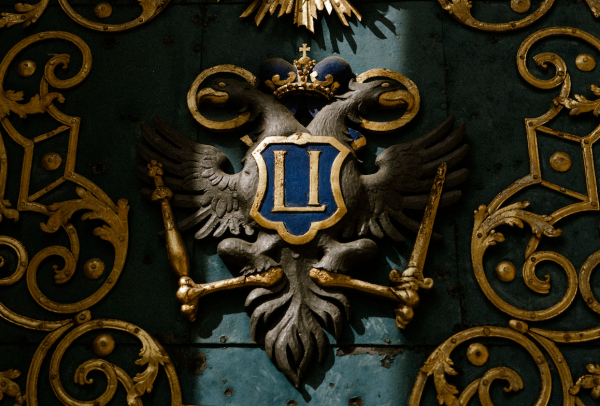
A personalized duogram that is well restrained at the outset leaves exactly the right room for that growth.
A crowded, overworked early mark leaves little space for whatever family symbol may one day follow it.
This is, in the end, the difference between decoration and design that genuinely respects time.
Legacy is sometimes treated as a subject reserved for old families with long documented histories behind them.
The atelier does not share that view, and its clients rarely arrive already believing it either.
Every family with a long history was, at some point, simply two people beginning something together.
The personalized duogram they carried at that beginning is often the earliest surviving object of that story.
The Engagement Introduction
A personalized duogram gives a newly engaged couple a shared mark before any surname has changed.
The Ceremony Program
Placed at the top of a wedding program, the mark introduces two names without announcing either one.
Correspondence and Keepsakes
Thank-you notes and early gifts carry a consistent identity long before any registry is finalized.
The Inherited Object
Engraved into silver or stitched into linen, the mark becomes an early artifact of a shared history.
Some couples never add a third letter at all, and the duogram simply remains their mark for a lifetime.
Both outcomes honor the original commission equally, and neither should be treated as the lesser path.
A personalized duogram does not need to anticipate grandchildren to be worth commissioning with real care today.
It only needs to represent, honestly and durably, the two people who are commissioning it right now.
This honesty, more than any assumption about the future, is what gives the mark its lasting integrity.
Couples who understand this tend to make calmer, more confident decisions throughout the design process.
They are not trying to solve for every future contingency within a single piece of artwork.
They are simply asking for a mark that tells the truth about where they stand today.
On Growth
A well-restrained personalized duogram leaves visual room for a fuller family mark to follow, should the family ever choose to commission one.
The Atelier Journal
Inside the Atelier: Composing the Shared Mark
Commissioning a personalized duogram is closer to a private consultation than to an ordinary design transaction.
The process begins with conversation, never with a questionnaire handed across a desk without context.
Both names, their history together, and the occasion the mark must serve are discussed before any sketching begins.
Only once that context is understood does the atelier begin exploring specific letterform directions.
Multiple interlace directions are typically developed before a single one is ever presented to the couple.
Refinement continues until the mark performs correctly at every scale it is likely to encounter.
The final stage is never delivery alone, but guidance on how the mark should be applied consistently.
This structure exists to protect a couple from a common risk: settling too quickly on the wrong direction.
Clients are shown the reasoning behind each direction, not simply the final image presented at the end.
This transparency is intentional, since a commissioned mark should be understood, not merely accepted on faith alone.
01
Consultation
A private conversation establishes both names, the occasion, and the register the mark must hold.
02
Letterform Study
Each initial is studied independently for its natural weight before any pairing is attempted.
03
Interlace Exploration
Multiple ways of joining the two letters are sketched and compared side by side.
04
Balance Review
Every direction is tested against strict symmetry so that neither letter dominates the other.
05
Refinement
The strongest direction is refined for scale, from a signet ring to a linen border.
06
Delivery
The finished duogram is prepared across every application the couple intends to use.
Each stage exists to remove uncertainty before a couple ever commits to a single final direction.
By the time delivery occurs, the outcome rarely feels like a surprise to the couple receiving it.
It feels, instead, like confirmation of something the couple already sensed was correct from the beginning.
This structure protects clients from a common risk: settling too quickly on the wrong interlace.
The consultation matters more than most clients expect it to, going into that first conversation.
A personalized duogram is a portrait in miniature, and a portrait requires that its subjects be genuinely understood.
The atelier wants to know how the two names are spoken together, and what they are meant to convey.
These questions seem tangential until the moment they quietly determine the entire structure of the mark.
I was trained first as a graphic designer, long before specializing in personal emblems of this kind.
That early discipline still governs how I approach every personalized duogram commission accepted at the atelier.
On Consultation
A personalized duogram begins with listening, not sketching, because the mark can only be correct once the relationship it represents is genuinely understood.
The Atelier Journal
Craft in Numbers
Craftsmanship resists easy measurement, though certain figures still illuminate what a commission actually involves.
A single personalized duogram typically explores several distinct interlace directions before one is finally chosen.
This range exists because the correct solution for two specific letters is rarely obvious immediately.
Multiple scales are tested for every finished mark, from ring-sized engraving to stationery-sized print.
A duogram that only works at a single scale has not, in the fullest sense, been properly finished.
Most clients assume the initial idea is the hard part, and the refinement a mere formality afterward.
3–5
Interlace directions explored per personalized commission
40+
Letterform pairings typically considered before one is chosen
100+
Years a well-proportioned duogram can remain legible on silver
2
Initials, balanced so neither ever outranks the other
These figures describe restraint rather than scale, which is precisely the underlying point of the exercise.
A personalized duogram, like true luxury, is not measured by how frequently it changes over time.
It is measured, instead, by how rarely it ever needs to change at all.
In practice, the last small adjustments to an interlace decide considerably more than the first bold sketch ever did.
This is why the atelier tests every direction well beyond the size at which it is first presented.
On Restraint
A personalized duogram is finished not when nothing more could be added, but when nothing more could be removed without loss.
Luxury Identity
The Measure of Restraint
Luxury, properly understood, has very little to do with ornamentation for its own sake.
It has a great deal to do with discretion, precision, and quiet confidence in a mark’s own presence.
A personalized duogram embodies this principle more directly than almost any other object a couple might commission.
It does not need to shout, because the two people it represents already know exactly what it means.
The progress below reflects how deliberately each stage of a personalized commission is weighted in practice.
Refinement consistently consumes the largest share of total effort, which surprises most first-time clients.
This ratio is precisely inverted from how most couples imagine the design process actually working.
The most successful compositions are read in a single visual moment, without the eye laboring to decipher them.
This immediacy is the result of a careful resolution between richness and clarity, never an accident of taste.
Consultation & Listening — 20%
Letterform Exploration — 25%
Refinement & Testing — 40%
Final Delivery & Handoff — 15%
Most clients assume the initial sketch is the hard part, and refinement a mere formality afterward.
In practice, the opposite proves true, and the last small adjustments decide everything that matters.
A duogram that only works at a single scale has not, in the fullest sense, been properly finished.
A viewer’s eye can hold only so much information in a single glance before it stops reading as a mark.
Every proposed addition to a composition is tested against a simple question before it is ever accepted.
Does this addition earn its place, or does it merely fill space that could otherwise breathe freely.
The most convincing luxury signal is rarely more ornament, but rather the confidence to include only what is necessary.
On Effort
Most of the work behind a personalized duogram is invisible by design, spent on refinements a client will feel long before they ever notice them.
The Atelier Journal
Voices of Distinction
The truest measure of a personalized duogram is not how it looks on delivery, but how it ages afterward.
Clients rarely describe the process in technical terms when asked to reflect on the experience.
They describe it, instead, in terms of recognition, partnership, and a certain quiet relief.
The reflections below are drawn from clients across several countries who have commissioned this particular work.
Names have been abbreviated throughout, to preserve the privacy each client is rightfully owed.
What recurs across these accounts, again and again, is a sense of relief rather than excitement.
Relief, it turns out, is the more honest reaction to work done properly and without haste.
Excitement tends to fade within a season; relief tends to persist for years afterward instead.
Several clients mention the same detail unprompted: how few revisions the process required from start to finish.
“We commissioned our duogram the week we became engaged, long before any wedding planning began. It still sits on our front door knocker.”
R. & S. Halloway · London, England
“As two architects opening a joint studio, we needed a mark that read as equal partnership rather than one name leading the other. It does exactly that.”
Marchetti & Rinaldi Studio · Florence, Italy
“I did not expect two letters to feel emotional, yet that is precisely what happened when I first saw the finished mark.”
A. Whitcombe · Kyoto, Japan
“Our duogram has traveled from a wedding program to a vineyard label to a christening gift, and it has never once looked dated.”
The Ferreira-Adams Family · Cape Town, South Africa
Luxury Identity
Where a Personalized Duogram Lives
A finished personalized duogram is expected to perform across a wide range of contexts and materials.
It may appear on personal stationery one day and on a small leather case the very next.
It may be engraved into silver, embossed into leather, or rendered as a small digital favicon.
Each of these contexts places different demands on legibility, weight, and overall proportion.
A mark that only works at one scale has not yet been fully resolved by its designer.
The atelier tests every commission across the applications most relevant to a given couple’s actual life.
One of the world’s foremost collections of decorative and applied art still preserves personal ciphers belonging to couples and courts alike.
Studying centuries-old engraved initials teaches proportion in a way no modern template can replicate.
A minimalist duogram and an ornate one still share the same underlying rules of proportion.
Only the surface vocabulary changes; the architecture beneath it remains entirely constant.
Silver deepens, leather softens, and paper yellows, and a well-composed mark accommodates all three with grace.
Consider how differently a single personalized duogram behaves across just two applications most couples request together.
A mark for correspondence must read warmly, often alongside restrained typography and quiet color choices.
The same mark, engraved later onto a signet ring, must read with considerably more authority and less delicacy.
Reconciling these two moods within a single coherent design is a genuinely difficult problem to solve well.
It is solved not through compromise, but by identifying which elements of the mark are load-bearing.
The right material does not merely display a personalized duogram; it participates in how the mark ages and is remembered.
A duogram used as a small digital mark must remain legible even when reduced to a few pixels wide.
Some clients require only a handful of applications; others require dozens across an entire household.
A newly engaged couple may need the mark only for stationery and a small collection of keepsakes.
A professional partnership may need it across signage, correspondence, and a complete digital presence.
Both cases receive the same underlying rigor, adjusted only in scope rather than in underlying standard.
Consistency across every application, rather than novelty within any single one, is what builds lasting authority.
A mark used consistently will always read as more considered than one used only sporadically.
Certain proportions and interlace decisions must remain fixed across every application for the mark to feel coherent.
Other elements, such as weight or a supporting flourish, can flex depending on the surface involved.
Knowing which is which requires the kind of experience that cannot be shortcut by software alone.
On Application
A personalized duogram used with restraint retains an authority that the same mark, scattered across every surface, quietly surrenders.
Bespoke Weddings
The Wedding Duogram and Beyond
The most common occasion for a personalized duogram remains, by a wide margin, an engagement.
A couple has decided to marry but has not yet stood before witnesses to formalize a shared name.
Etiquette has long held that a shared surname initial should wait until vows are actually exchanged.
A personalized duogram respects that etiquette while still giving the couple something to hold immediately.
Built from first initials only, it claims nothing that has not already been claimed by the couple themselves.
Heraldic scholarship has long documented how personal marks evolve over time rather than simply disappear.
A two-letter form is rarely a final destination; it is far more often a considered starting point.
Some couples drawn to a fuller heraldic treatment of this union eventually commission the duogram tradition in its broader form as a companion piece.
Neither partner’s initial should visually dominate the other, regardless of alphabetical order or personal preference.
Achieving this balance requires careful attention to stroke weight, letter height, and the negative space each initial occupies.