Personalized Family Monogram: A Mark Built to Be Inherited
The Personalized Family Monogram: A Mark Built to Be Inherited
On the quiet authority of a shared household symbol — and why the most enduring marks of belonging have always represented families, not individuals alone.
A name belongs to everyone who carries it, and to no one in particular.
A personalized family monogram exists to change that quietly, one household at a time.
This is an account of how a family’s shared identity takes visual form.
It is written for a reader who already senses that a name deserves more than a signature.
The Art of Monograms
What a Personalized Family Monogram Actually Is
Every family carries a name long before it carries a mark to go with it.
A personalized family monogram exists to close that distance, deliberately and by design.
It is not a single person’s initial dressed up for the occasion.
It is a shared symbol, built to represent every member of a household at once.
This distinction matters more than it first appears to.
A classic monogram speaks to an individual, or perhaps a married couple.
A personalized family monogram speaks to something larger: a household, a lineage, a name carried forward.
A crest monogram borrows a different vocabulary again, pairing a pictorial charge with an interlaced initial.
Each of these forms is legitimate, and each answers a slightly different question.
Understanding which one a family actually needs prevents a design from doing work it was never built for.
I am asked, more often than any other question, to explain the difference between these three forms.
The honest answer begins with intention rather than aesthetics.
A personalized family monogram is commissioned to represent continuity, not a single occasion.
It should still make sense to a grandchild who never met the family member who requested it first.
That requirement shapes nearly every decision I make once a commission begins.
A monogram built only to please its first owner has already failed at its deeper purpose.
The finest family monograms are legible before they are admired.
A guest encountering one for the first time should read continuity in it immediately, without needing an explanation.
This is precisely the discipline heraldry perfected centuries before graphic design existed as a formal practice.
A shield had to be understood at a glance, often under considerable pressure.
A personalized family monogram is a shared emblem built to represent every member of a household across generations, not a single individual’s initial.
A personalized family monogram inherits that same discipline, even though the stakes today are entirely different.
It borrows the logic of legibility and applies it to a name, rather than a lineage claimed through battle.
No family commissioning this work is entitled to a coat of arms in the formal sense, and few ask for one.
What they want instead is a mark with equivalent gravity, built honestly around their own documented story.
This distinction is one I insist upon before any design work begins.
A personalized family monogram invented from nothing carries no false claim to a lineage it does not have.
It simply borrows the visual grammar of permanence and directs it forward, not backward.
In this sense, every family monogram is new, even when its logic draws on centuries of precedent.
The oldest personal marks were never decorative in the first place.
They identified a bearer at a distance, in circumstances where confusion carried genuine consequence.
That discipline of instant recognition has not left the craft, even though the battlefield certainly has.
Today the mark is read on a signet ring, a stationery set, or a nursery door, rather than a shield.
The distance has shrunk considerably, but the requirement for immediate recognition has not changed at all.
A personalized family monogram that requires explanation has already failed at its primary task.
The best marks are understood before they are ever analyzed.
A family monogram, properly composed, becomes shorthand for an entire household’s shared sense of itself.
It replaces a great deal of explanation with a single, considered symbol.
This is a more efficient form of communication than most families realize when they first begin the process.
Negative space deserves particular attention in this discipline, and it is often the first principle a novice overlooks.
The empty space surrounding a family’s initials is not truly empty; it performs quiet structural work.
A composition that ignores this space collapses into visual noise the moment it is enlarged or reduced.
The finest personalized family monograms treat that space as a material in its own right, not an absence of one.
A monogram that requires explanation has already failed at its primary task.
Legacy & Family Heritage
The Origins of the Family Mark
Every alphabet, every symbol, every family name began as an image long before it became a formal signature.
The earliest family marks were carved into stone, stamped into wax, or engraved directly into a signet ring.
A single symbol served as proof of belonging in a world where few people could read an entire document.
Merchants marked their letters, physicians marked their instruments, and families marked the objects that mattered to them most.
A personalized family monogram descends directly from this instinct, refined over centuries into a considered discipline.
It was never meant to explain itself in words.
It was meant to be recognized the way a face within a family is recognized, before a single word is spoken.
That instinct has not weakened in the centuries since it first appeared on a merchant’s ledger or a household seal.
Scholars of European ornament trace the earliest family marks to manuscript traditions, where a single symbol could anchor an entire page.
Those illuminated marks were never incidental additions to the text they introduced.
They were considered worthy of as much craftsmanship as anything written beside them.
A related discipline exists for a single individual rather than an entire household, built from a related but distinct grammar; readers curious about that narrower form may examine the atelier’s personal crest commissions for a useful point of comparison.
A personal crest and a personalized family monogram share the same underlying grammar while answering to a different scope of audience.
Understanding which one a given family actually needs prevents an atelier from asking one mark to perform the other’s work.
Most families arrive already sensing which form suits their situation, though I still test that instinct through conversation.
A young household, only recently established, is usually better served by a lighter monogram than a fuller heraldic treatment.
A family several generations into its own documented story may be ready for something considerably more elaborate.
Neither instinct is more correct than the other, since both describe something genuinely lived rather than merely wished for.
The medieval period was the first to attach a personal mark reliably to a single named household.
A family’s shield had to distinguish it from every other family occupying the same field or the same town.
That requirement produced a visual discipline that has never fully left the craft in all the centuries since.
Proportion, hierarchy, and negative space were not abstract concerns to the households who first relied on them.
They were practical matters, since a poorly composed mark could cause genuine confusion at a genuinely inconvenient moment.
Modern commissions carry none of that historical urgency, yet the underlying discipline remains entirely worth preserving.
A personalized family monogram today is rarely read at any real distance, but it is still read quickly.
A guest glancing at a place setting or a piece of correspondence forms an impression within a single second.
That impression is either earned through careful, deliberate design, or it is not earned at all.
Ancient World
The Earliest Family Marks
Households stamp initials and symbols onto ceramics, coins, and correspondence long before formal heraldry exists.
Medieval Europe
The Shield as Identity
A family’s mark becomes a matter of survival, distinguishing one household from another across a crowded field.
Renaissance
The Merchant Household
Trading families adopt a shared mark to secure agreements and distinguish goods traveling unfamiliar routes.
18th Century
Formal Convention
Composition, tincture, and proportion become codified across the courts and households of Europe.
19th Century
The Domestic Fixture
A family’s monogram becomes a fixture of silver, stationery, linen, and architectural detail throughout the home.
Present Day
The Commissioned Mark
A personalized family monogram continues as a deliberate expression of a household’s shared identity.
Royal Traditions
Royal Precedent for the Family Cypher
No institution in European history applied the family mark with more discipline than the royal houses of the continent.
A monarch’s cypher, formed from initials or dynastic symbols, served simultaneously as signature, seal, and declaration.
It appeared on state documents, on regimental colors, and on gates few outside the household were ever permitted to approach.
The royal mark was never intended as ornament alone.
It functioned as an instrument of continuity, recognizable across an entire kingdom without a single word of explanation.
the institution long responsible for regulating English heraldic identity has preserved centuries of precedent on how such a mark should be composed to convey legitimacy rather than passing preference.
one of the world’s most storied royal collections documents this discipline in extraordinary detail, offering a masterclass in restraint applied at the highest level of craft.
What is striking about these historical marks is how rarely they relied on excess to communicate belonging.
Grandeur, in the finest historical examples, was achieved through proportion rather than through accumulation.
The interlaced symbols found on royal linens, porcelain, and stationery followed strict conventions of scale, weight, and placement.
Those conventions were never arbitrary.
They ensured a family’s mark remained legible and dignified whether viewed on a ring seal or across a ceremonial gate.
A personalized family monogram drawing on this tradition inherits more than a passing aesthetic preference.
It inherits a discipline: the understanding that a family mark must be built to last, never simply to please.
This is the same discipline applied to every commission developed within this atelier, regardless of the materials it will inhabit.
A royal cypher was never designed for a single audience alone.
It had to remain dignified whether examined closely on a document or observed from a distance across a facade.
That dual requirement, intimacy and grandeur achieved through the same restrained form, remains the central challenge today.
A private family rarely requires anything so elaborate as a full royal cypher, but the underlying discipline still applies in full.
Every element included in a personalized family monogram should still be able to justify its own presence within the composition.
Royal marks also demonstrate remarkable restraint in their use of color and material across an entire reign.
A small, fixed palette, used consistently, reads as considerably more authoritative than a wide and varied one ever could.
This is a lesson the atelier applies directly to every family commission it undertakes, regardless of scale.
The signet ring reached its widest popularity during a period when households across Europe adopted this same instinct for themselves.
A ring’s small surface demanded exceptional discipline; there was no room for a poorly resolved mark.
That level of restraint is difficult to find in most commercial design today, though it has not disappeared entirely.
A family willing to apply this same discipline at a private scale inherits an authority no advertising expenditure could purchase.
This is the argument, at its core, for commissioning a personalized family monogram rather than assembling one from a template.
“Long before logos became commonplace, the most enduring marks of distinction belonged not to companies, but to individuals.”
The Atelier Journal
Crest Monogram, Classic Monogram, or Family Emblem
Clients new to bespoke identity design often ask which form of mark actually suits their household.
A personalized family monogram, a classic monogram, and a crest monogram each serve a distinct purpose, and confusing them weakens the result.
A classic monogram is typically built from interlaced initials and speaks most naturally to a single individual or a married couple.
A personalized family monogram, by contrast, is built to represent an entire household across every generation that carries its name.
A crest monogram sits between the two, combining a pictorial charge with an interlaced initial in a single hybrid form.
Many families ultimately commission more than one mark, allowing each to serve the purpose it was actually designed for.
A person might commission a classic monogram for personal correspondence while separately planning a family monogram for shared household use.
Another family may reserve a full heraldic crest for architectural or ceremonial application while relying on a lighter monogram day to day.
The distinction matters because each mark carries different expectations regarding permanence and intended audience.
A crest monogram can be lighter in spirit than a full crest, since it borrows some of a monogram’s immediacy.
A personalized family monogram sits closer to the crest end of that spectrum, built explicitly for shared, generational use.
Readers curious about the daily, more personal register this spectrum begins with may find the atelier’s approach to bespoke monogram design a useful point of comparison.
Understanding these distinctions before beginning a commission prevents a family from asking one mark to perform work better suited to another.
A family arriving with a clear sense of the distinction tends to make faster, more confident decisions from the outset.
A family arriving without that clarity benefits just as much from the conversation, simply at a somewhat different pace.
Neither starting point changes the quality of the eventual result, only the length of the earliest conversations.
What matters most is that the chosen mark is allowed to do the work it was actually designed to do.
A personalized family monogram asked to function as a casual daily initial will always feel overbuilt for that context.
A classic monogram asked to function as a family’s principal mark will always feel underbuilt for its intended ambition.
This is why the atelier insists on this conversation before a single sketch is ever produced.
It is a small amount of time spent early that saves considerable revision later in the process.
Some families arrive already certain that a full family monogram is the appropriate commission for their circumstances.
Others arrive assuming they need something more elaborate, when a more modest monogram would in fact serve them better.
Part of the atelier’s role is to say so honestly, even when the more elaborate commission might seem the more impressive choice.
Personalized Family Monogram Compared
| Mark | Represents | Typical Use |
|---|---|---|
| Personalized Family Monogram | An entire household across generations | Linens, stationery, architectural detail |
| Classic Monogram | A single individual or married couple | Personal correspondence, luggage, accessories |
| Crest Monogram | A hybrid of pictorial charge and interlaced initial | Signet rings, ceremonial or formal use |
| Full Heraldic Crest | An entire lineage, formally rendered | Architecture, formal documents, heirlooms |
The right mark reflects a household’s actual, documented history rather than an aspiration borrowed from another family’s story.
Legacy & Family Heritage
A Mark Built to Be Inherited
Every personalized family monogram I design is created with a second generation already in mind.
The family commissioning it is rarely its only intended reader.
A mark built only for the present moment has misunderstood its own purpose entirely.
Heritage is not inherited automatically; it is built, one deliberate choice at a time.
A family that wishes to be remembered must first decide what it wishes to be remembered for.
A personalized family monogram gives that decision a permanent, visual form.
It becomes shorthand for values that would otherwise require a great deal of explanation.
Restraint, continuity, and quiet ambition can all be read into a single well-placed line.
This is far more efficient than any written family history, and considerably more durable besides.
Paper fades, and stories are retold imperfectly across the span of a few generations.
A monogram engraved into silver or stone resists both of those forms of erosion entirely.
I have designed family monograms intended for grandchildren not yet born at the time of the commission.
The commissioning parent understands they will not be present to explain its meaning firsthand.
The monogram, however, will still be legible, and its underlying logic will still hold.
A personalized family monogram, chosen well, becomes invisible in the best possible sense — understood as simply who the family is.
A family monogram and a full heraldic crest are close cousins, though not identical in scope or intention.
A heraldic crest typically represents an entire lineage in the formal register; a family monogram represents a household more immediately.
Many families commission both, in careful sequence, over the course of several decades.
A newborn may receive a family monogram first; a milestone anniversary may later prompt a fuller heraldic crest treatment.
By the time a family has reached its third generation, the monogram has become inevitable rather than novel.
It appears without announcement on stationery, on doorways, and eventually on the objects a family simply lives with.
This progression is not sentimental for its own sake; it is simply the natural life of a well-made symbol.
The alternative, a family with no shared visual language at all, is considerably more common and considerably less memorable.
Distinguished families are rarely distinguished by wealth alone.
They are distinguished by consistency, and a personalized family monogram enforces exactly that discipline.
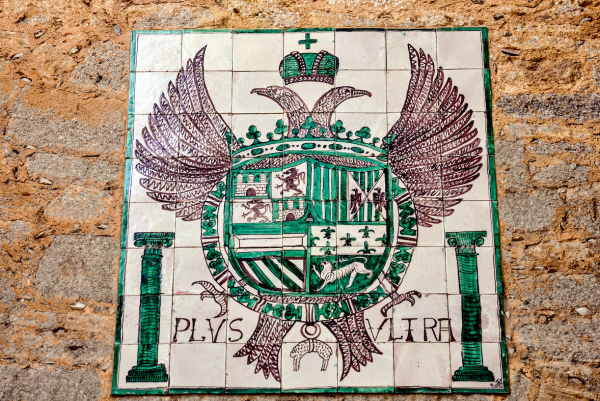
It disciplines every subsequent choice, from a wax seal to a garden gate, toward the very same idea.
Material matters a great deal to how a family monogram survives across the span of several decades.
Families who commission thoughtfully at the outset rarely need to reconsider the mark again.
The First Generation
A personalized family monogram is commissioned, often to mark a milestone rather than an occasion of vanity.
The Second Generation
The mark extends to stationery, correspondence, and increasingly to the fabric of the home itself.
A Marriage
Two family histories are considered together, and a shared monogram is sometimes composed to reflect the union.
Present Day
The original monogram is revisited, refined only slightly, and carried forward largely intact.
Bespoke Weddings
The Family Monogram at Life’s Threshold Moments
A wedding is one of the few occasions when two family histories meet by design rather than accident.
Some couples choose to interlace their existing family monograms into something new entirely.
Others commission an entirely fresh personalized family monogram to mark the beginning of a shared household.
Both approaches are legitimate, and the correct choice depends entirely on what came before the wedding itself.
A couple with strong individual family histories often prefers a careful interlacing of both into a single mark.
A couple beginning without either prefers to start cleanly, with one unified household monogram.
This moment is treated with unusual formality in most family traditions, and for genuinely good reason.
Linens, invitations, and correspondence are monogrammed as a matter of course, not indulgence, once a household is established.
The wedding monogram is expected to outlast the ceremony itself by decades, not merely by a season.
This expectation has not diminished with time; if anything, families today take it more seriously than ever.
A personalized family monogram born from a wedding appears first on an invitation, and that is only its earliest appearance.
It later appears on linens, on correspondence, and eventually on the everyday objects of a shared home.
“Combining two family histories into a single mark sounded straightforward until we actually began the process. What arrived required none of the compromise either of us had quietly feared.”
— Eleanor & David Marchetti, Newlywed Commission, Vermont
Children born into that household inherit the mark before they inherit almost anything else that belongs to the family.
This is precisely why a wedding monogram deserves more deliberation than the single ceremony it first serves.
A hurried decision made under the pressure of a wedding timeline rarely produces work built to last.
I ask every couple to begin this conversation well before the invitations themselves are due.
The strongest family monograms balance two histories without erasing either one in the process.
This requires genuine listening, not merely a stylistic preference, from the very first conversation onward.
A monogram that favors one family’s history over the other rarely satisfies either side for very long.
Fairness, in this context, is not a sentiment; it is a working design constraint.
Cultural traditions shape this process considerably, and no two families approach it in quite the same way.
Some traditions favor a shared shield divided cleanly between two family symbols.
Others favor a woven interlace, where two sets of initials resolve into a single continuous form.
Neither approach is more correct than the other; both carry long and entirely legitimate precedent.
“Our monogram appeared on every envelope we sent that year, and it still appears on our children’s stationery today. It has simply become how our family signs its name.”
— The Alvarenga Family, Household Commission, Texas
Luxury Identity
A Mark That Behaves Like an Institution
A personalized family monogram is often the first instance of shared visual discipline in a household’s life.
Before a family has a crest, a seal, or a formal letterhead, it often already has a monogram.
This is not a coincidence; the same instinct produces all three, simply in a considered order.
Luxury institutions have long understood that restraint communicates more than volume ever could.
A personalized family monogram applies that same understanding to a household rather than to an enterprise.
It is not marketing, and it should never be mistaken for marketing of any kind.
A family monogram exists whether or not anyone outside the household ever encounters it at all.
That is precisely what separates it from a corporate mark built specifically for visibility.
Visibility is incidental to a personalized family monogram; permanence is its entire and only purpose.
Families across law, medicine, architecture, and finance commission family monograms for exactly this reason.
The mark appears on household silver long before it ever appears on a business card, if it ever does at all.
This ordering matters, and it tells you something genuinely true about a family’s actual priorities.
A monogram built first for private household use tends to be more honest than one built for an audience.
Audience-first design tends to chase passing trends; private-first design tends to resist them entirely.
The atelier’s process reflects this priority at every single stage of a family commission.
A minimalist family monogram is not a lesser version of a more ornate one.
It is simply a different resolution of the very same underlying discipline.
Some family names are best served by an elaborate composition; others by a single confident line.
The correct choice depends entirely on the household, never on whatever happens to be fashionable that year.
A monogram chosen to follow a passing trend will look dated within a single decade.
A monogram chosen to represent a family honestly rarely looks dated at all, regardless of how much time passes.
This is the central argument for bespoke work over any templated alternative available elsewhere.
Nothing produced from a limited set of preset shapes can carry a family’s genuine, documented meaning.
A personalized family monogram, properly commissioned, cannot be purchased off a shelf, by definition of the form itself.
Visibility is incidental to a personalized family monogram; permanence is its entire and only purpose.
01
Discovery
An extended conversation establishes the family’s documented history, values, and long-term intentions.
02
Research
Heraldic and typographic precedent relevant to the family’s specific story is studied in depth.
03
Composition
Early concepts explore letterforms, hierarchy, and proportion before a single direction is chosen.
04
Refinement
The favored direction is tested at every scale the household is likely to require.
05
Delivery
A complete family monogram is prepared for engraving, stationery, and everyday household application.
The Atelier Journal
The Anatomy of a Personalized Family Monogram
A personalized family monogram is built from a limited set of decisions, and each one carries disproportionate weight.
The first is letterform configuration, which determines whether initials interlock, stack, or present in careful sequence.
The second is hierarchy, the question of which letter within the arrangement anchors the entire composition.
The third is weight, the formal language of stroke and line that a household’s character will ultimately determine.
Each of these decisions reflects the character of the family being represented, never a passing aesthetic preference.
A household devoted to quiet stewardship will typically favor a lighter composition, arranged with considerable restraint.
A household shaped by public service or long tradition may support a slightly more layered arrangement without tipping into excess.
Understanding this distinction is essential to designing a mark that will still feel appropriate decades from now.
A personalized family monogram differs from a mark built for one individual in one essential respect, which is scope.
An individual mark speaks through a single name; a family monogram speaks through a household’s entire shared identity.
This is why the process typically begins with extended conversation rather than a folder of pre-made letterforms.
A family’s own documented history contains more useful design information than any mood board could ever provide.
The atelier’s task is to listen for the detail a family may not yet recognize as significant.
A grandparent’s handwriting, a favored proportion, or a half-remembered household symbol can all inform the eventual composition.
None of these details dictate the outcome directly, but each contributes to a mark that belongs to this family alone.
That specificity is precisely what separates a commissioned monogram from an arrangement of letters selected at random.
“I commissioned our family monogram the year our first grandchild was born, and what arrived felt less like a new design and more like something we had simply been waiting to recognize.”
— R. Halloway, Family Commission, Connecticut
Readers interested in how this same discovery process applies to a single life rather than an entire household may examine a related exploration of that same discovery process for a single life.
A personalized family monogram, once resolved, tends to reveal something the household already believed but had never rendered visually.
This is a quieter kind of discovery than most design commissions offer, and it rewards genuine patience.
Few possessions a family owns are asked to carry this much responsibility while remaining this visually restrained.
Scale changes everything about how a symbol is perceived, and a genuinely personalized monogram accounts for this from the outset.
Nothing about this discipline can be improvised once a commission has already begun in earnest.
Consider how differently a single mark behaves across just two applications most families request together.
A composition intended for stationery must read warmly, often alongside softer supporting typography throughout a suite of materials.
A mark built for one household’s moment should still feel entirely appropriate decades later.
5
Design stages typical of a full family monogram commission
100%
Bespoke, with no two family commissions resolved identically
3-6
Distinct visual directions typically explored per household
Generations
The intended lifespan of a properly commissioned mark
Royal Traditions
Heraldry and the Grammar Beneath the Family Mark
Heraldry developed its own strict grammar centuries before typography existed as a formal discipline in its own right.
Every element of a shield, from tincture to charge to placement, carried specific meaning within a governed system.
A personalized family monogram borrows from this grammar even when its final form appears far simpler than a full coat of arms.
Balance, hierarchy, and proportion all originate from this same underlying heraldic convention.
A monogram built around a single dominant letter often follows a hierarchy long used in formal armorial design.
This convention persists today across most considered family marks developed for households across the country.
institutions dedicated to preserving heraldic tradition continue to document these conventions with remarkable precision, offering a record of symbols governed by rule rather than whim.
That record remains a valuable reference for any atelier committed to historical accuracy rather than invented tradition.
It is easy to design a mark that merely looks attractive.
It is considerably more difficult to design a mark that honors the grammar it has inherited.
This is the difference between a family monogram that feels timeless and one that feels merely fashionable.
The former draws on centuries of established convention.
The latter draws only on the preferences of the present moment, which rarely age particularly well.
A well-trained eye can often identify a family monogram’s era simply by how loosely or strictly it follows heraldic grammar.
The most enduring designs tend to sit closer to the disciplined end of that particular spectrum.
This does not mean a contemporary family monogram cannot feel genuinely fresh.
It means that any freshness must be achieved within the grammar, through proportion and craftsmanship, rather than by abandoning it outright.
A monogram that ignores this grammar entirely rarely reads as innovative; more often, it simply reads as unfinished.
This is precisely why the atelier studies the original grammar closely enough to use it correctly.
A family that understands this history tends to make better decisions during its own commission.
This holds true even when the final design departs significantly from any historical precedent.
Knowing the rules, in other words, is what makes departing from them thoughtfully possible in the first place.
This grammar traveled well beyond the British Isles, adopted with regional variation across the European continent.
Households in Scandinavia, in the Iberian peninsula, and across the German states each developed their own dialect of the same discipline.
What remained constant across every regional variation was the underlying seriousness of the exercise itself.
A personalized family monogram commissioned today inherits this entire history, whether or not the household requesting it is fully aware of it.
“The finest symbols are rarely created to follow trends. They are created to outlive them.”
Legacy & Family Heritage
Materials, Scale, and the Discipline of Craftsmanship
A personalized family monogram does not exist in isolation; it exists as a mark applied to material.
The intelligence of its design must account for every surface it will eventually inhabit.
This is not a secondary consideration within the process; it is, in many respects, the most demanding aspect of the commission.
A composition that reads beautifully in ink on cream stationery may lose definition entirely when engraved into silver.
A design with subtle hairline detail may disappear when translated into single-color embroidery or a compressed digital format.
These are not problems that can be resolved after the fact; they must be anticipated from the very first sketch.
On paper, whether correspondence stock or heavier formal sheets, the mark must perform with genuine typographic precision.
On silver and other metals, engraved into flatware or a signet ring, it must hold its integrity at the smallest scales.
On stone or wood, carved into an architectural detail, it must read with equal confidence from a considerable distance.
A personalized family monogram that satisfies each of these material tests was designed by someone who understood the full system from the outset.
The decorative arts collections held within one of the world’s great encyclopedic museums preserve extraordinary examples of how family marks have functioned across centuries.
What emerges from any sustained engagement with this material is a consistent principle worth repeating here.
The finest marks were never designed to be impressive.
They were designed to be correct, which is a considerably higher standard for any household to meet.
A family archive tells a story that individual objects cannot tell entirely on their own.
A signet ring, a set of household linens, and a piece of correspondence together form a more convincing narrative than any single item.
I encourage every family to think of a personalized family monogram as the beginning of such an archive, not a single purchase.